Eden Health Retreat
A secluded rainforest sanctuary in the Currumbin Valley offering transformative wellness experiences through nature immersion
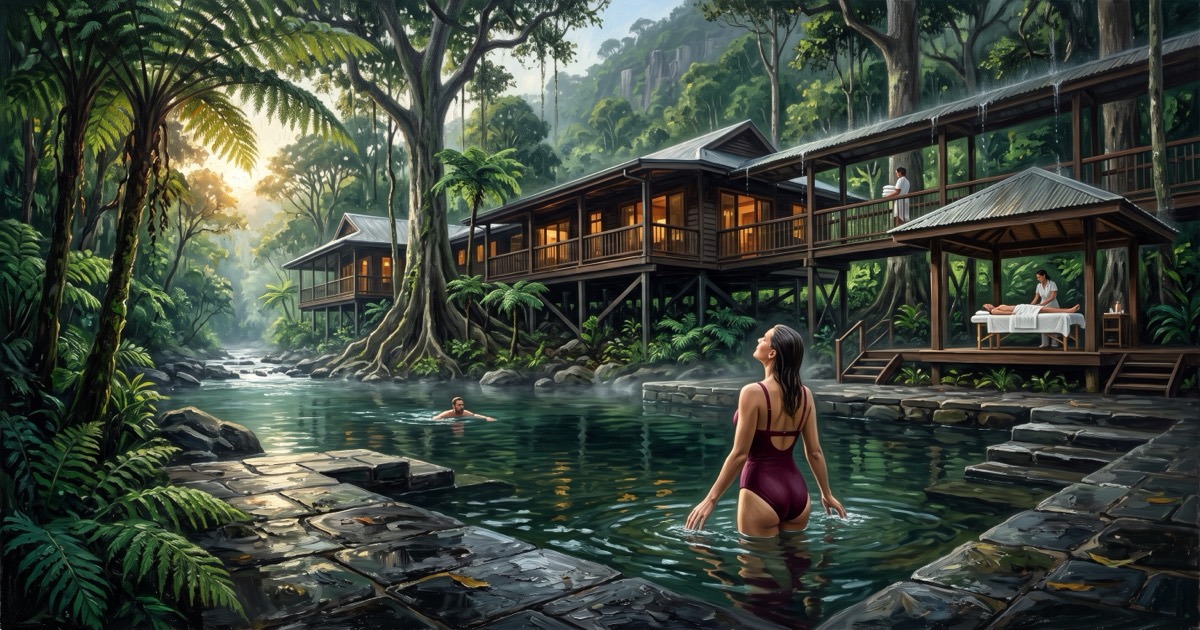
Eden Health RetreatEden Health Retreat lies in the Currumbin Valley in the Gold Coast hinterland, on a large property of rainforest, creeks and waterfalls, and is among the longest-running health retreats in Australia, operating for decades on a consistent philosophy rather than a fashionable one. It is adults-only and largely all-inclusive, with stays sold by the week or part-week, and the structure is firm: no alcohol, no caffeine, no devices in public areas, early starts, and a daily programme of bushwalking, aqua classes, yoga, meditation, strength work and lectures, with treatments included in the package and a wholefood kitchen serving three meals with no menu choice on some programmes. Nutrition and naturopathy consultations are available. Among Australia wellness resorts it is the most disciplined and the most value-driven of the genuine retreats; guests wanting luxury finishes or flexibility will be happier at Gaia or Elements.
The core of what Eden does is among the best-founded offerings in this guide: daily exercise outdoors, wholefood meals, no alcohol or caffeine, early nights and time away from screens. That needs no further claim. Detox describes the programme rather than a physiological process, crystal-based sessions have no demonstrated physical effect, and claims about negative ions in valley air are not supported by evidence. There is no doctor on site and no diagnostics; naturopathy is a complementary practice rather than medical care. Anyone managing a health condition should continue under their own doctor, and anyone with a history of disordered eating should approach the set-menu programmes with care.
Setting:
The Currumbin Valley in the Gold Coast hinterland, on a large property of rainforest, creeks and waterfalls, with valley walls forming a natural amphitheatre and a sheltered microclimate. The surrounding Gondwana rainforests are World Heritage listed. That listing belongs to the protected forests of the region rather than to the retreat itself. Wildlife is abundant and the setting is genuinely quiet.
Treatments include:
- Signature massage using native Australian botanicals
- Body treatments using indigenous Australian ingredients
- Remedial and relaxation massage
- Lymphatic drainage massage
- Crystal-based sessions using locally sourced quartz, with guided visualisation
Two clarifications. Lymphatic drainage is a gentle massage technique; it has a genuine clinical role in post-surgical swelling under direction, but it does not enhance detoxification or immune function. And crystal sessions are offered within their own tradition; there is no evidence that quartz produces any physical or physiological effect, though guided visualisation in a quiet room is genuinely relaxing.
Water Facilities:
- Heated outdoor swimming pool on a mineral and salt-based system
- Natural rock pools along Currumbin Creek
- Spa and plunge facilities
- Creekside spaces for rest and meditation
A mineral or salt system is not chlorine-free: salt pools generate chlorine by electrolysis, which is how they sanitise, and all commercial pools require treatment and monitoring under bathing regulation. Natural creek pools are unmonitored: levels and currents change quickly after rain, and swimming should follow the retreat's guidance rather than appearance.
Programmes include:
- Seven-day signature renewal programme, balancing activity and rest
- Part-week stays following the same daily structure
- Stress recovery programmes
- Movement and mind-body programmes
- Emotional wellbeing workshops
- A digital detox emphasis across all programmes
Each incorporates:
- Daily movement sessions from gentle to dynamic
- Bushwalking and time in the rainforest
- Nutrition education and hands-on workshops
- Lectures and personal development sessions
- Scheduled rest between activity
These are wellness and education programmes, not medical care: no doctor on site, no diagnostics, no published outcome data. Detox describes the programme category rather than a physiological process: the liver and kidneys handle that continuously, and a week without alcohol, caffeine and refined sugar, with daily exercise and proper sleep, is a complete explanation for feeling markedly better.
Emotional wellbeing workshops are not psychological treatment; anyone dealing with trauma or mental health difficulty should work with a qualified practitioner and can tell the retreat what support they need. Anyone with a history of disordered eating should approach set-menu programmes with care.
Additional Activities:
- The Flying Fox, the retreat's valley-crossing challenge activity
- Valley walks on the property's rainforest trails
- Creekside meditation
- Qi gong in the morning clearings
- Boxing and fitness in the outdoor pavilion
- Creative workshops including mandala making and journaling
Wholefood cooking using produce from the retreat's own gardens and regional growers. Meals are free of alcohol, caffeine, refined sugar and processed ingredients, and on some programmes there is no menu choice: the food is the programme rather than a service alongside it.
- Garden produce: Greens, vegetables and herbs harvested from the on-site gardens
- Proteins: Local fish, eggs from the retreat's hens, and plant proteins
- Native ingredients: Finger lime, Davidson plum and lemon myrtle used through the menus
- Style: Vegetable-led contemporary Australian
- Dietary requirements: Accommodated on request, within the existing restrictions
Menu Highlights:
Menus change with the season and the gardens, so specific dishes are not published in advance. Expect vegetable-led cooking with native Australian ingredients, local fish and eggs. Worth knowing before booking: there is no coffee, no alcohol and no added sugar for the length of your stay, and regular coffee drinkers should expect a difficult first day or two.
Note that food does not detoxify the body: the liver and kidneys do that continuously. A week of wholefood eating without alcohol, caffeine or refined sugar is genuinely worthwhile on its own terms and needs no stronger claim.
Accommodations:
- Renovated cabins and suites set within the rainforest
- Private verandas overlooking the valley or the canopy
- Minimalist design in natural materials and earth tones
- Quality bedding and a pillow menu with a choice of fills
- Adults only
Service Approach:
Long-established and unpretentious, with many staff of long standing. Practitioners include naturopaths, therapists and fitness staff rather than clinicians; there is no doctor on site. The register is communal: guests eat together, walk together and follow the same timetable, which suits solo travellers unusually well and will feel close-quartered to anyone wanting privacy.
Estimated Pricing & Value:
- Stays are sold by the week or part-week rather than nightly
- Shorter part-week stays: from around AUD $1,600-2,600 per person
- Full-week programmes: from around AUD $3,200-5,200 per person
- Largely all-inclusive, with treatments included in the package
Prices are indicative and quoted per person rather than per room. Because meals, the full activity programme and a number of treatments are included, the comparison with the resorts elsewhere in this guide is not like for like. Eden is among the better-value genuine retreats in Australia. Confirm current rates and inclusions directly.
Included:
All meals, the full daily activity and lecture programme, guided bushwalking, use of the pools and facilities, and a number of treatments depending on the length of stay. Naturopathy and nutrition consultations are available.
FAQ:
How structured is it?
Firmly. Early starts, a set daily programme of bushwalking, aqua classes, yoga, meditation, strength work and lectures, no alcohol, no caffeine and no devices in public areas. On some programmes there is no menu choice. That structure is the point and the reason it works: it removes decisions and makes it easy to move, sleep and eat well for a week. Guests wanting flexibility or luxury finishes will be happier at Gaia or Elements of Byron elsewhere on this page.
What is well founded here, and what is not?
The core is well founded and needs no embellishment: daily exercise outdoors, wholefood meals, no alcohol or caffeine, early nights and several days away from screens. That combination reliably leaves people feeling considerably better. Beyond it, some framing should be read carefully. Claims about negative ions in valley or waterfall air affecting mood or health are not supported by evidence; crystal work has no demonstrated physical effect; and no treatment or meal detoxifies the body. None of that diminishes the retreat; it simply means the honest reasons to come are the straightforward ones.
Is it a medical facility?
No. There is no doctor on site, no diagnostics and no published outcome data. Staff are naturopaths, therapists and fitness practitioners. Naturopathy is a complementary practice rather than medical care. Anyone managing a health condition should remain under their own doctor, and anyone with a history of disordered eating should approach the set-menu and weight-focused programmes with care and speak to their own clinician first.
Wins
- Best Australian Health and Wellness Retreat, Luxury Travel Gold List Awards, 2023 (see the caution below)
Runner-up placings
- Best Wellness Retreat, Spa and Wellness Awards, 2023. A consumer-voted category
Entrant-nominated programmes
- Continent winner, Luxury Spa Awards, 2025, for Eden Spa
- Continent winner, Luxury Hotel Awards, 2024
- Regional winner, Luxury Hotel Awards and Luxury Spa Awards, 2023
- Luxe Global Awards, 2023
The Luxury Hotel, Luxury Spa and Luxe Global programmes are entrant-nominated rather than independently judged, and are grouped separately for that reason.
A contested title. Three properties on this page (Eden, Elysia and Gaia) each list the Luxury Travel Gold List 2023 Australian health and wellness category. That title cannot belong to all three. Of the three, Eden's is presented as an unqualified win; Elysia's at least specifies the former trading name under which it was received. Until the awarding body's own record is checked, treat the entry with caution wherever it appears.
Eden's genuine distinction is its longevity: it is among the longest-established health retreats in Australia. That is a fact about the property rather than an award, and it is the more reliable reason to consider it.