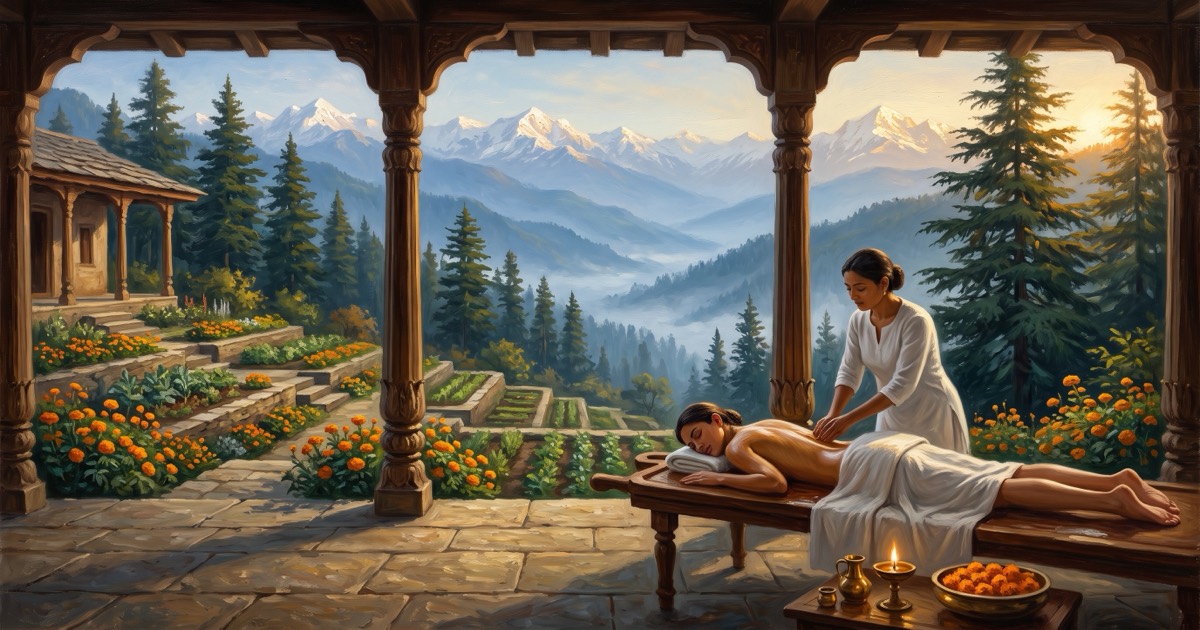
A 2,500-acre estate in the Western Ghats, built around assessment before treatment
Dharana's distinguishing commitment is that programmes begin with measurement rather than a menu. Assessment on arrival covers biomarker panels, genomic analysis, heavy metals testing and pulse diagnosis, and the findings shape a protocol drawn from Ayurveda including full Panchakarma, naturopathy, Tibetan medicine, sound work, infrared and oxygen therapy and cold plunge. The 70-acre wellness campus holds 17 treatment rooms, the underground Dhyana meditation cave, a yoga pavilion facing the mountains, four relaxation terraces, a restoration studio, the tranquility pool and the Jalayu water therapy area. Ninety-nine villas by Khanna Schultz sit across a 2,500-acre estate in the Western Ghats. Programmes run from three nights to fourteen and beyond, and the longer ones are where the approach earns its claims.
Setting:
Two and a half thousand acres in the Sahyadri Mountains, the northern section of the Western Ghats, a UNESCO World Heritage region and among the most biodiverse landscapes on earth. Three hours from Mumbai and ninety minutes from Pune, the estate holds rice fields, bamboo, and old forest supporting a remarkable range of endemic birds, butterflies and medicinal plants. The property sits below Mount Shillim, with guided treks to the summit. Stepwells, meditation clearings and forest paths run through the grounds. Season matters considerably here: October to March is cool and clear, while the June to September monsoon transforms the landscape and suits guests whose programme is largely indoors.
Signature Treatments & Modalities:
- Diagnostic assessment on arrival, covering biomarker panels, genomic analysis, heavy metals testing, pulse diagnosis and body composition, from which the protocol is built
- Ayurvedic Panchakarma, the classical purification sequence, over fourteen nights or more under physician supervision
- Shirodhara, a continuous stream of warm oil across the forehead
- Abhyanga, four-handed synchronised massage with dosha-specific oils
- Tibetan sound work using singing bowls
- Neuro-reactive training for coordination and cognitive performance
- Cold plunge and contrast therapy for recovery
- Infrared therapy and oxygen therapy
- Naturopathic and Tibetan medicine consultations alongside the Ayurvedic team
Heavy metals testing and genomic analysis are offered widely in this sector; interpretation varies considerably and a finding may be uncertain or difficult to act on. Ask what is being tested, what the result would change, and who interprets it with you.
Wellness Facilities (70 acres):
- Seventeen private treatment rooms opening to forest and mountain views, equipped for both Ayurvedic and contemporary therapies
- Dhyana Meditation Cave, an underground sanctuary cut into the hillside for meditation in near-total sensory stillness, and genuinely unusual in Indian wellness properties
- Yoga Pavilion with panoramic mountain views for daily classes and private sessions
- Four relaxation terraces at different points across the property, for the hours after treatment
- Physical Restoration Studio for fitness, rehabilitation and movement assessment
- Tranquility Pool, an infinity pool with valley views
- Jalayu water therapy area for hydrotherapy and contrast bathing
- Tea House and Apothecary for herbal preparations
- Forest clearings, walking paths and summit trails across the wider estate
Signature Wellness Programs:
- Art of Detox (5-7 nights): cleansing built on the arrival assessment, combining naturopathic treatment and nutritional reset.
- Ayurvedic Panchakarma (14-21 nights): the classical purification sequence under Ayurvedic physician supervision, including preparatory oleation, the main cleansing therapies and a rejuvenation phase. The length is not optional; the protocol requires it.
- Rest & Revive (3-5 nights): an introduction for those who cannot commit longer, pairing assessment with treatments for stress and sleep.
- Mental Resilience (7-10 nights): supportive work on burnout and exhaustion through meditation training, treatment and structured rest.
- Yogic Path (5-7 nights): immersion in yoga practice and philosophy, daily asana, pranayama and meditation, open to all levels.
Specialized Programs:
- Age Rejuvenation (7-14 nights): combining assessment findings with Ayurvedic rasayana therapies and contemporary recovery technologies.
- Immunity Rasayana (7-10 nights): the Ayurvedic immunity-building therapies alongside nutrition and lifestyle work.
- Holistic Healing (14+ nights): the most intensive protocol, drawing on the full range of assessment and treatment. Medical history review is required before booking.
Each program includes:
- Diagnostic assessment on arrival
- A protocol built from those findings
- Daily treatments, varying by programme
- Yoga and meditation sessions
- Ayurvedic meals matched to constitution
- Physician consultations through the stay
- A take-home protocol and recommendations
Panchakarma is a substantial intervention rather than a spa treatment, and its longer protocols are demanding. Ayurveda is a traditional medical system with its own training and practitioners; it is not evidence-based in the Western sense, and a programme here is not a treatment for a diagnosed condition. Anyone managing a medical condition, taking prescribed medication, or receiving treatment for a mental health condition should discuss suitability with the retreat and with their own physician before booking, and should continue under that physician's care throughout.
Additional Wellness Activities:
- Guided treks through the Western Ghats with naturalists identifying medicinal plants and endemic species
- Mount Shillim summit trek, with meditation at the top
- Forest walks, which most guests find the single most restorative part of a stay
- Dhyana Cave meditation in near-total silence
- Sunrise and sunset yoga on the outdoor pavilions
- Pranayama workshops
- Ayurvedic cooking classes
- Stepwell meditation
- Bird watching, with a substantial species list recorded across the estate
- Organic farm visits
On the guided plant walks: identification is educational. Do not gather or consume wild plants on the strength of a walk. The Western Ghats hold many species that are toxic or easily confused with edible ones.
Dining follows an earth-to-table philosophy grounded in Ayurvedic nutrition, with ingredients seasonal and sourced from the estate's own farms and the surrounding region. Slow cooking is the default. For programme guests, meals are prescribed by the Ayurvedic physicians against constitution, current imbalance and therapeutic goal. The kitchen's real skill is making prescribed food worth looking forward to, which over a fourteen-night protocol matters more than any single treatment.
- Green Table: the signature restaurant, Mediterranean and Indian dishes overlooking a traditional stepwell, open all day and drawing on the estate's gardens.
- Ojas: Indian and international wellness cuisine, with the menu changing seasonally. Ayurvedic meal plans for programme guests are served here.
- Vyoma: lighter casual dining with stone-baked options, for active days.
- Tea House & Apothecary: herbal preparations and custom tea blends made to individual requirements, plus light nourishment through the day.
Dietary Philosophy:
Ayurvedic principle governs not only what is eaten but when and how, taking account of digestive fire, seasonal appropriateness and individual constitution. Programme guests receive plans that may include detox juices, kitchari, rasayana dishes and dosha-balancing cuisine. The kitchen holds genuine expertise in therapeutic diets including anti-inflammatory and gut-focused protocols. Four venues across the property give guests some choice of setting without breaking the therapeutic consistency of what they are eating, and dietary restrictions are accommodated with advance notice.
Accommodations (99 Villas):
- Ninety-nine villas by Brooklyn-based Khanna Schultz, built from natural materials into the landscape
- Valley View Villas: long views across the valleys to the mountains, with private outdoor space
- Forest View Villas: set within the woodland, closer and more enclosed
- Premium Villas: larger, with separate living areas and greater seclusion
- Pool Villas: selected villas with private plunge pools
- Every villa includes a private treatment area allowing therapies in-room, indoor and outdoor showers, decks and terraces, day beds, and detailing drawn from local craft traditions
- Villas positioned across the campus for privacy and for access to the wellness facilities
Service & Wellness Team:
The team-to-guest ratio is high and the wellness staff genuinely multi-disciplinary: Ayurvedic physicians, naturopathic doctors, yoga therapists, meditation teachers, Tibetan medicine practitioners and therapists trained across modalities. Each guest's programme is overseen by a primary wellness physician who coordinates treatments, reviews progress against repeat assessment and adjusts accordingly. That supervision is the substantive difference from a spa retreat. The property maintains relationships with specialist consultants for referral where a guest's needs fall outside its scope, which is the right arrangement and worth knowing exists. Guests leave with written protocols and the option of follow-up consultation, and a good number return annually.
Estimated Pricing & Value:
- Valley View Villas: from roughly ₹35,000-50,000 per night within all-inclusive programmes
- Premium and Pool Villas: from roughly ₹60,000-85,000 per night
- Rates typically include accommodation, all meals, the programme's daily treatments, yoga and meditation, use of the facilities and wellness consultations
- Diagnostic assessments and specialised treatments may carry additional charges depending on programme
- Longer programmes of fourteen to twenty-one nights generally carry better per-night rates
- Airport transfers from Mumbai or Pune available at additional cost
Pricing is indicative and varies by season and exchange rate; confirm current rates and programme inclusions directly with the retreat.
Included in Wellness Programs:
Diagnostic assessment on arrival, development of the personalised protocol, daily treatments as specified by programme, Ayurvedic meals matched to constitution, yoga and meditation sessions, physician consultations, access to all facilities including the meditation cave, pools, yoga pavilion and relaxation terraces, guided nature walks and activities, and a written take-home protocol. Additional specialist consultations, further diagnostics and treatments outside the programme are available at supplementary cost.
FAQ:
What makes Dharana different from other Indian wellness retreats?
The sequence. India has a great many excellent Ayurvedic properties, and most begin by selecting treatments. Dharana begins with assessment and builds the protocol from what it finds, then reassesses during the stay and adjusts. Physician supervision runs throughout. The 70-acre campus provides infrastructure few properties anywhere can match, and the Western Ghats setting adds something no urban clinic can. Guests who want to know why a programme was chosen for them, and to see it change in response to their progress, are the ones best served here.
What can Dharana realistically help with, and what can it not?
It is a wellness retreat rather than a medical facility, and the distinction matters more here than at most properties precisely because the diagnostics look clinical. Guests most commonly come with stress and burnout, poor sleep, digestive complaints, low energy or a general sense of decline, and those are the areas where extended programmes and physician oversight do genuine good. What Dharana does not do is treat diagnosed medical or psychiatric conditions. Anyone under treatment for a physical or mental health condition should regard a stay here as complementary to that care, continue with their own doctor throughout, and discuss the programme with them in advance. Acute conditions and psychiatric emergencies are outside scope entirely, and medical history review before booking exists to establish that.
How long should a stay be?
Honestly, longer than most guests plan. Three to five nights introduces the approach and delivers the assessment, which has its own value. Seven to ten allows a protocol to be implemented and adjusted. Fourteen to twenty-one is where the substantial programmes, full Panchakarma in particular, become possible at all, and the classical texts assume that duration for good reason. Season is worth weighing alongside length: October to March suits guests wanting the treks and outdoor work, while the monsoon between June and September is well matched to an intensive indoor protocol.
Note that the World Spa Awards entries are nominations across three consecutive years rather than wins, and that the programme is decided by industry and public voting rather than by inspection. The property's genuine distinctions are its scale, its physician supervision and its setting.
Also featured in: Gut Health