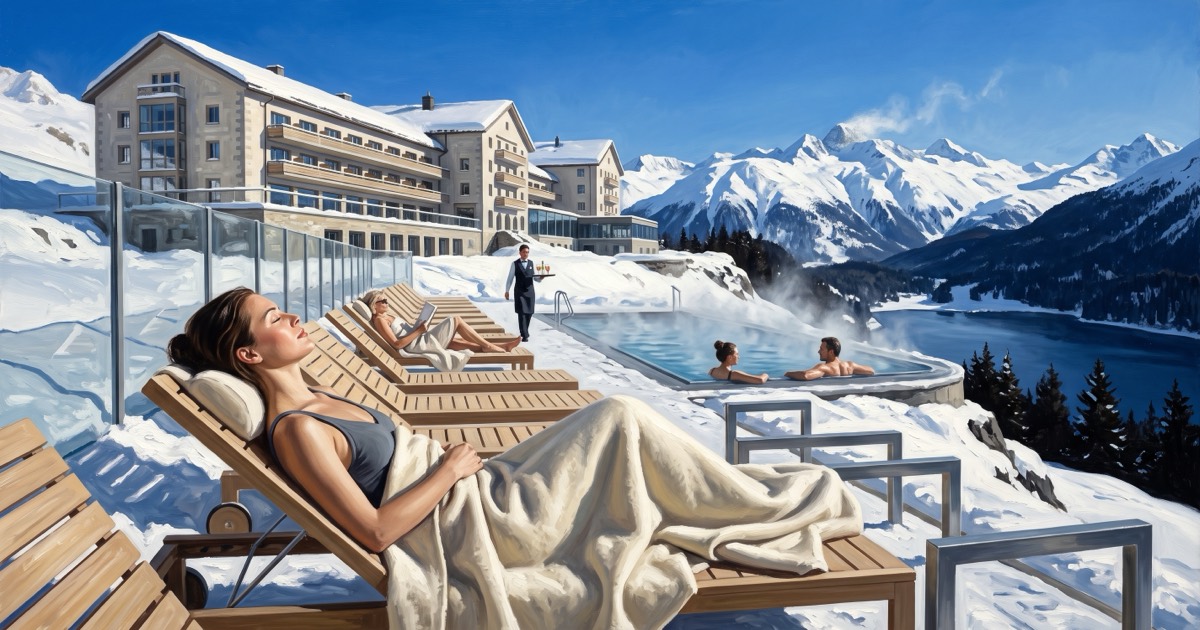
Switzerland has the deepest concentration of licensed medical clinics in this guide, so several of these operate as wellness retreats with physician assessment and a prescribed programme, while others are alpine wellness resorts where the thermal water and the mountains do the work.
Melt into the brilliant embrace of the Swiss Alps alongside crystalline lakes, Switzerland wellness resorts stand as monuments to holistic modern healing, luxurious indulgence, and complete renewal. These remarkable sanctuaries blend centuries-old thermal traditions with cutting-edge medical science, architectural brilliance with pristine natural surroundings, creating environments where profound healing and luxury coexist in perfect harmony. From thermal waters to medical marvels of innovation, wellness resorts Switzerland options offer a diversity of extraordinary experiences united by unwavering commitment to excellence. Here, ancient springs that have bubbled from Alpine depths for millennia meet progressive longevity science; minimalist architectural masterpieces frame snow-capped mountain vistas; and world-class practitioners guide personalized journeys toward optimal wellbeing. As you consider these exceptional Switzerland wellness resorts, prepare to discover not merely places of epic luxurious escape where environments designed for profound legendary rejuvination, pristine natural resources, and commitment to innovation converge to create wellness experiences that rank among the world's most extraordinary.

Switzerland has been associated with medical wellness since the nineteenth century, when European visitors travelled to Alpine sanatoriums for mountain air, mineral springs and early hydrotherapy. Today its wellness properties range from licensed medical clinics with resident physicians and on-site diagnostics to thermal spa resorts and hotel spas — a wider range than the marketing suggests, and the distinction matters when choosing.
What the setting reliably offers is altitude, quiet, clean air and good walking, alongside genuine clinical infrastructure at the medical end. Terms used widely in this sector — cellular rejuvenation, longevity, precision medicine — cover interventions whose evidence varies considerably, from well-founded basics such as nutrition, exercise, sleep and cardiovascular risk assessment through to therapies with much thinner support. A reasonable approach at any Swiss property is to ask what a proposed test or treatment is for, what the result would change, and who will interpret it with you.
Switzerland Apex 6 Wellness Resorts 2026 — Comparison at a Glance
| Resort | Location | Type | Stay | Price Range | Best Season | Signature Experience | Wellness Focus |
|---|
| Grand Resort Bad Ragaz | Bad Ragaz, St. Gallen | A La Carte | Flexible | $$$$ | Year-round | 36.5°C thermal Tamina spring | Thermal spa & medical health |
| Chenot Palace Weggis | Weggis, Lake Lucerne | All-Inclusive | 3-14 nights | $$$$$ | Year-round | Chenot Method biolight therapy | Detox programmes & recovery |
| Montreux, Lake Geneva | All-Inclusive | 3-14 nights | $$$$$ | Jun–Sep | CLP Longevity cellular program | Longevity programmes & medical screening |
| The Dolder Grand | Zurich | A La Carte | Flexible | $$$$$ | Year-round | 4,000m² Dolder Spa | Urban luxury & art collection |
| Waldhotel Burgenstock | Bürgenstock, Lake Lucerne | A La Carte | Flexible | $$$$ | May–Oct | Alpine health performance lab | Medical wellness & altitude therapy |
| 7132 Therme Vals | Vals, Graubünden | A La Carte | Flexible | $$$$ | Year-round | Zumthor stone thermal architecture | Architectural bathing & mineral springs |
Read This First: Medical Procedures Sold as Wellness
Some properties on this page offer medical procedures rather than spa treatments. Switzerland has the deepest concentration of licensed medical clinics in this guide, and that is a genuine strength. It also means the distinction between a treatment and a procedure matters more here than anywhere else.
- Hyperbaric oxygen therapy has genuine licensed indications, including decompression illness, carbon monoxide poisoning and certain non-healing wounds. General wellness, recovery and longevity are not among them. Untreated pneumothorax is an absolute contraindication; asthma, COPD with carbon dioxide retention, previous bleomycin chemotherapy and insulin-dependent diabetes all require assessment first. Ear and sinus barotrauma is the most common side effect, and is usually mild.
- Whole-body cryotherapy has no device cleared or approved by the US FDA for any medical condition. Documented risks include frostbite, burns and eye injury, and asphyxiation where liquid nitrogen displaces oxygen in an enclosed space, which has caused a death. Published contraindications include uncontrolled hypertension, cardiac conditions, Raynaud's syndrome, cold allergy and pregnancy.
Discuss either of them with your own doctor before you travel, not on arrival, and continue any treatment you are already receiving.
Before You Book: Worth Asking
Several properties here describe themselves as clinics. In Switzerland that often reflects genuine licensing and resident physicians, but the word itself is not a guarantee, and programmes vary widely in how much medicine they actually involve.
- Who administers the procedure, and what are their qualifications and licence?
- Is a physician on site while it is given, or only available for consultation?
- What is the evidence for the specific outcome being promised, and what would change if it did not work?
- What is included in the quoted price, and what is billed separately? Diagnostics and individual procedures are frequently extra.
A property doing this well will answer all four readily.
Frequently Asked Questions — Switzerland Wellness Resorts
Also worth comparing: Germany · Spain · Austria
Why is Switzerland considered the world leader in medical wellness?
Switzerland's standing in medical wellness rests on several things at once: a 19th-century tradition of Alpine sanatoriums that first linked mountain air with recovery, a strong medical education system, strict regulation, and a long-standing reputation for privacy that has drawn an international clientele. Clinique La Prairie has worked in this field since 1931 and builds its signature Revitalisation programme around its own CLP Extract. Chenot Palace Weggis applies the Chenot Method. Grand Resort Bad Ragaz draws on thermal springs recorded since 1242. The common thread is that several Swiss properties operate as licensed medical facilities rather than spas, with resident physicians and on-site diagnostics, which is less common elsewhere.
What is the Clinique La Prairie longevity program?
Clinique La Prairie in Clarens, near Montreux, has worked in this field since 1931, when Professor Paul Niehans developed his cellular therapy approach. Its signature offering today is the Revitalisation programme, built around the clinic's own CLP Extract and combining medical diagnostics — blood biomarker analysis, genetic testing and organ function assessment — with nutrition, physical reconditioning, sleep work and aesthetic medicine. Most programmes run seven days and six nights; the shorter Health Diagnostic runs three days. Every programme opens with a full medical assessment by the clinic's physicians. The approach is medical rather than spa-oriented, which places CLP alongside properties such as SHA Wellness Clinic in Spain and Lanserhof in Germany. Niehans' original cellular therapy does not stand today as it was presented in the 1930s, and longevity medicine remains an active research field rather than a settled one.
What makes 7132 Therme Vals architecturally significant for wellness?
7132 Therme Vals was designed by Pritzker Prize-winning architect Peter Zumthor and is among the most widely studied works of late twentieth-century architecture. Built from locally quarried Valser quartzite, the baths are set into the mountainside, and the experience is organised as a sequence of stone chambers rather than as a treatment menu. Water from St. Peter's Spring emerges at around 30°C and feeds indoor and outdoor pools at varying temperatures, including the fire and ice pools used as a contrast pair. Light, acoustics and the temperature of the stone itself are all deliberately controlled, so the building sets the pace of a visit. Note that Swiss public bathing regulations require treatment and monitoring of circulating bath water, so descriptions of the baths as chemically untreated are not accurate.
How much do Switzerland wellness resorts cost per night?
Switzerland is among the most expensive wellness destinations, and the range is very wide — so it is worth separating the two propositions on this page. A medical programme is the major expense: Clinique La Prairie's Revitalisation starts from roughly CHF 31,800 for seven days including accommodation, full board and Geneva transfers, with its shorter Health Diagnostic from around CHF 17,680, and Chenot Palace Weggis runs seven-night programmes in the region of CHF 8,000–16,000 depending on accommodation. A straightforward stay costs a fraction of that: rooms at the Dolder Grand, Bad Ragaz, Waldhotel Bürgenstock and 7132 Vals broadly span CHF 400–2,500 per night by property, season and category, with thermal bath access included at Vals. For exact figures see the individual property entries below, which are more detailed than any summary — and confirm current rates directly with each property, since programme pricing changes by season and by room category. One thing worth weighing: at the medical properties the price rises with the quantity of diagnostics included, so it is reasonable to ask which tests are genuinely indicated for you rather than accepting the fullest package by default.
What is the best time to visit Swiss wellness resorts?
Swiss wellness resorts operate year-round, and each season offers distinct advantages. Summer (June–September) provides the most spectacular Alpine scenery with hiking, outdoor yoga, and warm temperatures ideal for lakeside properties like Chenot Palace Weggis and The Dolder Grand. Winter (December–February) creates the quintessential Alpine wellness experience — soaking in thermal waters surrounded by snow at Bad Ragaz or Vals is extraordinary. Spring and autumn offer shoulder-season rates and fewer crowds. Clinique La Prairie, The Dolder Grand, and Waldhotel Burgenstock are year-round destinations. 7132 Therme Vals is arguably most atmospheric in winter when steam rises from the thermal pools against snowy mountain backdrops.
BEST SWITZERLAND WELLNESS RESORTS TOP 6 CURRENTLY - Equipoise
Switzerland offers a distinct proposition in wellness travel: several of its best-known properties are licensed medical facilities rather than spas, with resident physicians, on-site laboratories and programmes that begin with diagnostics. Clinique La Prairie on Lake Geneva and Chenot Palace Weggis both work this way, as does the Waldhotel within Bürgenstock Resort. Alongside them sit properties where the draw is the water and the setting — the thermal springs at Bad Ragaz, recorded since 1242, and Peter Zumthor's quartzite baths at Vals. The Dolder Grand adds a fifth option above Zurich, where a 4,000 square metre spa sits within a city hotel. The practical choice is between a structured medical week, which is expensive and demands commitment, and a flexible stay where the spa is one part of the trip rather than the reason for it. Both are well served here, but they suit different travellers, and it is worth being honest with yourself about which you are before booking.
A la carte and packages
7310 Bad Ragaz, Switzerland
Stay options: flexible, with health and wellness packages available
Grand Resort Bad Ragaz sits in the Rhine valley in eastern Switzerland, where thermal water from the Tamina Gorge has been used since the medieval period — the springs emerge at around 36.5°C. The resort combines Belle Époque hotel buildings with a large thermal spa and the Medical Health Centre, which is a genuine clinical facility with physicians, diagnostics, physiotherapy and rehabilitation, not a spa consultation desk.
On the water: thermal bathing at body temperature is comfortable and genuinely useful for musculoskeletal discomfort — warmth, buoyancy and unloaded joints are real effects. Claims that particular mineral compositions treat conditions from rheumatic disease to skin complaints are traditional rather than established, and this guide does not repeat them. The clinical side of the property is where medical treatment happens, and it is separate from the bathing.
The medical centre is the reason to choose Bad Ragaz over a conventional spa hotel: orthopaedic and rehabilitation work here is well regarded, and guests can combine treatment with a normal hotel stay. Practical: Zurich is around ninety minutes by road, and the resort is large and busy — quiet is found in the spa rather than the public areas.
Grand Resort Bad Ragaz Awards
Grand Resort Bad Ragaz Recent Accolades
Wellness & Spa
- Top of the Luxury Spa and Health Resorts category, The 101 Best Hotels in Switzerland, 2025 and again in the edition reported in 2026
- Europe's Best Health and Wellness Resort, Karl Wild Hotelrating Schweiz, 2023
- Best Luxury Wellness Resort, Seven Stars Luxury Hospitality and Lifestyle Awards, 2024
- Nominee, Switzerland's Best Wellness Retreat, World Spa Awards, 2023
- Featured in the Condé Nast Traveller Wellness and Spa Guide, 2025
Hotel
- Three MICHELIN Keys, MICHELIN Guide, 2025
Golf
- Best 18-Hole Course in Switzerland, Swiss Golf Awards, 2025, for the Golf Club Bad Ragaz Championship Course
Dining
- Three MICHELIN Stars and a Green Star, Restaurant Memories under Sven Wassmer, 2025
- Best Golf Restaurant in Switzerland, Swiss Golf Awards, awarded to gladys for a seventh time as of 2026
- Several restaurants across the resort hold MICHELIN stars and GaultMillau points
Certifications & Memberships
- Swisstainable Level III, the programme's leading tier
- SQS sustainability certification
- Member, American Express Fine Hotels and Resorts
Distinctions
- Thermal water at 36.5°C from the Tamina Gorge, in use since the springs were found in the 13th century
- 233 rooms and suites across two five-star hotels, the Grand Hotel Quellenhof and Spa Suites and the Grand Hotel Hof Ragaz
- Medical Health Centre with more than thirty specialists on site
- Clinic Bad Ragaz provides clinical rehabilitation within the resort
Planning note: the Hof Ragaz is being rebuilt and repositioned through 2026, with limited room availability at weekends until mid-December, and the golf course returns to full play around mid-August 2026. Confirm what is open before booking.
Grand Resort Bad Ragaz - Wellness Resort InfoGrand Resort Bad Ragaz is among Europe's most established medical wellness destinations, built on thermal water that emerges from the Tamina Gorge at 36.5°C, which happens to be body temperature. The springs have been used since the 13th century. What distinguishes the resort now is the scale of the clinical operation attached to it: a Medical Health Centre with more than thirty specialists, and Clinic Bad Ragaz providing genuine rehabilitation within the resort grounds. Restaurant Memories under Sven Wassmer holds three MICHELIN stars and a Green Star.
Setting:
Eastern Switzerland at the foot of the Alps, in the region marketed as Heidiland, with the Tamina Gorge above the village. The resort sits high enough to clear the winter fog that settles in the Rhine valley, which is a genuine advantage in the colder months and not a small one. The village of Bad Ragaz has existed as a spa town for centuries and the resort is its centre rather than an addition to it.
Signature Treatments:
- Thermal water therapies in the historic Helenabad
- Massage worked in and around the thermal pools
- The NEWYOU Method, the resort's own programme combining preventive and complementary medicine
- Hyperbaric oxygen therapy, delivered under medical supervision
- Physiotherapy and movement work in water, which is what the temperature of this spring is genuinely good for
Hyperbaric oxygen therapy is a medical procedure with real contraindications, including certain ear, sinus and lung conditions. It requires screening, and guests should discuss it with their own doctor before booking.
Water Facilities:
- Thermal water at 36.5°C piped directly from the Tamina Gorge springs, the reason the resort exists
- The historic Helenabad bath house, in use for generations
- Tamina Therme, the larger thermal bath complex, with pools at varying temperatures
- Thermal water supplied to selected suites for private bathing
- Indoor and outdoor pools across the resort
- Bathing facilities operated to Swiss public health standards
Programmes include:
- Health check programmes with biomarker assessment and medical diagnostics
- Weight management and cleanse programmes under medical supervision
- A sleep clinic with diagnostic capability and treatment protocols for insomnia
- Recovery programmes built around the thermal water
- Longevity and preventive programmes combining medical assessment with thermal therapy
Each programme incorporates:
- Consultations with medical specialists across disciplines
- Thermal water therapy through the stay
- Nutritional plans from the resort's dietitians
- Diagnostic testing appropriate to the programme
- Follow-up after departure
These are clinical programmes. Guests managing a medical condition, taking prescribed medication, or with any history of disordered eating should discuss suitability with the resort and their own physician before booking, and remain under that physician's care throughout.
Additional Wellness Activities:
- Meditation in the relaxation areas facing the Alps
- Yoga classes across the week
- Hiking and Nordic walking from the resort directly
- Supervised fitness and therapeutic exercise
- Two golf courses, a championship and an executive layout
- Aquatic fitness in the thermal pools
- Winter sports within reach, with Pizol nearby
Unusually serious for a medical wellness property. Restaurant Memories under Sven Wassmer holds three MICHELIN stars and a Green Star, and several other restaurants across the resort hold stars and GaultMillau points. Wassmer's cooking is built almost entirely on Alpine ingredients, which makes the kitchen a genuine expression of the region rather than a luxury import.
- Local produce: vegetables, herbs and fruit from regional growers, much of it organic
- Alpine ingredients: the foundation of Memories in particular, worked with contemporary technique
- Nutritional input: menus developed with the resort's medical and nutrition team for guests on programmes
- Range: from three-star tasting menus to straightforward food at the golf clubhouse
- For programme guests: plans set against the medical assessment rather than chosen from the menu
Menu Highlights:
Alpine char and trout appear across the restaurants, cooked simply and dressed with mountain herbs. Memories works at a different register altogether, with tasting menus built from a deliberately narrow Alpine larder, which is the point rather than a limitation. That a guest can eat at a three-star restaurant and follow a supervised medical programme in the same week is close to unique.
Accommodations:
- Rooms and suites across three hotels: Grand Hotel Quellenhof and Spa Suites, Grand Hotel Hof Ragaz, and Hotel Palais Bad Ragaz
- Mountain or garden views from most rooms
- Thermal water supplied directly to selected suites
- Swiss-made mattresses with adjustable firmness
- A pillow menu including Alpine wool
- Quellenhof is the flagship and holds the spa suites
Service Approach:
More than thirty medical specialists work on site alongside trainers, naturopaths and nutritionists, and they genuinely collaborate rather than operating as separate departments. Swiss precision in the service, delivered with more warmth than the stereotype allows. The important practical point is that this is a resort with a clinic inside it rather than a spa hotel with a doctor on call, and guests arriving for medical programmes are treated accordingly.
Estimated Pricing & Value:
- Nightly rates: roughly CHF 600-1,200 by room category and season
- Two-night stays: roughly CHF 1,200-2,400 with spa access
- Week-long stays: roughly CHF 4,000-8,000
- Medical programmes: from around CHF 2,500
Pricing is indicative and varies by season and exchange rate; confirm current rates directly with the resort.
Included:
Access to the Helenabad thermal baths and the Tamina Therme, the fitness facilities, the daily wellness activities and breakfast. Medical programmes add consultations, diagnostics and follow-up care, and are priced separately.
FAQ:
What is special about the thermal water?
It emerges from the Tamina Gorge at a constant 36.5°C, which is body temperature, and that is the genuinely useful fact rather than a marketing one. Water at body temperature allows extended immersion without the cardiovascular load that hotter thermal baths impose, which is why it works so well for physiotherapy and for guests recovering from surgery or managing joint conditions. The mineral content includes magnesium, calcium and sulphur compounds. The springs have been used since the 13th century, and balneotherapy in water of this kind has a reasonable evidence base for musculoskeletal pain and mobility, though it treats no disease on its own.
How medical is it, really?
More than almost anywhere else on this list. The Medical Health Centre holds more than thirty specialists across disciplines, and Clinic Bad Ragaz is a licensed rehabilitation facility, not a spa with clinical styling. Guests come here after orthopaedic surgery, for cardiac and neurological rehabilitation, and for sleep disorders diagnosed properly in a sleep laboratory. The wellness offering sits alongside that rather than substituting for it. Anyone under treatment should coordinate with their own physician, and the resort is set up to do exactly that.
Who is it best suited to?
Guests who want medical substance without giving up comfort, and particularly those with musculoskeletal issues, recovering from surgery, or wanting a proper health assessment rather than a spa week. The thermal water at body temperature makes it unusually good for anyone with limited mobility or chronic joint pain. It also suits couples with different objectives, since one can follow a clinical programme while the other plays golf and eats at a three-star restaurant. Guests wanting a silent retreat or a spiritual dimension should look elsewhere; this is Swiss, practical, and evidence-led.
A la carte
Hechenried 20, 6353 Weggis, Switzerland
Stay options: structured all-inclusive programmes, typically a seven-night minimum
Chenot Palace Weggis sits on Lake Lucerne and delivers the Chenot method, developed by Henri Chenot and now run under a resident medical team. Programmes open with assessment — biomarker panels, body composition, and in some programmes genetic testing — and run for seven nights or more across diet, treatments, hydrotherapy, cryotherapy and physical activity. The kitchen is calorie-controlled and the schedule is genuinely disciplined.
Be clear about what the method is and is not. The daily structure — a light plant-led diet, no alcohol, early nights, daily movement, massage and enforced rest — reliably leaves people feeling considerably better after a week, and that is a sufficient explanation. Terms such as detoxification, cellular regeneration and energy rebalancing are the method's own vocabulary rather than established physiology; the liver and kidneys handle detoxification continuously. Cryotherapy is not suitable for people with cardiovascular conditions or uncontrolled high blood pressure, or during pregnancy.
The property is comfortable and the setting on the lake is excellent. Guests come for structure and supervision rather than for a holiday; anyone wanting flexibility or good food in the conventional sense should look elsewhere on this page.
Chenot Palace Weggis Awards and Accolades | 2023-2025
Chenot Palace Weggis Recent Accolades
2025
- Ranked among Top 3 Best Global Detox Retreat, The Luxury Spa Edit Awards
2024
- World's Best Detox Programme, World Spa Awards (fourth consecutive year)
- Ranked among Top 3 Best Global Medi Spa, The Luxury Spa Edit Awards
2023
- World's Best Detox Programme, World Spa Awards (third consecutive year)
- 2nd Place, Wellness Retreat of the Year, Destination Deluxe Awards
- Winner, Medi-Spa of the Year, Destination Deluxe Awards
- Nominee for Switzerland's Best Wellness Retreat, World Spa Awards
Chenot Palace Weggis - Wellness Resort InfoChenot Palace Weggis is the flagship of the Chenot group, on the shore of Lake Lucerne facing Rigi and Pilatus. It is a clinic rather than a spa hotel, and the distinction is enforced by the format: programmes run a minimum of seven nights, open with medical assessment and biomarker testing, and follow a fixed structure of treatment, diet and rest. The Chenot Method combines Chinese medicine principles with contemporary diagnostics, and the group has taken World's Best Detox Programme at the World Spa Awards four years running. Roughly 5,000 square metres of treatment facilities across a lakeside park.
Setting:
Weggis sits on Lake Lucerne in a pocket of unusually mild microclimate, which is why the village has long been called the Swiss Riviera and why palm trees grow here at this latitude. The property faces Rigi and Pilatus across the water. Some 20,000 square metres of parkland surround it, with gardens and a contemporary art gallery. The setting matters more than usual here, because guests on a restricted diet spend a great deal of time walking it.
Signature Treatments:
- Hydrotherapy with phyto-mud applications and essential oils
- The Chenot massage, incorporating cupping
- Bioenergetic treatments, offered within the Chenot Method's own framework
- Hydro-jet and pressure therapies
- Cryotherapy chambers
- Treatments prescribed from the arrival assessment rather than selected by the guest
Water & Wellness Facilities:
- Indoor swimming pool, heated year-round
- Hydrotherapy pools used within the treatment protocols
- Private lakefront with direct access to Lake Lucerne for open-water swimming in season
- Hydro-jet stations
- Vitality pools and thermal contrast areas
- Cryotherapy chamber and sauna facilities
- Around 5,000 square metres of treatment space in total
Programmes, minimum seven nights:
- Advanced Detox: the signature programme, and the one the awards refer to
- Recover and Energise: aimed at chronic stress and depletion
- Prevention and Ageing Well: the longevity programme, built on diagnostics
- Sleep Recovery: combining assessment with treatment and sleep hygiene work
- Weight Management: medically supervised, with metabolic assessment
Each programme incorporates:
- Medical assessment with biomarker analysis on arrival
- The Chenot Diet, a calorie-restricted plant-based protocol
- Daily treatments set against the assessment
- Diagnostic testing appropriate to the programme
- A minimum seven-night stay, which is not negotiable
These are clinical programmes involving significant calorie restriction and medical supervision. Guests managing a medical condition, taking prescribed medication, who are pregnant, or who have any history of disordered eating should discuss suitability with the clinic and their own physician before booking, and remain under that physician's care throughout. Programmes are not appropriate for everyone and the clinic screens accordingly.
Additional Activities:
- Morning yoga in the studio above the lake
- Guided meditation
- Hiking in the hills behind Weggis, and up Rigi
- Swimming in Lake Lucerne from the private lakefront
- Stretching and conditioning classes
- Cryotherapy sessions
- The art gallery and gardens, which most guests use more than they expect
The Chenot Diet is the programme's hardest element and should be understood before booking: it is plant-based, calorie-restricted, and portions are small by design. What the kitchen achieves is making that genuinely enjoyable rather than merely tolerable, which over seven nights is the difference between completing a programme and abandoning it.
- Produce: organic, and selected against the protocol rather than the menu
- Approach: plant-based throughout, with an emphasis on anti-inflammatory ingredients
- Portions: calibrated to the programme, and noticeably small
- Timing: meals scheduled around the treatment day rather than to convention
- Execution: developed jointly by the kitchen and the nutrition team
Menu Highlights:
An amaranth risotto with forest mushrooms is the dish guests most often remember, and it demonstrates the kitchen's actual skill: building depth of flavour without fat, salt or volume to work with. A vegetable mosaic follows under a herb emulsion. Guests should still arrive prepared for hunger in the first two or three days; the food is very good, and there is not much of it, and both of those things are deliberate.
Accommodations:
- Ninety-seven rooms and suites across the property's buildings
- Contemporary design in natural materials, with lake and mountain views
- Terraces and balconies to most rooms
- Rooms designed around rest, which matters on a programme where guests sleep more than usual
- Hypnos mattresses with a pillow choice
- Quiet is enforced throughout, and the property feels calmer than its size suggests
Service Approach:
Medical staff, therapists and hospitality team working to a single protocol, which is what a fixed-programme clinic requires. Swiss precision delivered with more warmth than expected, and staff who understand that guests in the third day of a restricted diet need patience rather than efficiency. The team is practised at the emotional arc of a detox week, which is a real skill and the reason completion rates here are high.
Estimated Pricing & Value:
- Seven-night Advanced Detox: from roughly CHF 8,230 single occupancy
- Seven-night Recover and Energise: roughly CHF 7,900-14,500 by accommodation
- Seven-night Prevention and Ageing Well: roughly CHF 8,500-16,000 by accommodation
- Additional treatments including cryotherapy: from roughly CHF 160 per session
- Programmes are sold as packages; nightly rates outside a programme are limited
Pricing is indicative and varies by season and exchange rate; confirm current rates and programme inclusions directly with the clinic.
Included:
Accommodation, all meals on the Chenot Diet, medical consultations, diagnostic testing, the programme's daily treatments, fitness activities, access to the wellness facilities and herbal teas throughout. Transfers from Zurich are arranged separately.
FAQ:
What is the Chenot Method?
A protocol developed over five decades by Henri Chenot, combining principles from Chinese medicine with contemporary diagnostics and a calorie-restricted plant-based diet. Its organising idea is hormesis, the observation that controlled short-term stressors such as heat, cold and calorie restriction can trigger adaptive responses, which is a real area of research though its clinical applications are still being established. The seven-night minimum exists because the protocol is built around a sequence that takes that long to complete. What a guest should expect is a structured medical programme, not a spa week.
What is the diet actually like?
Plant-based, precisely portioned, and considerably more restricted than most guests anticipate. Meals are timed around the treatment schedule rather than to habit. The first two or three days are genuinely hard for most people, and the clinic is honest about this; energy typically lifts afterwards. The cooking is skilful enough that the food is a pleasure rather than a penance, which is the single thing that makes the format survivable. Guests unwilling to accept real hunger for several days should choose a different property rather than a shorter Chenot stay.
What should guests expect from a seven-night programme?
Honestly, this varies enormously between individuals, and no responsible account should promise particular outcomes. Guests commonly report better sleep, more energy after the initial difficult days, and a clearer sense of their own eating habits, and the structured break from work and alcohol accounts for a good deal of that on its own. Weight change over a week of calorie restriction is largely fluid and is not a durable result. What the programme is genuinely designed to provide is a diagnostic picture, a period of enforced rest, and a plan to take home; the lasting benefit depends almost entirely on what happens after departure. Anyone managing a medical condition should treat the stay as complementary to their own doctor's care rather than as a substitute for it.
A la carte
Rue du Lac 142, 1815 Clarens-Montreux, Switzerland
Stay options: structured medical and wellness programmes, typically a seven-night minimum
Clinique La Prairie sits above Lake Geneva at Clarens and has operated since 1931, which makes it among the oldest institutions in this field. It is a licensed medical clinic rather than a spa: resident physicians across internal medicine, cardiology, dermatology, nutrition and sleep, an on-site laboratory, and programmes that begin with diagnostics. Thirty-eight rooms only, deliberately small relative to the scale of the medical operation.
Its origins lie in Paul Niehans' cellular therapy work of the 1930s. It is worth being straightforward about this: the science of that period does not stand today as it was then presented, and the historical celebrity clientele is not evidence of efficacy. What the modern programme delivers is thorough diagnostics and physician-supervised intervention across a structured week.
The clinic's own published position on healthy ageing rests on well-evidenced ground — balanced anti-inflammatory nutrition, regular activity including balance work, sleep hygiene and not smoking. Those are among the best-supported interventions in medicine and are available to anyone at no cost; what a stay adds is measurement, supervision and a week in which to act on them. Anyone considering the genetic or epigenetic testing offered should ask what is being tested, what the result would change, and who will interpret it with them.
Clinique La Prairie Awards
Clinique La Prairie Recent Accolades
Public votes and rankings
- Best Global Longevity Retreat, The Luxury Spa Edit Awards, 2025
- Second, Best Global Medi-Spa, The Luxury Spa Edit Awards, 2025 and 2024
Nominations
- World's Best Wellness Clinic, World Spa Awards, 2024
Editorial listings
- Featured in the Condé Nast Traveller Spa Guide, 2023
Two entries have been removed. A LUXlife listing comes from an entrant-nominated programme rather than independent assessment. And a Destination Deluxe “Medi-Spa Treatment of the Year” award for a stem cell treatment has been removed as an accolade — see the note opposite. Note also that the remaining entries are public votes, a nomination and an editorial listing; there are no independently judged awards in this record.
Distinctions
- Founded in 1931 at Clarens above Montreux, overlooking Lake Geneva — among the longest-established medical clinics in wellness
- A licensed medical clinic with resident physicians and an on-site laboratory, which is a genuine distinction and rare in this sector
- Programmes typically run seven nights and require medical screening before booking
- Longevity research is the clinic's stated focus, with its own scientific advisory structure
On stem cell and “revitalisation” treatments — read before booking. Cell-based and cell-extract therapies marketed for rejuvenation or longevity are not established treatments: outside a small number of licensed indications, chiefly certain blood and immune disorders, they are unproven for anti-ageing or general wellbeing, and regulators including the FDA have repeatedly warned about clinics offering them. An industry award for such a treatment is a marketing accolade, not clinical evidence, which is why it has been removed from the list. Discuss any such programme with your own doctor — independently of the clinic selling it — before committing.
No programme has been shown to extend human lifespan. Longevity describes a category here rather than a demonstrated outcome. Clinique La Prairie's real strengths — nearly a century of operation, licensed physicians, proper screening, and a genuine laboratory — need no such claim.
A note on the group: Longevity Hub by Clinique La Prairie operates separate outposts, including Bangkok and Doha, which hold their own awards. Those belong to those properties rather than to the Montreux clinic.
Clinique La Prairie - Wellness Resort InfoClinique La Prairie was founded at Clarens above Montreux in 1931 by Professor Paul Niehans, and is among the oldest institutions in this field by several decades. It is a licensed medical clinic rather than a spa: a resident team of specialists across many disciplines, an on-site laboratory, and programmes that begin with medical assessment and run typically a week. The medical spa runs to around 1,600 square metres. Thirty-eight rooms only, which is small for the scale of the clinical operation and is deliberate.
Setting:
Clarens, on the lakeshore just outside Montreux, facing across Lake Geneva to the mountains of the Chablais. The Swiss Riviera has a notably mild microclimate for its latitude. The buildings combine the original clinic architecture with modern medical facilities, set in gardens, and the whole compound is arranged for privacy, which for the clientele this place attracts is not incidental.
Signature Treatments:
- Facial and skin treatments using the group's own Swiss Perfection line
- Cryotherapy chambers
- Meditation and deep relaxation practice
- Infrared and light-based therapies
- Aesthetic medicine, delivered by physicians rather than therapists
- Treatments prescribed from the medical assessment rather than chosen from a menu
Water & Wellness Facilities:
- A medical spa of roughly 1,600 square metres
- Indoor pool glazed to the lake and mountains
- Hydrothermal circuit with contrasting temperatures
- Kneipp path, the alternating hot and cold water walk
- Ice fountain and sensory showers
- Fitness centre and movement studios
Programmes include:
- Revitalisation: the clinic's signature seven-day week, built around its CLP Extract, and the programme its reputation rests on
- Life Reset: a less intensively medical week aimed at stress, energy and lifestyle
- Brain Potential: focused on cognitive health
- Master Detox: a medically supervised cleanse built on diagnostics
- Healthy Weight: medically supervised, with metabolic assessment
- Health Diagnostic: a shorter three-day intensive assessment
Each programme incorporates:
- Medical evaluation with biomarker assessment on arrival
- Nutrition and exercise plans supervised by specialists
- Treatments set against the assessment findings
- Consultations across the relevant disciplines
- Follow-up after departure
These are clinical programmes. Guests managing a medical condition, taking prescribed medication, who are pregnant, or with any history of disordered eating should discuss suitability with the clinic and their own physician before booking, and remain under that physician's care throughout. Programmes require medical screening and the clinic declines bookings where they are not appropriate.
Additional Activities:
- Supervised fitness training
- Aqua fitness in the panoramic pool
- Guided meditation and mindfulness
- Yoga and stretching with instructors
- Sound and vibration sessions
- Walks along the lakeshore and into the vineyards above Montreux
Food is prescribed against each guest's assessment and programme rather than ordered, and is served at the clinic's restaurant SEEDS under Chef David Alessandria. The emphasis is on nutritional composition, with anti-inflammatory principles running through the menus. Portions are calibrated to the programme.
- Programme menus: set against the individual medical assessment
- Composition: built for nutrient density rather than volume
- Micronutrients: vitamins, minerals and phytonutrients balanced deliberately
- Sourcing: local and organic, seasonally
- Dietary needs: vegetarian, vegan and specific requirements accommodated within the protocol
Menu Highlights:
Menus are set against each guest's assessment and change with the season, so specific dishes are not published in advance. The kitchen at SEEDS works to nutritional composition under Chef David Alessandria, with vegetarian, vegan and specific dietary requirements accommodated within the programme protocol. The relevant point for anyone weighing a week here is that food built to a clinical specification still has to be worth sitting down to, since that is often what determines whether guests complete a restricted programme.
Accommodations:
- Thirty-eight rooms and suites, with views over Lake Geneva and the Alps
- Accommodation split between the Château and the Résidence buildings, in several room categories
- Light-filled interiors designed around rest and recovery
- Rooms arranged for privacy, which matters given the clientele
- The small room count relative to the size of the medical operation is the point: this is a clinic with rooms, not a hotel with doctors
Service & Medical Team:
A resident team of specialists across many disciplines, from internal medicine and cardiology to dermatology, nutrition and sleep, working collaboratively rather than in isolation. That breadth in a private setting is genuinely unusual and is the reason for the pricing. Swiss discretion throughout, with warmth from the nursing and hospitality staff that guests consistently single out.
Estimated Pricing & Value:
- Revitalisation, seven days: from CHF 31,800
- Revitalisation Premium, seven days: from around CHF 48,000
- Master Detox, seven days: from CHF 20,950
- Health Diagnostic, three days: from CHF 17,680
- Life Reset, seven days: from CHF 14,900
Programme prices are quoted for a Superior Room and typically include accommodation, full board, the medical programme and transfers from Geneva airport; higher room categories cost more, and stem cell and other specialist protocols are priced separately. Confirm current rates and inclusions directly with the clinic.
Included:
Programmes include accommodation, all meals to the prescribed plan, medical evaluation, the programme's treatments, access to the medical spa, fitness centre and pools, transfers from Geneva airport, and follow-up consultation after departure.
FAQ:
What is the Revitalisation programme?
The clinic's signature seven-day week, and the offering its name was built on. It is organised around medical assessment, nutrition, movement and wellbeing, with the protocol set from each guest's diagnostics and adjusted through the stay, and centres on the clinic's own CLP Extract. The clinic's origins lie in Professor Niehans' cellular therapy work from the 1930s, and it is worth being clear that the science of that period does not stand today as it was then presented; what the modern programme delivers is comprehensive diagnostics, physician-supervised intervention and a structured week, which is substantial on its own terms. Longevity medicine remains an active research field rather than a settled one, and claims about slowing ageing should be read in that light.
How does the Master Detox differ from a detox retreat?
Principally in supervision and diagnostics. It opens with laboratory testing of organ function and metabolic markers, and the protocol is built by physicians from those findings rather than applied uniformly. Liver and kidney function are monitored through the week. The honest framing is that the body's detoxification is performed by those organs continuously and cannot be outsourced to a programme; what a supervised week can do is remove alcohol, processed food and overwork, support those organs' normal function, and identify anything the testing reveals. That is genuinely valuable, and it is different from what the word detox usually promises.
How medical is it, and who is it for?
Among the most genuinely medical properties on this list. A resident team spanning many specialties, an on-site laboratory, and physicians rather than therapists delivering the clinical work. It suits guests who want a thorough health assessment with the diagnostics to support it, and who will act on the findings afterwards. It is not a retreat for rest alone, and at these prices it should not be chosen as one. Anyone under active treatment should regard a stay as complementary to their own physician's care, share the results with them, and change no medication except through them.
A la carte and packages
Kurhausstrasse 65, 8032 Zürich, Switzerland
Stay options: flexible, with spa packages and day spa access available
The Dolder Grand sits on the Adlisberg above Zurich, a nineteenth-century building extended by Foster + Partners, with views across the lake to the Alps. Its spa runs to around 4,000 square metres and includes a substantial thermal circuit — snow room, kotatsu foot baths, sunaburo sand loungers, hydrotherapy pools and saunas — which is the best reason to come and is open to day guests as well as residents.
The hotel's art collection is genuine and unusual for a hotel, with works by Dalí, Warhol and Hirst through the public spaces. On the claim that viewing art produces measurable neurological benefits: that is not established, and the collection needs no such justification — it is simply worth seeing.
This is a luxury city hotel with an excellent spa rather than a medical property: there is no resident physician team, no diagnostics and no clinical programme, though aesthetic medicine is offered separately. For structured medical wellness, Clinique La Prairie or Waldhotel elsewhere on this page are the relevant choices. Practical: around fifteen minutes from central Zurich by car or the Dolderbahn funicular.
The Dolder Grand Awards
The Dolder Grand Recent Accolades
Wins
- Hotel of the Year, GaultMillau, awarded 2023 for 2024
- Switzerland's Leading Hotel, World Travel Awards, 2024
- Luxury Business Hotel of the Year, The 101 Best Hotels in Switzerland, 2025
- Best City Hotel, SonntagsZeitung, 2023
- #1 Best City Hotel in Switzerland, Bilanz, 2023
- #3 Best City Hotel in Europe, Bilanz, 2023
Ratings
- Five Stars, Forbes Travel Guide
- Two MICHELIN Stars and 18 GaultMillau points, The Restaurant under Heiko Nieder
Rankings
- #3 Hotels in Switzerland, Condé Nast Traveler Readers' Choice Awards, 2024
Nominations
- Nominated across several World Travel Awards categories in 2023, 2024 and 2025, including Switzerland's Leading Hotel, World's Leading Classic Hotel and Europe's Leading Luxury City Resort
Distinctions
- Opened in 1899 above Zurich, and restored by Norman Foster in 2008
- Spa of roughly 4,000 square metres across several floors, among the largest in a European city hotel
- Contemporary art shown throughout the hotel
- Set on the Adlisberg above the city, with Zurich and the lake below
The Dolder Grand - Wellness Resort InfoThe Dolder Grand is a landmark 5-star hotel and wellness destination perched above Zurich, combining historic grandeur with contemporary luxury. The property features an award-winning 4,000 square meter spa, medical wellness programmes, Michelin-starred dining, and contemporary art shown throughout the hotel, all set within a serene environment that offers panoramic views of the city, Lake Zurich, and the Alps. The resort's Life Balance concept addresses physical and mental well-being through four pillars—Relax, Vitality, Beauty, and Detox—delivered by a team of expert practitioners in an atmosphere of refined Swiss elegance and precision.
Setting:
Located high above Zurich on the edge of the Adlisberg forest, The Dolder Grand offers a unique combination of urban proximity and natural tranquility. The historic main building with its distinctive towers and contemporary wings designed by Norman Foster creates an architectural harmony between tradition and modernity. Surrounded by parkland and offering sweeping views over Zurich, Lake Zurich, and the Alps, the setting provides both a city resort experience and a peaceful retreat from urban energy.
Signature Spa Treatments:
- Dolder Grand Life Balance treatments focused on the four pillars of Relax, Vitality, Beauty, and Detox
- Anti-aging facials by Margy's Monte Carlo with Swiss cellular cosmetics
- Japanese bamboo massage, a deep tissue technique worked with warmed bamboo canes
- Reflexology, a foot-focused massage offered for relaxation rather than to treat specific organs
Water Facilities:
- A 25-metre indoor swimming pool with floor-to-ceiling views over the city
- Indoor and outdoor whirlpools
- The Snow Paradise cooling area, used for contrast therapy after heat
- Japanese sunaburo heated pebble beds
- Plunge pools in both the Ladies' and Gentlemen's spa areas
Advanced wellness programs include:
- Medical wellness modules combining preventive medicine with luxury hospitality
- Comprehensive check-ups with sports medicine and cardiology focus
- Psychosocial counselling for burnout, stress and life transitions, offered as short-term support during a stay rather than ongoing mental health care
- Personalized nutrition and lifestyle optimization programs
- Health and immune boost programs tailored to individual needs
Each program incorporates:
- Consultations with specialists in internal medicine and relevant fields
- Advanced diagnostic testing including biomarker analysis
- Customized treatment plans addressing specific health concerns
- Integration of the four Dolder Grand Life Balance pillars
- Spa treatments selected to complement medical approaches
Additional Wellness Activities:
- Morning yoga and meditation sessions for mental clarity and physical alignment
- Fitness center with state-of-the-art Technogym equipment and personal training
- Four different outdoor running trails through the surrounding forest
- Specialized sauna rituals in separate Ladies' and Gentlemen's spa areas
- Meditation in the mosaic cupola space
- Relaxation in the chill-out room's hanging chairs
The Dolder Grand offers an exceptional culinary program highlighted by The Restaurant under innovative chef Heiko Nieder, holding two Michelin stars and 18 Gault et Millau points. The dining philosophy balances gastronomic excellence with nutritional science, offering both indulgent fine dining and health-conscious options that support wellness goals while delivering sophisticated flavor profiles and artistic presentation.
- Innovative techniques: Creative approaches to texture, temperature, and flavor combinations that engage all senses
- Seasonal ingredients: Carefully sourced local and international ingredients at peak freshness
- Wellness-oriented options: Dishes designed to support specific health goals without compromising on taste
- Artistic presentation: Visually stunning compositions that reflect the hotel's appreciation for contemporary art
- Nutritional science: Menu development informed by current research on nutritional benefits and dietary needs
Menu Highlights:
Menus change with the season and are not published in advance. The Restaurant serves a tasting menu built around Nieder's style of layered, precisely composed courses, with vegetarian and dietary variations available on request. The Garden Restaurant, Saltz and the bars cover the rest of the day, from Swiss classics to lighter spa-side dishes.
Accommodations:
- Rooms and suites across the historic main building and the two Foster wings, blending period detail with contemporary design
- Panoramic views of the city, Lake Zurich, or the Alps through floor-to-ceiling windows
- Sophisticated interiors featuring high-quality natural materials and artworks from the hotel's collection
- A pillow menu offering a choice of fills and firmness
Service Approach:
The Dolder Grand delivers an exceptional level of personalized service combining Swiss precision with warm hospitality. The staff includes medical professionals, wellness experts, and hospitality specialists who work together to create seamless experiences tailored to individual needs. The service philosophy centers on anticipating guest requirements while providing discreet, attentive care that respects privacy and personal preferences.
Estimated Pricing & Value:
- Nightly rate: CHF 700-1,500 for rooms, CHF 1,200-5,000+ for suites
- Day spa admission: CHF 100 (redeemable against treatments)
- Medical wellness modules: From CHF 1,890 for basic program
- Comprehensive health check: From CHF 2,940
- Spa treatments: CHF 180-320 for individual treatments
Prices are indicative and change by season. Confirm current rates with the hotel.
Included:
Hotel guests receive complimentary access to the entire 4,000 square meter spa including the swimming pool, whirlpools, saunas, steam baths, and relaxation areas. Medical wellness programs include free accommodation and breakfast for an accompanying person, medical consultations, and personalized health assessments.
FAQ:
How does the Dolder Grand Life Balance concept work?
The Dolder Grand Life Balance concept provides a structured yet flexible framework built on four interconnected pillars: Relax (stress reduction and mental peace), Vitality (energy enhancement and physical strength), Beauty (skin rejuvenation and aesthetic harmony), and Detox (elimination of toxins and metabolic optimization). Rather than offering one-size-fits-all packages, spa specialists help identify which pillars need the most attention on arrival, based on health status, stress levels and wellness goals. Treatments are then curated across disciplines into a personalized sequence that keeps some balance across all four domains, with the intention that the habits formed continue beyond the stay.
What distinguishes the spa facilities from other luxury wellness destinations?
The Dolder Grand Spa combines European and Japanese wellness traditions within a 4,000 square metre complex. One distinguishing feature is the separation of certain facilities — the Ladies' and Gentlemen's spas each have a dedicated sauna, steam bath, aroma pool and relaxation area, alongside shared spaces for couples and social use. The water facilities include the 25-metre pool with floor-to-ceiling views, the Snow Paradise for contrast therapy after heat, and the Japanese sunaburo heated pebble beds, which are unusual to find in a European spa. The architecture is part of the experience: the mosaic cupola serves as a meditation room, and the chill-out rooms are furnished with suspended chairs.
How are the medical wellness programs different from standard spa treatments?
The medical wellness programmes are run with the Dolder Medical group and are closer to preventive medicine than to spa treatment. They draw on physicians in internal medicine, cardiology, sports medicine and preventive care, and can include laboratory testing, cardiovascular screening and body composition analysis. Where a spa treatment is aimed at relaxation, these programmes are aimed at assessment and longer-term planning, with a personalized health roadmap covering nutrition, exercise and preventive strategy. They are not a substitute for care from your own doctor: guests managing a diagnosed condition, including anyone seeking ongoing mental health support rather than short-term counselling during a stay, should discuss suitability with the Dolder Medical team and their own physician before booking.
A la carte and packages
Bürgenstock, 6363 Obbürgen, Switzerland
Stay options: flexible, with medical wellness programmes arranged after consultation
Waldhotel Bürgenstock sits around 500 metres above Lake Lucerne on the Bürgenstock resort estate, in a terraced building by Matteo Thun using local limestone and timber. It is the medical wing of the wider resort: physicians, diagnostics, physiotherapy and rehabilitation alongside conventional hotel and spa facilities, with programmes set after consultation rather than chosen from a menu.
The design philosophy emphasises natural materials, daylight and forest views. There is reasonable evidence that daylight, views of nature and quiet support recovery and sleep — a real if modest effect. Claims that specific material choices are scientifically proven to accelerate healing go beyond what the research supports, and this guide does not repeat them.
The genuine distinction here is that rehabilitation and medical care happen in a setting that does not feel clinical, which suits guests recovering from surgery or managing a condition who want privacy and comfort. It is not a substitute for your own doctor, and anyone under treatment should continue that care and tell their physician what they plan. Practical: reached by funicular from the lake or by road, and the wider Bürgenstock estate is large with several hotels and restaurants.
Waldhotel Bürgenstock Awards and Accolades | 2023-2025
Waldhotel Bürgenstock Recent Accolades
Waldhotel Bürgenstock is one of the hotels within Bürgenstock Resort Lake Lucerne. The accolades below were awarded either to the resort as a whole or to the Bürgenstock Hotel & Alpine Spa, a separate hotel in the same resort. Each entry names the recipient. None was awarded to the Waldhotel on its own.
Bürgenstock Hotel & Alpine Spa
- World's Best Hotel Spa, World Spa Awards, 2023 and 2024 (Alpine Spa)
- Europe's Best Hotel Spa, World Spa Awards, 2023 and 2024 (Alpine Spa)
- Switzerland's Best Hotel Spa, World Spa Awards, 2023 and 2024 (Alpine Spa)
- Switzerland's Leading Luxury Hotel, World Travel Awards, 2024
- Europe's Leading Hotel Suite, World Travel Awards, 2023, for the Royal Suite
- Nominated for Europe's Leading Green Hotel, Switzerland's Leading Design Hotel and Switzerland's Leading Luxury Hotel, World Travel Awards, 2023 and 2024
Bürgenstock Resort
- Listed as a Luxury Hideaway in The 101 Best Hotels in Switzerland, 2025
- Switzerland's Leading Luxury Hotel, World Travel Awards, 2023
- Nominated for Europe's Best Incentive Hotel, World MICE Awards, 2024
- Executive Pastry Chef Damián Carini named Pâtissier des Jahres by GaultMillau, awarded 2023 for 2024
- The resort's Corporate Culinary Director named Koch des Jahres 2023 by SonntagsZeitung and Karl Wild
- Finest Luxury Spa Hotel Worldwide, Finest Luxury Hotel Switzerland and Finest Luxury Wellness Spa Worldwide, Hotel Travel Awards 2022-23 (Bürgenstock Hotel & Alpine Spa)
Waldhotel Bürgenstock - Wellness Resort InfoWaldhotel Bürgenstock is a 5-star medical and wellness hotel forming part of the Bürgenstock Resort complex above Lake Lucerne. Designed as a contemporary interpretation of Alpine architecture, it combines medical services with holistic wellness in a mountain setting. The hotel offers medical check-ups, diagnostic services, rehabilitative treatments and preventive programmes alongside luxury accommodation, a nutrition-led kitchen and spa facilities, in a building designed to sit within the surrounding landscape.
Setting:
Set roughly 500 metres above Lake Lucerne on the Bürgenstock ridge, the Waldhotel is built into the mountainside with a terraced design that follows the natural terrain. The "healthy by nature" concept extends to the building itself, whose limestone facade is intended to be gradually colonised by local plants so that the structure changes with the seasons. The property is surrounded by Alpine forest with hiking trails and long views over the lake.
Signature Spa Treatments:
- Facial treatments combining dermatological input with luxury skincare
- Therapeutic massage adapted to specific conditions and rehabilitation needs
- Physiotherapist-designed body treatments for recovery and mobility
- Treatments using Alpine herbs and local botanical ingredients
Water Facilities:
- Indoor and outdoor pools at the Waldhotel spa
- A vitality pool
- Therapeutic hydro-circuits
- Cold plunge pools
- Access to the Bürgenstock Resort infinity pool, at the Bürgenstock Hotel
Advanced wellness programs include:
- Diagnostic programmes with medical assessment and a personalised health plan
- Weight management and nutritional programmes
- Rehabilitation programmes covering orthopaedic, cardiovascular and neurological recovery
- Stress management and burnout prevention with medical and psychological components
- Metabolic and dietary reset programmes supervised by medical staff
Each program incorporates:
- Initial and follow-up consultations with doctors and specialists
- Treatment plans built around the individual's assessment
- Nutritional guidance and personalised dietary recommendations
- A combination of conventional and complementary approaches
- Post-stay guidance for continuing at home
Additional Wellness Activities:
- Guided forest walks in the surrounding Alpine woodland
- Medical fitness training with sports therapists
- Outdoor exercise programmes
- Mindfulness and meditation sessions
- Nutrition workshops and cooking classes
- Hiking trails at a range of difficulty levels
The Waldhotel's culinary concept centres on Verbena cuisine, a nutrition-led approach emphasising fresh seasonal ingredients prepared with both health and flavour in mind. Working with the medical team, the kitchen builds dishes that support a guest's dietary plan without treating healthy eating as a restriction.
- Nutrition-led cooking: Dishes built around nutritional profile as well as taste
- Local sourcing: Ingredients from the hotel's own herb garden and regional Alpine producers
- Dietary adaptation: Menus adjusted to individual requirements identified during assessment
- Personalization: Custom menus tailored to individual dietary needs and health goals
- Educational component: Cooking workshops where guests learn to prepare healthy, flavorful meals
Menu Highlights:
Menus change with the season and with the dietary plans of guests in residence, so specific dishes are not published in advance. The kitchen works with lake fish, Alpine herbs from the hotel's garden, regional dairy and grains, and offers vegetarian and plant-based versions of most dishes. Guests on a medical programme have their menus adjusted in consultation with the nutrition team.
Accommodations:
- Rooms and suites designed to support rest and recovery
- Terraced architecture giving rooms views of the Alps and Lake Lucerne
- Natural materials and neutral colour palettes for a calm environment
- Rooms adapted for guests with reduced mobility and for those staying on rehabilitation programmes
Service Approach:
The Waldhotel combines medical practice with hotel hospitality. The staff includes doctors, therapists, nutritionists and wellness specialists working alongside hospitality professionals, so that clinical care and guest service run together rather than separately. The approach balances Swiss medical standards with the discretion expected in a five-star setting.
Estimated Pricing & Value:
- Nightly rate: CHF 650-1,200 for rooms, CHF 1,500-4,000 for suites
- Medical check-up programs: Starting from CHF 2,500
- Week-long wellness programs: CHF 5,000-10,000 depending on inclusions
- Rehabilitation stays: From CHF 8,000 per week including medical care
- Day spa access: CHF 100-150 (complimentary for hotel guests)
Prices are indicative and change by season. Confirm current rates directly with the hotel.
Included:
Hotel stays include access to the Waldhotel spa and fitness facilities, participation in select wellness activities, and access to the wider Bürgenstock Resort amenities. Medical programmes include consultations with specialists, diagnostic testing, a personalised treatment plan and follow-up support. Packages include breakfast and use of the electric Waldhotel car within the resort.
FAQ:
How does the Waldhotel blend medical care with a luxury resort experience?
The Waldhotel is built around the idea that clinical services and hotel hospitality can share the same building without either feeling compromised. Diagnostic areas are designed to avoid a clinical aesthetic while still meeting medical standards, treatment rooms are laid out more like spa suites with medical capability added, and medical staff work alongside hospitality staff rather than in a separate wing. The same thinking runs through room design and the kitchen, which works to the dietary plans set during assessment. The intention is an environment where treatment is easier to sustain because it is less institutional; how well that works varies by individual, and the hotel does not publish outcome data.
What makes the Verbena culinary approach special?
Verbena is the Waldhotel's own culinary concept, developed jointly by the kitchen and the nutrition team. Rather than simply removing ingredients, it builds menus around what a guest's dietary plan calls for, using preparation methods chosen to keep nutritional value intact. The distinguishing feature is personalisation: after a medical assessment, guests receive a nutritional plan, and the kitchen prepares versions of menu dishes that fit it. Many herbs and vegetables come from the hotel's own gardens. Verbena is a nutritional approach and a kitchen philosophy, not a medical treatment in itself.
How do the rehabilitation programs differ from standard medical rehabilitation?
The difference is setting and scope rather than clinical method. Where a dedicated rehabilitation centre concentrates on restoring physical function, the Waldhotel's programmes also cover nutrition, psychological support and lifestyle alongside the physical work, in a hotel environment rather than an institutional one. The medical team includes rehabilitation specialists and preventive care doctors, and the Alpine setting supports the outdoor and movement elements of a programme. Whether this suits a given person depends entirely on their condition and stage of recovery: the Waldhotel is a hotel with medical services rather than a hospital, and anyone considering a rehabilitation stay should discuss it with their treating physician first and confirm directly with the Waldhotel medical team that the programme is appropriate for their case.
A la carte and packages
7132 Vals, Graubünden, Switzerland
Stay options: flexible, with packages including Therme Vals access; day visits to the baths are possible without staying
7132 Therme Vals sits in a narrow valley in Graubünden, eastern Switzerland, and is built around thermal water emerging at around 30°C from the Valserrhein spring. The baths themselves, completed in 1996 to a design by Peter Zumthor, are the reason to come — built from 60,000 slabs of local Valser quartzite, they are among the most significant works of twentieth-century Swiss architecture and are a listed monument.
The experience is deliberately austere: a sequence of chambers at different temperatures, low light, stone and water, and quiet enforced by the design rather than by rules. Bathing in warm mineral water is comfortable and genuinely restful; claims that the water treats specific conditions are traditional rather than established. The hotel alongside offers rooms of varying standard, some by well-known designers.
Worth knowing before booking: Vals is genuinely remote, roughly two and a half hours from Zurich by road with the last stretch on a mountain valley road, and the village is small. Come for the architecture and the silence. Anyone wanting medical wellness should look at Clinique La Prairie or Waldhotel elsewhere on this page; this is a bathhouse, not a clinic.
7132 Therme Vals & 7132 Hotel Accolades
7132 Therme Vals & 7132 Hotel Recent Accolades
Nominations and finalist placings
- Switzerland's Best Hotel Spa, World Spa Awards, 2024 and 2023, for ESPA at 7132 Hotel
- World's Best Mineral and Hot Springs Spa, World Spa Awards, 2023, for the thermal baths
- World's Best Spa Design, World Spa Awards, 2023
- Finalist, Spa of the Year, Destination Deluxe Awards, 2023
Editorial listings
- Recommended, Forbes Travel Guide, 2025
A LUXlife Magazine entry has been removed, as LUXlife operates an entrant-nominated model rather than independent assessment. Note that nothing above is a win: the record consists of nominations, one finalist placing and an editorial recommendation. Repeated nomination reflects annual re-entry rather than accumulating recognition, and it is better to know that than to infer wins from a list.
Distinctions
- The thermal baths were designed by Peter Zumthor and completed in 1996, built from 60,000 slabs of local Valser quartzite quarried above the village
- Protected as a historic monument by the canton of Graubünden — an architectural listing, and the most substantive credential here by a considerable margin
- Zumthor received the Pritzker Prize, architecture's highest honour, in 2009
- Thermal water rises at around 30 degrees from the St Peter's spring
- Hotel rooms include floors designed by Zumthor, Tadao Ando, Kengo Kuma and Thom Mayne
- Set at 1,250 metres in the Valsertal, reached by a single road up the valley
Judge Vals on the building, which is why people come. The baths are among the most significant works of late twentieth-century architecture, and the cantonal monument listing is a real assessment by a public authority — unlike anything in the awards column. On the water itself: warm mineral bathing is genuinely relaxing and eases muscular tension through heat and buoyancy. Claims that a particular mineral composition treats named conditions are traditional rather than evidence-based, and minerals are not absorbed through the skin during bathing.
7132 Therme Vals & 7132 Hotel - Wellness Resort Info7132 Therme Vals and 7132 Hotel sit around naturally occurring thermal springs in the Alpine village of Vals. The centrepiece is the thermal baths designed by Pritzker Prize-winning architect Peter Zumthor, built from local Valser quartzite and among the most widely studied pieces of late twentieth-century Swiss architecture. The property combines that building with hotel rooms designed by a group of internationally known architects, a thermal bathing circuit and a restaurant programme, in one of the more remote valleys in Graubünden.
Setting:
Set at around 1,250 metres above sea level in the Vals Valley, the 7132 complex occupies a remote location whose thermal springs have drawn visitors for centuries. The buildings are set into the mountain landscape, with the thermal baths partly embedded in the hillside. The valley is quiet and largely undeveloped, and the architecture is deliberately organised so that the transition between built space and mountain is gradual rather than abrupt.
Signature Spa Treatments:
- Thermal water immersion sequences through the bathing circuit
- Hot stone treatments using heated Valser quartzite, the same stone used in the building
- Facial treatments using Swiss botanical products
- Massage and body treatments at the ESPA spa in the 7132 Hotel
Water Facilities:
- Thermal water emerging from St. Peter's Spring at around 30°C (86°F)
- Indoor and outdoor thermal pools at a range of temperatures
- The fire pool and ice pool, used as a contrast pair
- The sound pool, one of the chambers within the Zumthor bath sequence
- Steam rooms and quiet reflection pools within the stone structure
Swiss public bathing regulations require treatment and monitoring of circulating bath water. Descriptions of the baths as chemically untreated are not accurate.
Advanced wellness programs include:
- Guided thermal bathing sequences through the bath chambers
- Alpine stays combining thermal bathing with mountain walking
- Sessions using the acoustics of the stone chambers
- Mindfulness and sensory awareness practice within the bath architecture
- Seasonal programmes built around thermal bathing and local Alpine ingredients
Each program incorporates:
- Bathing rituals guided by spa staff
- Use of the architecture as part of the experience rather than as a backdrop
- Attention to sound, light and touch as much as to treatment
- Meals using local Alpine ingredients
- Periods of quiet in the designated contemplative spaces
Additional Wellness Activities:
- Guided Alpine hiking in the surrounding valley
- Herb walks with local guides
- Meditation sessions in the stone chambers
- Outdoor yoga overlooking the valley
- Seasonal rituals drawing on Alpine tradition
- Architectural tours of the Zumthor-designed baths
The culinary approach at 7132 follows the same reductive logic as the architecture: few elements, carefully chosen, with an emphasis on regional produce. The property runs several dining venues, including 7132 Silver, its fine-dining restaurant, alongside more everyday options for guests staying on longer bathing programmes.
- Regional sourcing: Ingredients from the surrounding Alpine region, including foraged herbs, mountain-raised meats and artisanal dairy
- Alpine tradition: Use of traditional preservation methods alongside contemporary technique
- Seasonal alignment: Menu cycles that follow the Alpine growing and grazing year
- Room and setting: Dining spaces designed with the same attention to acoustics, light and view as the rest of the property
- Dietary adaptation: Menus adjusted for guests on specific dietary requirements
Menu Highlights:
Menus change with the season and are not published in advance. The kitchens work with Alpine lamb and beef, local freshwater fish, foraged herbs and regional dairy and grains, with vegetarian options across the venues. Restaurant opening varies by season, so confirm which venues are running before booking.
Accommodations:
- Rooms and suites designed by architects including Tadao Ando, Kengo Kuma and Thom Mayne
- Minimalist interiors with an emphasis on material quality over decoration
- Views of the Alpine landscape through deliberately placed windows
- Accommodation split between the 7132 Hotel and the adjacent House of Architects
Service Approach:
Service at 7132 is deliberately unobtrusive, in keeping with a property whose main draw is a quiet building. Staff aim to stay out of the way of a guest's experience of the baths rather than to accompany it, which suits visitors who want solitude and suits others less well. Staff are well briefed on the architecture and on how the bathing circuit is intended to be used, and will guide guests who ask.
Estimated Pricing & Value:
- Nightly rate: CHF 650-1,200 for standard rooms; CHF 1,500-5,000 for architect-designed suites
- Day access to thermal baths: CHF 60-80 (external guests); complimentary for hotel guests
- Weekend thermal retreat package: CHF 1,500-2,500 per person
- Seasonal wellness programs: CHF 3,000-6,000 for comprehensive experiences
- Specialized treatments: CHF 150-350 per session
Prices are indicative and change by season. Confirm current rates directly with the property.
Included:
Hotel guests receive access to the thermal baths, including hours reserved for residents outside public opening, along with breakfast, internet and shuttle service to and from the Vals bus station. Some packages include additional spa treatments, guided activities and dining, depending on the programme selected.
FAQ:
How does the architectural design shape the bathing experience?
Zumthor designed the Therme Vals so that the building itself sets the pace of a visit rather than a treatment menu. The bath is organised as a sequence of stone chambers of different size, temperature, light level and acoustic character, and moving between them is the experience. Hand-cut Valser quartzite is used throughout, so surfaces change temperature and texture depending on their proximity to the water. Lighting shifts from near-darkness to filtered daylight, and circulation routes are laid out to lead bathers through progressively more enclosed spaces. The effect is widely described as calming, though what it does for any given person is a matter of experience rather than a measurable clinical result.
What are the thermal waters at Vals like?
The water emerges from St. Peter's Spring at a fairly constant 30°C (86°F), which is warm enough to bathe in without heating but cooler than many thermal baths, so the fire pool and steam rooms provide the heat contrast. It has passed through the local quartzite and carries a mineral content typical of Alpine spring water; the same source supplies the Valser mineral water brand. Warm bathing is comfortable and many people find it eases muscle tension and helps them sleep, which is a reasonable expectation of warm water rather than a treatment effect. Claims sometimes made for thermal water at Vals and elsewhere — that its molecular structure is unusual, that negative ions alter serotonin or brain wave activity, or that specific mineral ratios treat skin or joint conditions — are not supported by evidence and are not made here. Anyone with a cardiovascular condition, a skin condition, or who is pregnant should check with a doctor before using hot pools, and follow the posted guidance on time limits.
How does 7132 differ from other luxury wellness destinations?
7132 works by subtraction rather than addition. Where most luxury wellness properties compete on the breadth of their treatment menus and facilities, 7132 concentrates on the thermal water, the building and the valley, and offers a comparatively small selection of treatments. The service model is similarly restrained, favouring minimal interaction over constant attention, and the rooms, designed by architects including Ando, Kuma and Mayne, are spare rather than opulent. This suits guests who want quiet and are interested in the architecture. It suits less well anyone looking for an extensive spa menu, structured medical programmes or a lively resort, and the remoteness of the valley is a real consideration when planning travel.