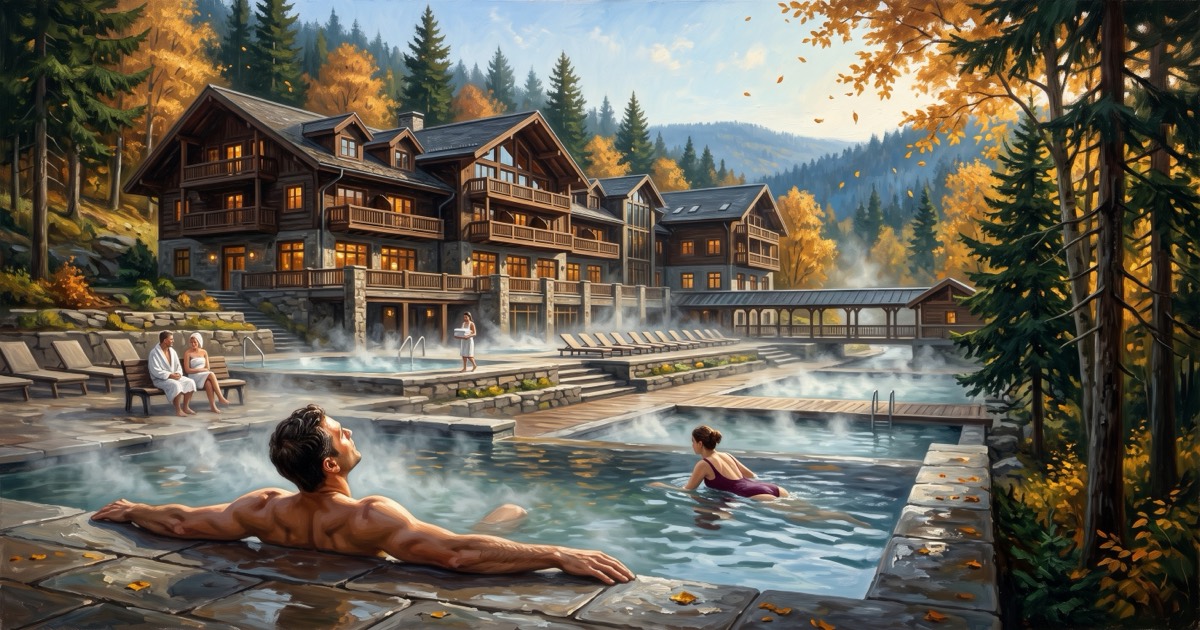
Lanserhof Tegernsee is a medical wellness clinic of around 21,000 square metres above Lake Tegernsee in Bavaria, designed by Christoph Ingenhoven and opened in 2014. It combines the LANS Med Concept, built on Dr FX Mayr's digestive regeneration principles, with diagnostic medicine including imaging and laboratory work. Seventy rooms and suites are designed around light and natural materials. It has held World's Best Medical Spa at the World Spa Awards in every year of that category. Guests come for a structured medical programme of one to three weeks; this is not a property to choose for a holiday.
Setting:
Alpine foothills above Lake Tegernsee, an hour south of Munich, on a large estate. Ingenhoven's architecture forms a low square of clean lines, floor-to-ceiling glass and larch, built to encourage the stillness the programmes depend on. Enzo Enea designed the gardens. Every room faces the Alps. Time spent among trees is associated with lower stress and better sleep, and the design works with that. An adjacent 18-hole golf course, hiking trails and the lake are within reach for guests well enough to use them.
Medical treatments include:
- Diagnostics including imaging, laboratory work and endoscopy
- The FX Mayr digestive programme, supervised by a physician
- Cell training using intermittent altitude simulation
- Whole-body cryotherapy at low temperature
- Genetic analysis, interpreted by specialist physicians
- Intravenous infusion therapies
- INUSpheresis, a blood filtration procedure
Water & Wellness Facilities:
- Heated outdoor pool, open year-round
- Indoor pool in the bathhouse with valley views
- Finnish sauna, sanarium and steam room
- Cold chamber for whole-body cryotherapy
- Kneipp pathway and hydrotherapy stations, in the Bavarian water-cure tradition
- Infrared sauna and relaxation areas
Two cautions on the treatment list. Whole-body cryotherapy is not suitable for everyone: people with cardiovascular conditions or uncontrolled high blood pressure, and those who are pregnant, should not use it, and any facility should screen for this. Intravenous infusion is a medical procedure with real risks and should follow assessment rather than preference. INUSpheresis is a form of therapeutic apheresis; apheresis has established uses in specific diagnosed conditions, but its use for general detoxification or wellbeing is not established, and the evidence base is thin. Ask what a proposed procedure is for, what the result would change, and what the evidence is. A clinic of this standing will answer.
Core programmes:
- Cure Classic, the foundational 7 to 21 night programme combining the Mayr cure with diagnostics and a personalised plan
- Longevity, with genetic analysis, biomarker work and regenerative therapies
- INUSpheresis programme, 5 to 7 nights
- Weight and sports, medically supervised, combining body analysis, nutrition and exercise physiology
- Dermatology, linking internal health to skin treatment
- Burnout recovery, with psychological support and movement therapy
Each includes:
- Initial medical examination and a personalised treatment plan
- Daily consultations with an assigned physician
- Meals calibrated to the therapeutic goal
- Daily group activities including yoga, Pilates, guided hikes and lectures
- Medical cover throughout the stay
Lanserhof is a licensed medical facility and its programmes involve genuine clinical supervision, which distinguishes it from almost every other property in this guide. It is still not a hospital, and it does not treat diagnosed disease in place of your own doctor. Anyone under medical care should continue it and tell their physician what they plan to undertake here. Advanced genetic and epigenetic testing can produce findings that are uncertain or hard to interpret; ask what is being tested and what you would do with the result before agreeing.
Additional activities:
- Daily yoga and Pilates
- Guided mountain hikes, from gentle forest walks to demanding routes
- Nordic walking with instruction
- Cooking classes covering the clinic's nutritional approach
- Weekly lectures on nutrition, sleep and preventive health
- Sound and meditation sessions
- Golf at the adjacent course
- E-bike excursions through the countryside and lakeside villages
- Cross-country skiing and snowshoeing in season
Dining is part of the treatment rather than an amenity beside it. Meals follow FX Mayr principles: a lighter opening phase, then a gradual return to fuller eating, with practices intended to survive the journey home. Portions are deliberate and the experience is closer to a protocol than to a restaurant.
- The core practice: chewing each mouthful thoroughly, eating without distraction, and not drinking during meals
- Local sourcing: seasonal, organic produce from regional Bavarian suppliers
- Proteins: pasture-raised meat, sustainably sourced fish and plant proteins
- Individualisation: meal plans set by physicians from diagnostic findings, with no single menu applying to every guest
- Supplementary options: a daily addition for guests who need more substantial meals than the fasting phase provides
Dining atmosphere:
The restaurant looks out over the Tegernsee valley and the Alps, with individual and communal tables. Guests frequently report that the enforced mindfulness of eating here (the deliberate chewing, the absence of phones, the attention to each mouthful) changes their relationship with food more durably than the diet itself. That is a plausible and modest claim, and a better reason to come than any single treatment. Note that terms such as alkaline nutrition and detoxification are used widely in this field: the underlying pattern of light, vegetable-led eating is sensible, but food does not alter the body's pH, and the liver and kidneys handle detoxification continuously.
Accommodations:
- 70 rooms and suites, from around 40 to 250 square metres, in light and natural materials
- Floor-to-ceiling windows and private balconies or terraces, facing the mountains or valley
- Larger suites with separate sitting areas
- A pavilion suite with private gym, kitchen, steam shower and sauna
- Rooms can be switched to reduce electrical fields in sleeping areas
- Specialist sleep technology in selected rooms
On the electrical-field switching: sensitivity to everyday electromagnetic fields is not an established medical condition, and studies have not found that people can detect exposure. The switch is offered as a preference rather than a treatment. If it helps you sleep, that is a reasonable enough basis for using it.
Service & Medical Team:
The depth of medical staffing is what distinguishes Lanserhof. Resident physicians across general medicine, cardiology, gastroenterology, orthopaedics and dermatology work alongside therapists, nutritionists, sports scientists and psychologists, and each guest is assigned a physician who follows them through the stay. Many guests return annually and stay in contact with their medical team between visits, which says more about the model than any single treatment does. The atmosphere balances precision with warmth, and staff remember returning guests' histories.
Estimated Pricing & Value:
- Cure Classic, 7 nights: from around €8,000, excluding accommodation
- Longevity, 7 to 14 nights: from around €6,500-10,400, excluding accommodation
- INUSpheresis programme: pricing varies with the protocol
- Accommodation: around €400-1,000+ per night by room category and season
- Combined weekly packages: typically €8,000-15,000+
Programme prices exclude accommodation, so the real cost of a week is both figures combined. Additional diagnostics and specialised treatments are billed separately. Prices are indicative; confirm current rates directly.
Included in Programmes:
Initial medical examination, personalised diagnostic and treatment plan, daily physician consultations, medical cover throughout, daily group activities including yoga, Pilates, guided hikes, lectures and cooking classes, and use of the bathhouse including pools, saunas, cryotherapy, Kneipp treatments and movement therapies. Meals follow the prescribed protocol. Additional diagnostics and specialised treatments are billed separately.
FAQ:
What makes Lanserhof different from a luxury wellness resort?
It operates as a medical clinic first. Where most wellness destinations offer spa treatments with an optional consultation, Lanserhof requires a medical examination on arrival, assigns each guest a physician, and treats the whole stay as one therapeutic intervention. The diagnostic capability is of a kind usually found in hospitals rather than hotels. Guests do not come here to relax, and the property is upfront about that: the food is restricted, the schedule is medical, and the building is deliberately quiet. If you want a spa holiday, this is the wrong choice, and several properties elsewhere in this guide would serve you better.
What is the FX Mayr cure, and does the science hold up?
Dr Franz Xaver Mayr, an Austrian physician, developed his principles in the early twentieth century from the view that intestinal health underlies much chronic illness. The cure rests on rest, cleansing and retraining how you eat: thorough chewing, unhurried meals, no liquids during eating. Some of Mayr's intuitions have aged better than others: contemporary microbiome research has given the general connection between gut health, immunity and mood a firmer footing, while specific claims about intestinal cleansing have not been borne out. What a week here reliably delivers is a light, regular diet, no alcohol, proper sleep, daily movement and medical attention, which is a sufficient explanation for feeling substantially better, and requires no additional mechanism.
Who is it for, and is it worth the money?
It suits people seeking a genuine change in health rather than a break: those experiencing burnout or declining energy, people with chronic digestive or inflammatory complaints wanting thorough investigation, and those committed to prevention. The cost, typically €8,000-15,000+ for a foundational week, reflects the medical staffing and diagnostics. Whether that is worthwhile depends on the comparison: as a holiday it is expensive and austere; as a comprehensive medical work-up with two weeks of supervised implementation, it is priced more conventionally than it first appears. Anyone with an existing medical condition should discuss the programme with their own physician before booking.
This is where the Lanserhof group's headline awards actually belong. World's Best Medical Spa is awarded to Tegernsee specifically: the awarding body and the group's own press releases both name the property. Elsewhere in this guide those wins are deliberately not attributed to Lanserhof Lans in Austria, because they are not its.
The run is unbroken. The World Spa Awards' own winners list names Tegernsee as World's Best Medical Spa in every year from 2015 to 2026. Lanserhof's releases have counted the run in different ways over the years ("for the third time in a row", "for the fifth year in a row", "for the 8th time in a row"); the awarding body's list is the one used here.
On the founding date: one Lanserhof release dates the group's first property to 1974, but the group's own history page and the World Spa Awards citation both give 1984 in Lans, which is the date used here.
And a common error worth correcting: at least one wellness guide describes Tegernsee as "the original Lanserhof flagship". It is not. Lans, in Austria, is the original; Tegernsee opened in 2014 and is the largest.
The World Spa Awards are decided by industry and public voting rather than inspection. Sustained wins indicate standing among peers; they are not an assessment of clinical outcomes, and Lanserhof publishes none. The genuine distinction here is that this is a licensed medical facility with real physician supervision, which separates it from almost every other property in this guide, and needs no trophy to establish.
Also featured in: IV Drips