Taiwan Wellness Resorts: Hot Springs, Mud Springs & Onsen Hotels

Taiwan holds some of the world's rarest spring types on one island, and this page reaches them through properties you can actually book. Guanziling is Taiwan's only mud hot spring, its water grey and opaque but still liquid rather than the thick mud people expect. Jiaoxi is the only flatland spring in the country, rising inside the town itself, where the farmers' association grows vegetables with it. Guguan's springs were found by the Tayal in 1907 and developed under Japanese rule; Wulai sits in Atayal country an hour from Taipei; Zhiben anchors the east coast; and Beitou holds three stars in the MICHELIN Green Guide. The bathing culture is Japanese in origin, built during the colonial period from 1895. None of these runs a fixed residential programme, so Taiwan's wellness offering is bathing culture rather than clinical — and the conventions differ sharply between them, from nude gender-separated halls to mixed pools requiring a swimsuit and cap, which this page sets out plainly rather than leaving you to discover on arrival.

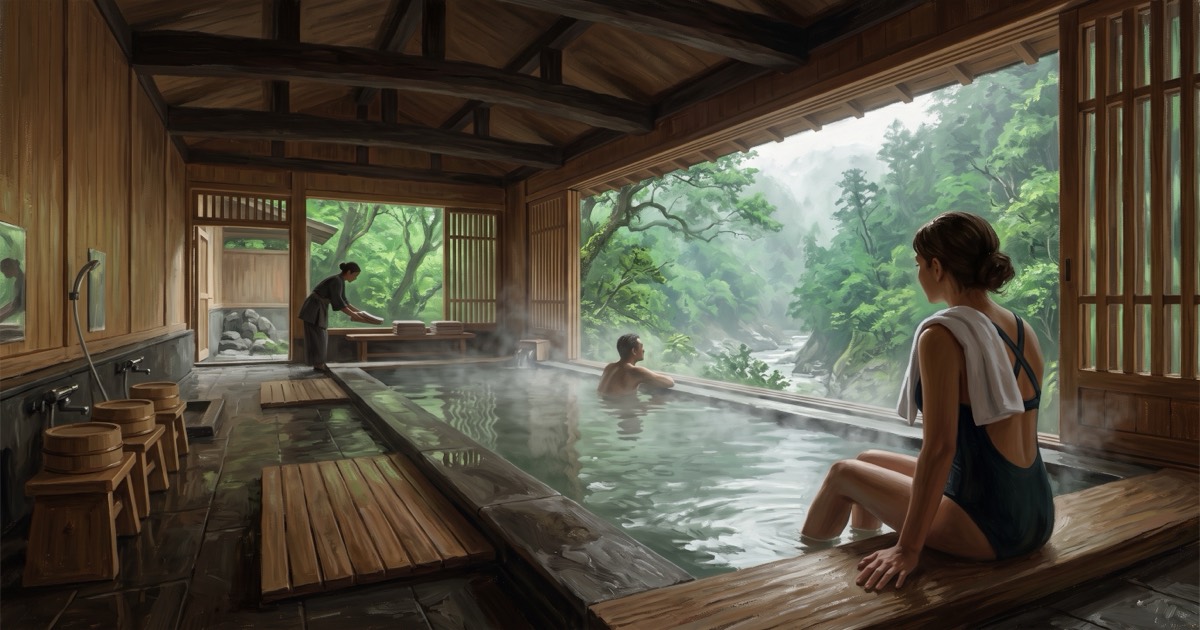
Cypress bath hall at a Guguan hot spring resort, open to the forested gorge, Taiwan

Taiwan Apex 6 Wellness Resorts 2026 - Comparison at a Glance

ResortLocationTypeStayPrice RangeBest SeasonSignature ExperienceWellness Focus
Radium KagayaBeitou, TaipeiA La CarteFlexible$$$Oct-AprA private stone bath in Japanese sukiya styleJapanese onsen tradition
King's Garden VillaBaihe, TainanA La CarteFlexible$$Oct-AprBathing in grey mineral mud, around 30 poolsTaiwan's only mud spring
Wellspring by SilksJiaoxi, YilanA La CarteFlexible$$$Oct-MarA private hot spring bath in every roomTaiwan's only flatland spring
Hotel Royal ChihpenZhiben, TaitungA La CarteFlexible$$Oct-AprThree bath houses, twelve pools between themForest setting, sodium bicarbonate spring
Volando Urai Spring Spa & ResortWulai, New TaipeiA La CarteFlexible$$$$Oct-AprA river-facing bath in every room, above the NanshiRelais & Châteaux, 23 rooms
HOSHINOYA GuguanGuguan, TaichungA La CarteFlexible$$$$Oct-AprA whole floor given over to the bath in most roomsVolcanic sulphur bathing
What Cannot Be Bathed In

Photographs of steaming ground are not invitations.

On Radioactivity and Mineral Claims

Beitou is famous for hokutolite, a rare radium-bearing mineral, and Guanziling's fame dates from the identification of trace radium in 1898. That is geology, and exposure while bathing is negligible. What this guide will not do is present it as therapeutic, because it is not.

Sodium bicarbonate springs are marketed across Taiwan as beauty soup, said to beautify the skin. Alkaline water leaves skin feeling smooth, and that is the honest description. Minerals are not absorbed through the skin, and no bathing water treats disease.

Two Histories This Page States Plainly

Taiwan's visible bathing culture was built during the Japanese colonial period from 1895. Tenguan opened in Beitou in 1896 as Taiwan's first hot-spring hotel, and the Beitou Hot Spring Museum, completed in 1913, was the largest bathhouse in East Asia at the time. The place name Beitou itself comes from the Ketagalan, the plains Indigenous people who lived there before.

Wulai sits on a hot-spring street, so White Terror Memorial, a former political prison where thousands were held under martial law. Where it appears in coverage of the island it should be described as a memorial, never as scenery.

Best Taiwan Wellness Resorts - Top 6 Currently

Radium Kagaya International Hotel, Beitou

A joint venture with Kagaya, a century-old Japanese hot-spring inn, beside the site of Taiwan's first
Summary

A joint venture between Taiwan's Radium Group and Kagaya, a century-old Japanese hot-spring inn. That is the genuine Japanese connection. The word Radium in the name needs unpacking, because it is neither meaningless nor a health claim. Beitou's geology really does contain radium: hokutolite, a lead-bearing barite discovered in Beitou Creek in the mid-1900s, is mildly radioactive and is found in only two places on earth — here and Tamagawa Onsen in Akita, Japan. It is the only mineral named after a place in Taiwan, and the creek is now a protected reserve; in Japan collecting it is illegal. So the naming reflects real local geology. What does not follow is the therapeutic claim often attached to it. Assertions that radium springs renew cells or boost immunity are not established, the background radiation here is measurably higher than elsewhere in Taiwan, and this guide neither repeats the health claim nor treats normal bathing as a hazard.

Opened 2010, with 90 guestrooms across seven room types. The exterior follows Japanese sukiya style, and a fourteen-storey atrium of shoji-screened walls and pinewood corridors runs through the building, with a glass lift giving a vertical view that guests consistently single out.

Experience & Bathing

Setting: Opposite Beitou Park in northern Taipei, near the Beitou Public Library and the Hot Spring Museum, a converted Japanese-era bathhouse which on completion in 1913 was the largest in East Asia. Xinbeitou MRT is a short walk. Beitou's springs were brought to wider attention by a German sulphur trader in 1893 and developed as a leisure district under Japanese rule from 1895. The district's source is Thermal Valley, a steaming headspring of a few thousand square metres running between roughly 80 and 100 degrees — the hottest water in the Datun volcanic group — known in the colonial period as Hell Valley and counted among the twelve great sights of Taiwan.

What is offered
  • Private in-room stone baths fed with Beitou thermal water
  • Public bathing areas in the Japanese manner
  • A seventh-floor stone sauna, by appointment only
  • Three venues: Tenshou restaurant, Hiyori lounge and cafe, and the 22-seat Yuduki bar
  • Free area and airport shuttles; pets prohibited except guide dogs

It stands beside the site of Tenguan, which opened in 1896 as Taiwan's first hot-spring hotel. Its ruins survive as a small historic park next door. Beside, not built upon, and the property's own guide says so.

Beitou has three spring types: white sulphur, green sulphur and iron sulphur. This hotel's baths are white sulphur, typically 41 to 42 degrees at pH 2.5 to 6.5. The green sulphur springs elsewhere in Beitou run at pH 1 to 2, highly acidic, and are restricted for guests with sensitive skin and children aged twelve and under.
Coverage states the white sulphur water alleviates chronic skin disease, arthritis and gynaecological conditions. That is not established. Warm sulphurous bathing eases muscular tension through heat and buoyancy, which is enough.
Programmes & Activities
  • Beitou Hot Spring Museum, the 1913 bathhouse
  • Beitou Public Library, one of the most admired green buildings in Taiwan
  • Tenguan Historic Site Park, next door
  • Ketagalan Culture Museum, within a kilometre, which connects to the origin of the place name
  • Thermal Valley, viewable but not enterable at 80 to 100 degrees
  • Guguan Temple and the Shaolai Suspension Bridge, both a short walk
Dining Experience

Japanese kaiseki-influenced dining is the strength, in keeping with the Kagaya partnership.

  • Tenshou, the main restaurant
  • Hiyori lounge and cafe
  • Yuduki, a 22-seat bar
  • Taipei's night markets are 20 minutes away by MRT
Accommodations & Service

Ninety guestrooms across seven room types, ranging roughly 13 to 32 square metres, most with private thermal baths. Service follows the Japanese ryokan model, with attentive room-based hospitality. Day sessions are available for non-residents.

Pricing & FAQ
Estimated pricing
  • From around NT$8,000 to 20,000 per night, rates observed 2026
  • The stone sauna is around NT$5,600 plus service, by appointment
Does the name mean the water is radioactive?

The name refers to the Radium Group and to Beitou's geology, which includes hokutolite, a rare radium-bearing mineral found in very few places. Exposure while bathing is negligible. This guide does not present radioactivity as a therapeutic feature anywhere, and Beitou is no exception.

Is it really connected to Japan?

Yes, and that is the interesting part. It is a joint venture with Kagaya, a Japanese hot-spring inn over a century old, and the sukiya architecture and service model follow from that. It also stands beside the ruins of Tenguan, Taiwan's first hot-spring hotel, which opened in 1896.

King's Garden Villa, Guanziling

A long-established villa resort on Taiwan's only mud hot spring
Summary

The only mud hot spring in Taiwan, and named alongside Kagoshima in Japan and Sicily in Italy as one of the world's foremost mud baths. Weak alkaline carbonate sulphur mud, around 75 degrees at source and cooled for bathing.

The water is opaque and grey, warmer and heavier than ordinary thermal water. The sensation is genuinely different, and there are very few places on Earth to experience it. The comparison with Kagoshima and Sicily is one Taiwanese tourism bodies make routinely; treat it as a widely repeated claim rather than a formal ranking, though the underlying rarity is real. Guanziling was named Taiwan's number one hot spring in 1920 and is counted among the country's four great hot spring areas alongside Beitou, Yangmingshan and Sichongxi. Prince Nobuhito, brother of Emperor Hirohito, came to bathe here in 1932, which is roughly when the village took its present shape.

Experience & Bathing

Setting: No. 56 Guanziling, Baihe district in the hills of Tainan, at around 270 metres on the slopes of Zhentou Mountain within the Siraya National Scenic Area. Closer to Chiayi than to Tainan city — roughly 15km against 40 — usually reached by rail to Chiayi or Houbi and then a local bus up the switchbacks, or about 20 minutes by car from Chiayi airport. The area was Pingpu, or Siraya, land until 1898, when Japanese soldiers stationed nearby came upon the spring; the scenic area still carries the Siraya name. The resort is a scatter of low wooden cabins and villas through gardens rather than a single block, which is why guests describe it as a village. Red Leaf Park is a ten-minute walk and the Water Fire Cave 1.5km away.

What is offered
  • Mud bathing in public and hotel facilities across the village
  • The Water and Fire Cave, where methane has burned above spring water for some three hundred years, listed among Taiwan's seven natural wonders
  • Modest hotels and guesthouses along the Old Street, several keeping their Japanese-era facades, most with their own mud baths. The village speciality is roast barrel chicken, cooked over wood fire, and the smell of it carries through the valley. Taiwan's first miniature golf course, laid out by the Japanese in 1932, is still here rather than luxury properties, which this page states plainly
The mud is for soaking only and must not be drunk. Guanziling's fame dates from 1898, when trace radium was identified in the spring. That is geology, not therapy, and it is not presented here as a benefit.
Taiwanese government tourism material has described the water as killing germs. That claim is not supported and is not repeated here. Warm mud bathing is soothing, exfoliating and unusual, which is reason enough.
Programmes & Activities
  • Mud bathing, the reason to come
  • The Water and Fire Cave, best seen after dark
  • Hongye Park and the surrounding hill walks
  • Tainan city, around an hour, Taiwan's oldest city and its former capital
  • Temples and old streets throughout the Baihe district
The mountain was home to the Pingpu people until 1898, when Japanese soldiers developed the spring. The sequence is stated here rather than skipped.
Dining Experience

Local Taiwanese cooking in the village, and Tainan an hour away is widely regarded as the best food city in Taiwan.

  • Village restaurants and guesthouse meals
  • Baihe is known for lotus, in season
  • Tainan for danzai noodles, coffin bread and milkfish
Accommodation

Modest hotels and guesthouses in the village, most with their own mud baths. This is not a luxury destination and the page does not pretend otherwise, typically NT$2,000 to 5,000 a night. The spring is the attraction; the accommodation is functional.

Pricing & FAQ
Estimated pricing
  • Public bathing entry is inexpensive; village accommodation NT$2,000 to 5,000 per night, rates observed 2026
What is a mud spring like?

Opaque, grey, and noticeably heavier and warmer than water — though it stays liquid and is not the thick mud a spa wrap might suggest, which surprises people. Guanziling's is weak alkaline carbonate sulphur mud, around 75 degrees at source and cooled for bathing. It coats the skin and rinses off leaving it smooth. The spa building here runs to some 2,650 square metres with around thirty separate pools, the largest facility in the village: mineral mud-rock baths, herbal and essential-oil baths, jet and bubble pools, sauna and steam. The mixed-sex pools require a swimsuit and a swimming cap, both sold on site, and this catches out almost every foreign visitor; smaller gender-separated nude sections exist, and private rooms can be rented by the hour. One caution: the spa also offers doctor-fish pedicures, which are banned in several US states and restricted elsewhere on hygiene grounds, since the tanks cannot be sterilised between users.

Is the Water and Fire Cave worth it?

Yes, and it is genuinely strange. Methane escaping from the rock has burned continuously above flowing spring water for around three hundred years, so flame and water occupy the same spot. It is listed among Taiwan's seven natural wonders and is best seen after dark.

Wellspring by Silks, Jiaoxi

A design hotel on Taiwan's only flatland spring, with a private hot spring in every room
Summary

The only flatland hot spring in Taiwan, confirmed by the national tourism administration. Most Taiwanese springs rise in mountains; Jiaoxi's rise within the town, at the foot of a hill behind Fuchung Temple in Deyang Village. Wellspring by Silks sits in the middle of that, on Wenquan Road — literally Spa Road — a three to five minute walk from Jiaoxi station.

The water is alkaline, crystal-clear and odourless, containing potassium chloride, sodium sulphide and potassium hydrogen carbonate, and it carries no sulphur smell at all. That clarity is unusual and is why Jiaoxi feels civic rather than resort-enclosed. One consequence of the water being this abundant and this clean: the local farmers' association has developed hot-spring-irrigated vegetables, drinking water and aquaculture, so the spring underpins the town's agriculture as well as its tourism. The hotel's restaurant closes that loop — Mihan Jiaoxi, an offshoot of Mihan Honke at Regent Taipei, builds its hot pot on Yilan seafood and those same hot-spring vegetables.

Experience & Bathing

Setting: Wenquan Road — Spa Road — in Jiaoxi, Yilan county on Taiwan's north-east coast, three to five minutes on foot from Jiaoxi station and around 40 minutes from Taipei through the Hsuehshan Tunnel. The springs are in the middle of a working town of about 35,000 people and the water emerges at roughly 50 degrees. The area was Kavalan and Atayal land for centuries before Han settlers led by Wu Sha began clearing it in 1796; the town grew around the springs from simple bathing enclosures, through the Japanese colonial bathhouses and inns, to its present designation as a Special Hot Spring Tourism Zone. The hotel is the first boutique hot-spring property from the Silks group, which also runs Regent Taipei, and it won the 2017 Red Dot Award for interior design — the work of JAHAA Design, who used Kavalan banana-leaf lanterns in the lobby, Nan'ao shale underfoot and Yilan's butterfly orchids as ceramic wall pieces.

What is offered
  • A private hot spring bath in every room, and a rooftop open-air pool, free and used by residents
  • Two remaining public bathhouses, with the town otherwise dominated by hotels
  • Tangwei Hot Spring, famous since the Qing dynasty and listed among the Eight Scenes of the Lanyang Area
  • Published accessibility provision: wheelchair rental, accessible parking and accessible toilets

The detail that should lead this entry: the Jiaoxi Farmers' Association has developed hot-spring vegetables, hot-spring drinking water and hot-spring aquaculture, using the resource to support local agriculture rather than only tourism. That is genuinely unusual.

Sodium bicarbonate springs are marketed across Taiwan as beauty soup. Alkaline water leaves skin feeling smooth, and that is the accurate description. Cosmetic-effect claims are not carried here.
Programmes & Activities
  • The rooftop boundless pool and the free public foot baths in the park, which are the most sociable bathing on this page
  • Wufengqi Waterfall, a short walk from town
  • Su'ao Cold Spring, around 40 minutes, a rare carbonated cold spring
  • Yilan's night markets and the Lanyang Museum
  • Guishan Island whale watching, seasonally, from Wushi Harbour
Dining Experience

Yilan has a strong regional food identity, and Jiaoxi's spring-grown vegetables appear on local menus.

  • Hot-spring vegetables, grown using the spring water
  • Yilan scallion pancakes and duck
  • Night market food in Yilan city, 20 minutes away
Accommodation

The town is dominated by hot-spring hotels, from simple guesthouses to large resorts, most with private in-room baths. Only two public bathhouses remain, which is worth knowing if the civic bathing experience is what you came for. Typically NT$2,500 to 8,000 a night.

Pricing & FAQ
Estimated pricing
  • Public foot baths are free; bathhouse entry is inexpensive; hotels NT$2,500 to 8,000 per night, rates observed 2026
Why does flatland matter?

Because it changes what the place feels like. Taiwan's springs almost all rise in mountains, reached by winding roads and enclosed in resorts. Jiaoxi's rise in the middle of a town, so the bathing is woven into ordinary life — people stop at the free public foot baths in the park, 370 metres from this hotel, on the way home. Staying here you get both: a private spring in your room and a working spa town outside the door, reachable from Taipei by train without a car or a transfer.

Is it easy from Taipei?

Very. Around 40 minutes by bus or car through the Hsuehshan Tunnel, which makes it the most accessible entry on this page and a genuine day trip from the capital.

Hotel Royal Chihpen, Zhiben

The only iron-barium carbonate spring in Taiwan, and the rust-orange colour proves it
Summary

The only iron-barium carbonate spring in Taiwan. The water emerges clear and oxidises to a rust-orange turbidity, staining the pools and the surrounding stone — the local name for the film that forms on the surface is hot spring flower. It is slightly salty and unmistakable. The Japanese opened the springs in 1917 and called this the golden spring; the Tekisuikaku, a wooden Japanese-style hotel with a public bathhouse attached, was among the most prestigious in Taiwan at the time, and Japanese visitors still come specifically for this water. Local tradition holds that couples bathing here are more likely to conceive a son, which earned it a nickname to match. That is folklore rather than physiology, and the entry records it as such.

Documented by the Zhiben National Forest Recreation Area, a government body. The valley runs between the Central Mountain Range and the Coastal Range, and is among the most attractive landscapes in Taiwan.

Experience & Bathing

Setting: No. 23, Lane 113, Longquan Road, Beinan Township, Taitung county, in the Zhiben River valley about 15km southwest of Taitung city. The hotel sits on a mountainside plateau in forest, invisible from the hot-spring strip below, beside the Zhiben National Forest Recreation Area. Taitung county's own tourism board calls it East Taiwan's first international hot-spring resort. Zhiben is Taitung's largest spring village and among the largest in Taiwan by water output, and it is one of only three Taiwanese spring areas that sustain star-rated hotels — the other two, Beitou and Jiaoxi, are also on this page. One honest note about the setting: Zhiben has been hit by typhoons repeatedly, and the commercial strip that once ran below was damaged and never fully rebuilt. The quiet is real, but it is the quiet of a place that lost something, not of somewhere undeveloped.

What is offered
  • Iron-rich carbonate bathing, the rust-orange water unique in Taiwan
  • Hotel and public bathing facilities across the township
  • Antong Hot Springs nearby, a separate sulphate chloride spring
  • River rafting on the Xiuguluan, the valley's main activity
Check current access before travelling. The April 2024 earthquake affected parts of Hualien county, and conditions on some routes and at some facilities have changed. Confirm with the scenic area administration or your accommodation.
Antong's marketing has claimed its water cures diseases. It does not, and this guide does not repeat it. A local legend attaches fertility properties to Shengnan Onsen; that is folklore, stated as folklore, and there is no evidence for it.
Programmes & Activities
  • Xiuguluan River rafting, the best-known activity in the valley
  • Zhiben National Forest Recreation Area and the valley's dairy and tea farms
  • Tropic of Cancer marker, just north of the township
  • The Taitung coast and the Zhiben River valley, which is flat, quiet and exceptional
  • Amis and other Indigenous communities throughout the valley, whose land this is
Dining Experience

Valley produce is the strength: rice, tea, dairy and pomelo. Hotel dining is the norm, with limited alternatives after dark.

  • Sailfish from Chenggong in season, September to February
  • Hualien mochi and valley-grown rice
  • Indigenous Amis cooking where available, which is worth seeking out
Accommodation

Hot-spring hotels and guesthouses across the township, most with private or public iron-rich baths. Standards are modest to mid-range rather than luxury, typically NT$2,500 to 6,000 a night. Confirm current operating status given post-earthquake conditions.

Pricing & FAQ
Estimated pricing
  • Accommodation from around NT$2,500 to 6,000 per night, rates observed 2026
Why is the water orange?

Dissolved iron. The water rises clear and oxidises on contact with air, turning rust-orange and leaving mineral staining on the stone. Combined with barium and carbonate content it makes this the only spring of its type in Taiwan, and the colour is the visible proof rather than a marketing description.

Is it affected by the earthquake?

Eastern Taiwan was affected by the April 2024 earthquake and by repeated typhoons, and Zhiben in particular has seen its commercial strip damaged over the years and never fully rebuilt. Conditions on some routes and at some facilities have changed, so confirm current access with the property directly before travelling.

Volando Urai Spring Spa & Resort, Wulai

A Relais & Châteaux hot-spring resort cantilevered above a river gorge
Summary

A Relais & Châteaux member since 2013 and listed in the MICHELIN Guide: twenty-three rooms on a wooded bend of the Nanshi River, an hour from central Taipei. Relais & Châteaux judges on cuisine as much as rooms, and the kitchen — ABU Authentic Cuisine, with a second restaurant, Volando Soyan — is a large part of why the membership stands.

A private hot spring bath in every room, fed by Wulai's carbonate springs and set behind floor-to-ceiling glass over the water, so the whole bathing experience can be had privately. The public bathhouse adds hot and cold spring pools, a hydrotherapy pool, sauna and steam, facing the river through an open frontage. Rooms are ryokan-like in feel, with L'Occitane amenities and a balcony above the gorge on every one.

Experience & Bathing

Setting: No. 176, Section 5, Xinwu Road, Wulai District, New Taipei City — about 20 kilometres and an hour from central Taipei, or an hour and a half from Taoyuan airport. A free scheduled shuttle runs to and from Xindian MRT, which makes it reachable without a car. Wulai is Atayal territory and the name is Atayal; the same people found the Guguan springs elsewhere on this page in 1907. The property sits directly above the Nanshi River in the forested Wulai mountains, with Neidong Forest Park and the Lansheng Bridge adjacent, and Wulai Old Street a ten to fifteen minute walk downhill.

What is offered
  • A private hot spring bath in every room, above the river
  • A spa pool and changing facilities. Posted etiquette asks bathers to wash before entering, not to scrub or use soap in the pools, and to limit each soak to about fifteen minutes — sensible given the source temperature and changing facilities
  • The riverside setting, and the sound work the resort has built around it: a valley echo ritual, crystal bowls and gongs, and meditative performances beside the water. Morning tai chi is offered with an in-house practitioner. There are guided walks to local waterfalls, and Wulai Old Street is a short walk for Atayal food and market stalls, which is when to go
The source runs at 60 to 70 degrees, well above bathing temperature. The pools are cooled, and the source is not enterable. Standard thermal cautions apply: limit sessions, come out to cool, hydrate.
expect some road noise; the resort is in the middle of a working village rather than isolated. Rooms are smaller than the price suggests, more than one guest has said so, and English is limited beyond a few staff. Facilities do occasionally go offline for maintenance, so ask what is running before booking.
Programmes & Activities
  • Bathing at sunrise, the reason the site exists
  • Snorkelling and diving, with some of the best coral in Taiwanese waters
  • The White Terror Memorial Park, a former political prison and a serious historical site
  • Circling the island by scooter, which takes under an hour
  • Sleeping Beauty Rock and the island's volcanic coastline
Dining Experience

Small island cooking, seafood-led, with limited choice. Nanliao village has most of the restaurants.

  • Fresh seafood from the surrounding waters
  • Guesthouse breakfasts and simple Taiwanese dishes
  • Options thin out considerably outside peak season
Accommodation

Every room has its own hot-spring bath over the river, so the public bathhouse is optional. Stay in the resort itself; Wulai village is a short walk, in guesthouses and small B and Bs, typically NT$1,500 to 4,000 a night. Reaching the island requires a ferry or short flight from Taitung, and ferries are weather-dependent with cancellations common, so allow slack in the itinerary.

Pricing & FAQ
Estimated pricing
  • Bathing entry is inexpensive; island guesthouses NT$1,500 to 4,000 per night, rates observed 2026
What is the bathhouse like, and what should I know first?

Because it is the only Relais & Châteaux property in Taiwan's hot-spring country, and because the setting is genuinely rare: twenty-three rooms cantilevered over a river gorge in Atayal territory, an hour from a capital city, with a private spring in every one. The trade-off is scale rather than quality — this is a small property on a village street, not an isolated estate, and it is priced as a Relais & Châteaux member.

How hard is it to reach?

Harder than anything else on this page, and that is part of it. Ferry or short flight from Taitung, and ferries are weather-dependent with cancellations common. Build slack into the plan and do not schedule a tight onward connection. The island is small and fills in summer, so book ahead.

HOSHINOYA Guguan, Taichung

The first HOSHINOYA hot-spring resort outside Japan, in a mountain valley
Summary

Within The Guguan Seven Heroes hiking trails, a hot-spring valley in the mountains east of Taichung. The Dajia River runs below the property, the Central Range rises on all sides, and the resort sits on a plateau above the village with a view over both.

Documented by the Longgu Waterfall and the Dajia River valley, a government body. Known during the Japanese colonial period as Caoshan, and one of Taiwan's four historic hot-spring areas.

Experience & Bathing

Setting: Guguan, in the mountains of Heping District east of Taichung, in a valley carved by the Dajia River as it falls from the 3,800-metre peak of Xueshan. Two and a half hours from Taipei, or about 90 minutes from Taichung, with a chauffeur pickup available from Taichung Station or the airport if requested three days ahead. The springs were found by the Tayal people, whose land this is, in 1907, and were developed under Japanese rule as a retreat for visiting officials and royalty. The water is a soft, low-alkaline sodium bicarbonate spring, colourless and locally called beauty soup for its effect on the skin — a traditional description rather than a clinical finding, and worth reading as such. HOSHINOYA is Hoshino Resorts' luxury brand; this is its first hot-spring property outside Japan, and its only Taiwanese one.

What is offered
  • Developed bathhouses drawing on the volcanic geology, both public and hotel
  • Forty-nine rooms, most of them maisonettes that give an entire floor over to the bathing area, ventilated by windows at both ends. Every room has a continuously supplied hot spring bath, which is the point of the place. Two public bath halls beyond that: indoor baths lined in Japanese cypress, deep enough to sit in fully, and outdoor baths laid out in zigzags that follow the shape of the ground. There is a spa treating guests in a traditional Japanese room behind shoji screens, an outdoor pool, morning forest bathing, yoga, Taiwanese tea sessions and a dessert hour at the Yuagari Lounge. Two restaurants and three lounges. Check-in is 3pm, check-out midday; pets are not accepted and the property is smoke-free apart from a designated area, with the green considerably more acidic
  • Hiking across the park, including the Guguan Seven Heroes, a set of demanding peaks above the valley. Shorter walks lead to the Shaolai Suspension Bridge and Longgu Waterfall; the resort runs guided morning forest bathing for those who would rather not climb
  • Strong seasonality worth planning around: plum blossom in late winter, then cherry blossom, calla lilies and azaleas from February to May, hydrangeas at Zhuzihu peaking in June, and silver grass turning the Qingtiangang meadows pale gold in autumn
Stated first because it is what surprises people: the two public bath halls are gender-separated and bathed in nude, in the Japanese manner. Swimwear is not worn. Every room has its own hot spring bath, so the public halls can be skipped entirely, and during maintenance they may run on alternating hours for men and women rather than both being open.
Green sulphur springs in this geology run at pH 1 to 2, highly acidic. Facilities restrict them for guests with sensitive skin and for children aged twelve and under. Ask which spring type a bathhouse uses before booking.
Programmes & Activities
  • The cypress-lined indoor baths, viewed from the marked boardwalks
  • Qixing Mountain, a half-day hike to the highest point
  • Public and hotel bathhouses throughout the park area
  • Zhuzihu calla lily and hydrangea fields, seasonally
  • Beitou, downhill, for the museum and the older bathing quarter
Dining Experience

Mountain restaurants throughout the park, many serving Taiwanese country cooking, and the whole of Taipei forty minutes away.

  • Sturgeon stew, the dish Guguan is known for, eaten in the village after a soak
  • Tea houses with views over the city
  • Taipei's restaurants and night markets, a short drive down
Accommodation

Hot-spring hotels and guesthouses across the park's fringes, from simple to high-end, typically NT$3,000 to 12,000 a night. Many visitors stay in Taipei and come up for the day, which works perfectly well given the distance.

Pricing & FAQ
Estimated pricing
  • Public bathhouse entry is inexpensive; hotels NT$3,000 to 12,000 per night, rates observed 2026
  • National park entry is free
Do I have to bathe naked?

Only if you use the public bath halls, which are gender-separated and nude in the Japanese manner. Every room here has its own continuously supplied hot spring bath, so you can have the whole experience privately and never enter them. This is the opposite arrangement to Guanziling elsewhere on this page, where the mixed pools require a swimsuit and a swimming cap.

Is it safe to have an active volcano next to a capital?

The valley is reached by mountain road and the drive from Taipei is two and a half hours, so this is a place to settle into rather than pass through. A chauffeur pickup from Taichung Station or the airport can be arranged with three days' notice, and there is parking on site with Tesla and Porsche chargers.

Taiwan Wellness Resorts: Unique Selection Data Points

Six bookable properties on some of the rarest spring types anywhere: Guanziling's grey mud, found in only two or three places worldwide, and the mineral waters of Beitou, Jiaoxi, Guguan, Wulai and Zhiben. Three of the six are the only star-rated hot-spring areas Taiwan sustains. One is the first HOSHINOYA hot-spring resort outside Japan; one is a Relais & Châteaux member; one won a Red Dot award for its interior. A local farmers' association uses its spring for vegetables, drinking water and aquaculture rather than only for bathing. And the bathing conventions genuinely differ between them, which is set out plainly rather than left to be discovered on arrival.

Frequently Asked Questions: Taiwan Wellness Resorts

Where does Taiwan's hot-spring culture come from?

Indigenous peoples used the springs long before, but the bathing culture visible today was built during the Japanese colonial period from 1895. Tenguan opened in Beitou in 1896 as Taiwan's first hot-spring hotel, and the Beitou Hot Spring Museum, completed in 1913, was the largest bathhouse in East Asia at the time. Four springs were developed as the majors: Beitou, Yangmingshan, Guanziling and Sichongxi. The place name Beitou itself comes from the Ketagalan, the plains Indigenous people who lived there.

What is a mud spring like?

Opaque, grey, and warmer and heavier than water. Guanziling's is weakly alkaline carbonate sulphur mud at around 75 degrees at source, cooled for bathing. It is one of very few in the world and the sensation is genuinely different from ordinary thermal bathing. It is for soaking only and must not be drunk. The nearby Water and Fire Cave, where methane has burned above spring water for some three hundred years, is listed among Taiwan's seven natural wonders.

Is radioactivity in Taiwanese springs a problem?

Not for bathing. Beitou is famous for hokutolite, a rare radium-bearing mineral, and Guanziling's fame dates from the identification of trace radium in 1898. That is geology, and exposure while bathing is negligible. What this guide will not do is present it as therapeutic, because it is not, and the same position applies to spa waters in Hungary, Croatia, Poland and Brazil.

What are the bathing conventions, and do I have to be naked?

It varies by property, and this page is deliberately split. HOSHINOYA Guguan and Volando Urai run gender-separated public baths where swimwear is not worn, though both give every room its own spring so the public halls can be skipped. King's Garden Villa at Guanziling is the reverse: its main pools are mixed-sex and require a swimsuit and a swimming cap, both sold on site, with smaller nude sections separate. Wellspring by Silks needs no communal bathing at all. On safety rather than etiquette: Taiwan's fumarole fields and Beitou's Thermal Valley, which runs at 80 to 100 degrees, cannot be entered anywhere. Photographs of steaming ground are not invitations.

Which should I choose?

For Japanese tradition and easy access from Taipei, Radium Kagaya in Beitou. For something you can experience in almost nowhere else, King's Garden Villa on Guanziling's grey mud. For design and the least effort of all, Wellspring by Silks, five minutes' walk from Jiaoxi station and reachable from Taipei by train. For seclusion and the highest craft, HOSHINOYA Guguan in the mountains east of Taichung. For a river gorge an hour from the capital, Volando Urai. For the east coast and forest quiet, Hotel Royal Chihpen. All six are bookable properties with their own hot springs, so the choice is about setting and bathing convention rather than access.