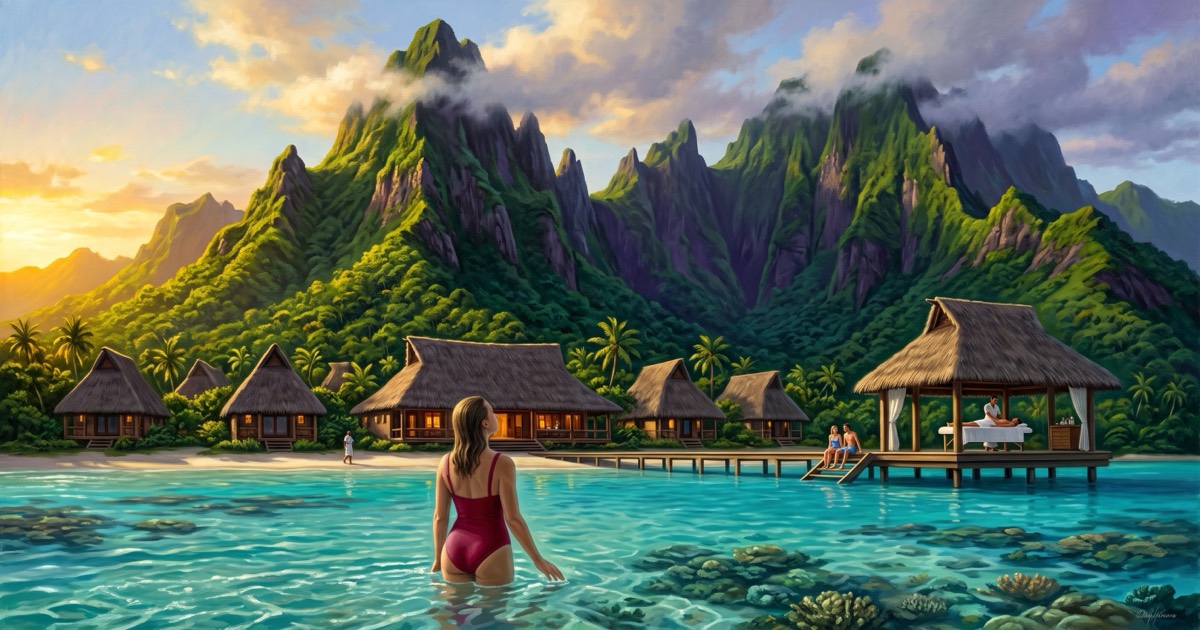
Fiji's wellness case is mostly environmental rather than clinical, and this page says so at the top. Warm ocean year-round, reefs close to shore, clean air and a genuinely unhurried pace, none of which any resort created. Only one property here runs structured wellness programmes; the others are island resorts with good spas, which is a legitimate and often preferable thing to be. What Fiji does hold is the Great Astrolabe, generally ranked the fourth largest barrier reef in the world, rainforest treatment bure among natural pools, and a resort of 22 bures taking around 46 guests across 525 acres. If you are searching for wellness retreats in the residential-programme sense, only Six Senses Fiji qualifies; the rest are wellness resorts where the spa is excellent and the days are yours to shape.

| Resort | Location | Type | Stay | Price Range | Best Season | Signature Experience | Wellness Focus |
|---|---|---|---|---|---|---|---|
| Six Senses Fiji | Malolo, Mamanucas | A La Carte | Flexible | $$$$$ | May-Oct | The only structured programmes in Fiji | Screening, sleep & programmes |
| Kokomo Private Island | Kadavu | A La Carte | Flexible | $$$$$ | May-Oct | The Great Astrolabe Reef on the doorstep | Diving, spa & private island |
| Namale Resort & Spa | Savusavu, Vanua Levu | All-Inclusive | Flexible | $$$$$ | May-Oct | 22 bures, around 46 guests | Clifftop spa, adults-oriented |
| Nanuku Auberge Resort | Pacific Harbour, Viti Levu | A La Carte | Flexible | $$$$ | May-Oct | Beach and jungle fitness where forest meets reef | Active wellness & spa |
| Koro Sun Resort | Savusavu, Vanua Levu | A La Carte | Flexible | $$$ | May-Oct | Open-sided bure among natural pools | Rainforest spa |
| Naveria Heights Lodge | Savusavu, Vanua Levu | All-Inclusive | Flexible | $$ | May-Oct | Hill lodge above the harbour, cooler than coast | Small-scale, hiking |
Fiji's wellness case is mostly environmental rather than clinical. Warm ocean year-round, reefs close to shore, clean air and an unhurried pace, none of which any resort created.
Only one property here runs structured wellness programmes. The others are island resorts with good spas, which is a legitimate and often preferable thing to be, and the page describes them that way rather than inflating them.
Traditional Fijian treatments: ask who practises them. Fiji has genuine bodywork and healing traditions, and some resorts work with practitioners from those traditions while others use the vocabulary for treatments developed in-house. Neither is wrong, but they are different things. If cultural authenticity matters to you, ask directly.
On Malolo in the Mamanucas, about half an hour by boat from Denarau, and the most programme-led property in Fiji. Wellness screening, sleep work and individual scheduling rather than a treatment menu.
It is the only entry on this page that runs structured programmes, and the page is clear that this distinguishes it rather than making the others lesser.
Setting: Malolo Island, the largest of the Mamanuca Group, around 30 to 35 minutes by boat from Denarau Marina on Viti Levu. The resort opened in 2018 on a secluded bay with roughly 650 metres of private beach and a gently shelving lagoon that stays swimmable at all tides. It was designed by the Auckland practice Space Studio, using thatch, carving and local material alongside work commissioned through Rise Beyond the Reef, which pays rural Fijian women for traditional craft. The world-class Cloudbreak surf break is about twenty minutes away by boat, and Fijian crested iguanas, an endangered species, live on the property.
Several restaurants with programme-aligned options and a strong emphasis on local sourcing.
Twenty-four one and two-bedroom pool villas plus a set of larger residences, spread across roughly 120 acres on Malolo, the largest island in the Mamanuca group. Thatched roofs, vaulted ceilings, reclaimed timber and seagrass, with every villa taking a private pool, sun deck and outdoor shower. The sustainability claim here is structural rather than decorative: the resort runs entirely on solar, storing power in what is described as the largest Tesla battery microgrid in Fiji, and operates its own water purification and bottling plant alongside greywater recycling and composting. Produce, eggs and honey come from the resort's own garden and farm. The spa has four treatment rooms, hot and cold plunge pools, a steam room and an Alchemy Bar where guests blend their own scrubs and oils, with treatments drawing on plants from the herb garden. Nadi is about thirty minutes by boat from Denarau, or ten by air. The programme provision is what distinguishes it, and the Mamanuca location makes it the easiest to reach on this page.
If you want structure, yes, and this is the only property offering it. But be clear-eyed: Fiji's wellness case is largely environmental. Warm ocean, close reefs and an unhurried pace do most of the work, and none of that requires a programme. The sleep work here is the element with genuine foundations.
Fly into Nadi, transfer to Denarau, then around 30 minutes by boat. That makes it the most accessible property on this page. Vanua Levu and Kadavu both require a domestic flight in addition, which adds most of a day each way.
A private island in the Kadavu group, on the Great Astrolabe Reef, generally ranked the fourth largest barrier reef in the world and among the best diving in Fiji.
The reef is the reason to come. The spa sanctuary and the villas are excellent, but Kadavu's diving is what makes the journey worthwhile.
Setting: Yaukuve Levu Island in the Kadavu group, a 140-acre island reached by seaplane or helicopter from Nadi in roughly 45 to 60 minutes. The resort was created by the late Australian property developer Lang Walker, who first saw the island in 2010, and it remains family-run. It is deliberately low density: 21 beachfront villas of one to three bedrooms, each with its own infinity pool, and five hilltop residences of three to six bedrooms, which come with a butler and a nanny and are aimed at families and groups. Twenty-six keys in total on 140 acres.
Several restaurants drawing on an organic garden and the surrounding water, at a high standard for a remote island.
Twenty-one beachfront villas of one to three bedrooms and five hilltop residences of three to six, all with private pools, across 140 acres on Yaukuve Levu in the Kadavu group — twenty-six keys in total. The setting is the reason to come: the island sits within the Great Astrolabe Reef, generally ranked the fourth largest barrier reef in the world, with manta rays, reef sharks and turtles reachable from the beach and dive sites the resort reaches without sharing. The Yaukuve Spa Sanctuary sits in tropical garden and works with Pacific plant traditions and botanical extracts. A 5.5-acre farm supplies the three restaurants, and the conservation programme is participatory rather than ornamental: guests can transplant coral on the house reef, replant mangroves, and help identify individual manta rays. Created by the late Australian developer Lang Walker and still family-run. Reached by helicopter or seaplane, and genuinely remote. Genuinely remote, reached by private flight, and among the most expensive properties in Fiji.
The Great Astrolabe is generally ranked the fourth largest barrier reef in the world, and Kadavu is widely considered the best diving in Fiji. Soft corals, wall dives and seasonal manta rays, with the resident manta colony at Stick Bomby Reef. Reef etiquette matters: no touching, no standing, reef-safe sunscreen, licensed operators, and never chase marine life.
It is an island resort with an excellent spa, and the page says so rather than inflating it. There is no screening or structured programme. What restores people here is the reef, the remoteness and the water, which needs no programme attached.
A small all-inclusive resort on Vanua Levu operating at 22 bures and around 46 guests, with a clifftop spa above the Koro Sea, hydrotherapy facilities and sauna.
Forty-six guests on 525 acres means near-total privacy, which is the entire proposition and is unusual even at this price.
Setting: Hibiscus Highway, Savusavu, Vanua Levu, Fiji's second largest island, about 11km and ten minutes from Savusavu airport, reached by domestic flight from Nadi in around an hour. The 525 acres were formerly a coconut plantation. Worth knowing who owns it: Namale belongs to Tony Robbins, the American self-help author and speaker, who bought it after first visiting Fiji in the 1990s. The resort trades normally most of the year, but it CLOSES PERIODICALLY FOR ROBBINS' OWN RETREATS AND SEMINARS, so check availability early if your dates are fixed. Savusavu Bay is known as the soft coral capital of the world.
All-inclusive dining for a very small number of guests, which allows genuine flexibility.
Twenty-two private bures and villas across 525 acres of rainforest, waterfalls and coastline on Vanua Levu, taking around 46 guests at capacity, with a staff-to-guest ratio the property gives as four to one. Bures are thatched and timber-lined in Fijian style, several built on lava pinnacles above the Koro Sea, some with plunge pools or outdoor showers; there is no air conditioning in the traditional bures, which open to sea breezes and ceiling fans instead. The spa runs to around 10,000 square feet on a volcanic cliff, with soaking tubs above a blowhole and a hydrotherapy room included in the rate, though treatments are charged separately. The resort has been owned since 1991 by Tony Robbins, who converted a former coconut plantation, and it is adults only. Savusavu is about an hour's flight from Nadi, then a short transfer. Among the most expensive properties in this guide, and the privacy is what the price buys.
Near-empty. On a property of this size, forty-six guests at full capacity means you can go most of a day without seeing another, and the staff know everyone by name within hours. The property gives its staff-to-guest ratio as four to one. It is the closest thing to a private island on the page without actually being one.
Vanua Levu is Fiji's second island and far less visited than Viti Levu or the Mamanucas. Savusavu is a genuine working harbour town with its own hot springs, and the interior has rainforest and waterfalls. It costs a domestic flight, and three of the six properties on this page are there.
On the Coral Coast at Pacific Harbour, where rainforest meets reef, with an unusually active wellness offering: beach and jungle fitness sessions alongside a conventional spa.
The activity emphasis distinguishes it. Most Fijian resorts offer rest; this one offers effort as well, and on Viti Levu it needs no domestic flight. IT IS ALSO THE MOST FAMILY-ORIENTED PROPERTY ON THIS PAGE, which is worth stating plainly because the entry would otherwise mislead. Children under about eight are allocated a nanny for the day, older children aged roughly six to fourteen get a buddy — an Itokani — for the length of the stay, and there is a children's club running crafts, water sports and cultural activities. Young children have generally stayed and eaten free when sharing with parents. If you want the adults-only version of Fiji, Namale on this same page is the opposite proposition; if you are travelling with children and want them genuinely occupied, this is the entry to look at. Confirm current nanny and child-age terms at booking, as these change.
Setting: Pacific Harbour, on Viti Levu's south coast about 50km west of Suva, roughly two hours by road from Nadi or 55 minutes from Suva, with the resort's own sealed airstrip for charter and helicopter transfers. It sits on 500 to 550 acres along a long stretch of beach looking across Beqa Passage to Beqa Island and its lagoon. NOTE THE NAME: this traded for years as Nanuku Auberge Resort. It left the Auberge collection and now operates simply as Nanuku Resort, within Small Luxury Hotels of the World, so older reviews and listings under the Auberge name describe the same property.
Several restaurants with Fijian and international cooking, drawing on Viti Levu produce.
Suites, villas and multi-bedroom residences across roughly 500 acres of private estate at Pacific Harbour on Viti Levu, running down from hillside to a long stretch of private beach facing Beqa Lagoon. Most accommodation has a private pool or plunge pool, and the residences take whole families or groups. The family-friendly register is not a marketing line but a staffing decision: every child under nine is allocated a nanny from eight in the morning to eight at night at no charge, alongside a kids club, and that is unusual at any price. The spa is the Lomana, and dining centres on Kanavata with seafood landed locally. Access is easier than most of this page, either around two hours by road from Nadi or twenty minutes by air to the resort's own airstrip. Note that the property is a member of Small Luxury Hotels of the World and now trades as Nanuku Resort; older listings carry the Auberge name. No domestic flight required, which makes it the easiest of the Vanua Levu alternatives to reach and a good first Fiji trip.
Because most Fijian wellness is passive, and effort is a legitimate alternative. Beach and jungle fitness sessions here are genuine rather than token, and the rainforest-meets-reef setting supports both. If a week of lying still would leave you restless, this is the entry to look at.
Pacific Harbour is well known for baited shark dives, including bull sharks. Baiting alters natural behaviour and concentrates animals, and this guide does not encourage it. Unbaited reef diving in the same waters is excellent and carries none of those concerns.
A rainforest spa on Vanua Levu with open-sided bure treatment huts among natural pools and waterfalls, using local ingredients including coconut oil and tropical botanicals.
The setting is the treatment. Open-sided huts in rainforest with water running past is a genuinely different experience from a treatment room. The wider resort is unusual on this page for splitting itself cleanly in two: an adults-only Edgewater side with floating bures, its own beach club, infinity pool and swim-up bar, and a family side with a children's club, complimentary childcare and a pool with a waterslide, where children of twelve and under have generally stayed free with a paying adult. Between Namale's strict adults-only rule and Nanuku's family focus, this is the property that tries to serve both, and largely manages it by keeping them physically apart. Included activities are generous — nine-hole golf, tennis, pickleball, bicycles, cooking and weaving classes and a waterfall excursion — with fishing and town trips charged separately.
Setting: Hibiscus Highway, Savusavu, Vanua Levu, reached by domestic flight from Nadi to Savusavu, with airport transfers included. The estate runs to somewhere between 127 and 160 acres depending on the source, from rainforest down to a protected marina, and Savusavu town is about fifteen minutes away by local bus. A STATUS NOTE WORTH KNOWING: the resort has been held by the same owners for more than twenty years and is currently offered for sale as a going concern, with consented land alongside it for residential development. It is trading normally and reported growing revenues into 2026, but a change of ownership could alter the offering, so check recent guest reports if you are booking a long way ahead.
Fijian cooking using local produce, at a relaxed standard appropriate to the price.
Around fifty air-conditioned bures and villas across a 160-acre sanctuary of former coconut plantation, rainforest and private lagoon, comfortable rather than luxurious. The property splits either side of the Hibiscus Highway, which is worth knowing: the Rainforest side holds the clubhouse, restaurant, tennis, a nine-hole barefoot golf course and the spa, while the Edgewater side runs out into Koro Bay and is adults only, with an infinity pool and swim-up bar. Accommodation ranges from garden bures to two-bedroom pool bures beside the golf course, treetop villas with plunge pools, and floating bures moored in the marina, each with its own deck and a kayak tied alongside. The rainforest spa is reached on foot through the trees rather than sitting in the main building. Complimentary nanny service and a kids club sit alongside the adults-only section, and Savusavu airport is fifteen to twenty minutes away with transfers included. Considerably more affordable than the other Vanua Levu properties, with the rainforest spa as its distinction.
A traditional Fijian dwelling, timber-framed with a thatched roof. Here the treatment huts are built in that form and left open-sided, so you are treated in rainforest with natural pools and waterfalls around you. It is the setting rather than the technique that makes the spa distinctive.
Both are on Vanua Levu near Savusavu and they are not close in price. Namale takes around 46 guests and is all-inclusive at roughly six times the rate. Koro Sun is a comfortable resort with an exceptional spa setting. If the rainforest spa is what draws you, Koro Sun delivers it at a fraction of the cost.
A small lodge in the hills above Savusavu Harbour, cooler than the coast, with structured programmes, hiking through rainforest, and views over the coconut plantations and the bay.
The most affordable property on this page by a wide margin, and the one where the offering is built around getting out and moving rather than around a spa. Massage is available, including hot stone, but the days are shaped by waterfall walks, paddleboarding on the bay and down jungle rivers, rainforest trails, snorkelling and diving, and soaking in volcanic hot pools nearby. At four rooms it is a lodge in the true sense, and the experience depends heavily on the hosts — which the guest reports suggest is very much the point. Two resident dogs, Zeus and Koko, come with the place and accompany guests on walks.
Setting: In the hills just outside Savusavu on Vanua Levu, reached by a 45-minute flight from Nadi with pickup from Savusavu airport. It is owner-run by Sharon Wild, and the scale is genuinely small: FOUR guest rooms, each en-suite with air conditioning, hardwood floors and its own sun deck, sharing a Fijian-style lounge, a bar and a tree-top plunge pool looking over the bay. The town is close enough to walk to, though guests consistently note the climb back up.
Home cooking for a small number of guests, using local produce, included in the rate.
Four boutique rooms in an owner-run hill lodge above Savusavu Bay, each with an en-suite, air conditioning, hardwood floors and French doors onto a private sun deck. A treetop plunge pool, a Fijian-style lounge and a small spa offering massage and hot stone treatments sit alongside yoga and guided excursions to waterfalls, hot springs and villages. Two practical points before booking. The driveway is steep and unpaved, so arrange a transfer with the lodge rather than driving yourself without a suitable vehicle. And the outdoor decks are not railed, which is why the lodge suits adults and reads as unsuitable for young children. The property also markets detox and weight-loss packages from three nights; treat those the way this guide treats the category generally, as structured rest, fresh food and movement, which are genuinely worthwhile, rather than as a process that removes toxins the liver and kidneys do not already clear. The most affordable entry on this page, with elevation, quiet and hiking as the draw rather than luxury.
Temperature, mostly. The hills above Savusavu are noticeably cooler than the coast, which across a week matters more than it sounds in tropical humidity. The rainforest hiking is genuine, the views over the harbour are excellent, and it costs a fraction of the beachfront properties.
If you want walking, quiet and cooler air, yes. If you want a spa, a beach and resort service, no, and the page says so plainly. It is included because a page of expensive beachfront resorts does not represent the whole of what Fiji offers.
Six properties on a page that states plainly what Fiji is and is not. The wellness case here is environmental rather than clinical, and only one property runs structured programmes; the rest are island resorts with good spas, which the page treats as a legitimate thing to be rather than a shortfall. One sits on the Great Astrolabe Reef, among the largest in the world. One takes around 46 guests across 525 acres. One is a hill lodge at a tenth of the price of the most expensive entry, included because a page of beachfront resorts misrepresents the country.
Environmentally, yes; clinically, mostly not, and this page says so. Warm ocean year-round, reefs close to shore, clean air and an unhurried pace do most of the work, and no resort created any of it. Only Six Senses Fiji runs structured programmes with screening and scheduling. The others are island resorts with good spas, which is a legitimate and often preferable thing to be.
Ask who practises them. Fiji has genuine bodywork and healing traditions, and some resorts work with practitioners from those traditions while others use the vocabulary for treatments developed in-house. Neither is wrong, but they are different things, and if cultural authenticity matters to you it is a reasonable question to ask directly.
Roughly November to April, and it is a genuine consideration rather than a formality. Check the season's outlook before booking, confirm cancellation policies, and take travel insurance that covers weather disruption. May to October is the dry season and the better window for almost everything on this page.
No touching coral, no standing on reef, reef-safe sunscreen, licensed operators only. Sightings of larger marine life are seasonal and never guaranteed, so treat any operator promising them as overselling. Baited shark dives operate around Pacific Harbour; baiting alters natural behaviour and this guide does not encourage it.
Viti Levu needs no domestic flight and works well for a first trip. The Mamanucas are half an hour by boat from Denarau. Vanua Levu and Kadavu each require a domestic flight, which adds most of a day either way, and both are considerably quieter as a result. Kadavu has the best diving in the country.