Canada Wellness Resorts: Nordic Spas, Hot Springs & Indigenous-Owned Retreats

Two of the six properties on this page are owned outright by First Nations, and that is the most important thing about it. Klahoose Wilderness Resort is wholly owned by the Klahoose First Nation and staffed roughly seventy per cent by Indigenous people. Ainsworth Hot Springs has been owned since 2015 by the Yaqan Nukiy, who call the water nupika wu'u, spirit water. Both hold designations awarded by Indigenous-led bodies rather than by tourism boards. The rest of the page is Nordic bathing, which Canada does better than almost anywhere: alternating heat, cold and rest, outdoors, in serious landscape. Parks Canada is explicit that the Banff springs were used by Indigenous peoples long before their supposed discovery in 1883, and this page follows that. Only Klahoose runs a fixed multi-night programme, so Canada's wellness retreats are about landscape and Indigenous hosting rather than protocols, and four of these are day facilities where you stay elsewhere.

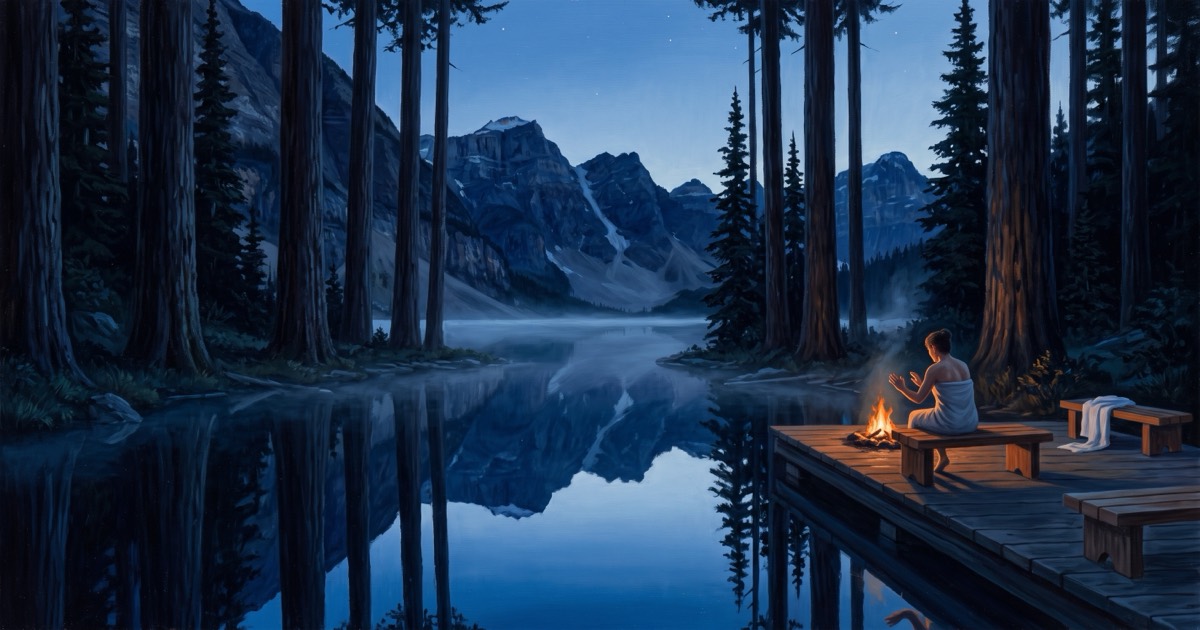
Guest by a fire on a lakeside deck at dusk, Canadian Rockies reflected in still water

Canada Apex 6 Wellness Resorts 2026 - Comparison at a Glance

ResortLocationTypeStayPrice RangeBest SeasonSignature ExperienceWellness Focus
Scandinave Spa WhistlerWhistler, BCDay VisitDay sessions$$Year-roundSilent outdoor baths in coastal forestNordic cycle, child-free
Banff Upper Hot SpringsBanff, AlbertaDay VisitDay sessions$Year-roundBathing at 1,585m facing Mount RundleNatural mineral hot springs
Kananaskis Nordic SpaKananaskis, AlbertaDay VisitDay sessions$$Year-roundRocky Mountain pools at 18+Nordic cycle, adults only
Nordik Spa-NatureChelsea, QuebecDay VisitDay sessions$$Year-roundKalla saltwater flotation and AufgussNorth America's largest spa
Klahoose Wilderness ResortDesolation Sound, BCAll-Inclusive3-5 nights$$$$May-OctGrizzly viewing with Klahoose guidesFirst Nation owned, wilderness
Ainsworth Hot SpringsKootenay Lake, BCA La CarteFlexible$$Year-roundThe horseshoe cave at 42 to 47CFirst Nation owned, mineral caves
Whose Land and Whose Springs

Parks Canada states plainly that the Banff springs were used by Indigenous peoples long before their 1883 discovery by railway workers. This page follows that framing rather than the discovery story.

Banff sits in Treaty 7 territory, the lands of the Iyarhe Nakoda, Siksika, Piikani, Kainai, Tsuut'ina and the Metis of Region 3. Scandinave Whistler sits on Squamish and Lil'wat territory. Nordik Chelsea is on Algonquin Anishinabeg territory.

The Nordic Cycle, Honestly

Heat, then cold, then rest, repeated. Sauna or steam for ten to fifteen minutes, a cold plunge for ten to thirty seconds, then fifteen to twenty minutes of rest, usually two or three rounds. It is genuinely pleasant and most people leave feeling calm and loose.

Claims that it eliminates toxins or boosts immunity are not supported and this guide does not repeat them.

Three of Six Exclude Children

Best Canada Wellness Resorts - Top 6 Currently

Scandinave Spa Whistler

Twenty thousand square feet of outdoor baths in coastal forest, where silence is enforced
Summary

20,000 square feet of outdoor baths set in coastal rainforest above Whistler, on Squamish and Lil'wat territory. Silence is the rule, not a suggestion, and it is enforced.

Child-free throughout. The combination of enforced quiet, mature forest and mountain air is what distinguishes it from every other Nordic spa in this guide.

Experience & Bathing

Setting: 8010 Mons Road, Whistler, British Columbia, a few minutes from Whistler Village and around two hours from Vancouver on the Sea to Sky Highway.

What is offered
  • Eucalyptus steam room and Finnish saunas
  • Cold plunge pools and Nordic waterfalls
  • Hammocks, solariums and fireside rest areas
  • Registered massage therapy, bookable separately
  • Open year-round, and best in falling snow
The Nordic cycle here is heat for ten to fifteen minutes, cold for ten to thirty seconds, then fifteen to twenty minutes of rest, two or three rounds. It is genuinely relaxing. Claims about eliminating toxins are not supported and are not made here. Avoid cold immersion with cardiovascular conditions without medical advice, and never after alcohol.
The silence policy is the property's real character. Phones are prohibited throughout the baths. Guests who want to talk should look at Nordik Chelsea instead.
Programmes & Activities
  • The baths themselves, ideally for a full half-day
  • Whistler Blackcomb for skiing and summer mountain biking
  • The Squamish Lil'wat Cultural Centre, in Whistler Village and worth the visit
  • Valley trail walking and lake swimming in summer
  • The Sea to Sky Highway, one of the great drives
Dining Experience

A cafe on site serving light food, deliberately simple so as not to break the rhythm of the baths.

  • Spa cafe with soups, salads and hot drinks
  • Whistler Village, minutes away, for the full range
  • British Columbia seafood and Okanagan wines throughout the region
Accommodation

Scandinave is a day spa with no accommodation. Whistler Village has the full range, from hostels to ski-in ski-out hotels, typically CAD 200 to 600 a night, rates observed 2026. Book the spa session before the room in winter, since slots fill.

Pricing & FAQ
Estimated pricing
  • Baths access from around CAD 100 per person, rates observed 2026
  • Massage bookings include baths access
Is the silence really enforced?

Yes, and it is the point. Staff will remind guests, phones are prohibited in the baths, and the effect after an hour is genuinely different from a spa where people chat. If that sounds restrictive rather than restorative, Nordik Chelsea in Quebec is the more sociable option.

Winter or summer?

Winter, for most people. Sitting in a hot bath outdoors with snow falling through cedar is the experience that brings people back. Summer is pleasant and quieter, but the contrast is what makes Nordic bathing work.

Banff Upper Hot Springs

Natural mineral water at 1,585 metres, the highest hot springs in Canada
Summary

Operated by Parks Canada within Banff National Park, part of the Canadian Rocky Mountain Parks UNESCO World Heritage Site. At 1,585 metres, these are the highest hot springs in Canada.

A single large outdoor pool facing Mount Rundle, fed by natural mineral water. Public, inexpensive and open year-round.

Experience & Bathing

Setting: Mountain Avenue, above Banff townsite, around ten minutes from the town centre and an hour and a half from Calgary.

What is offered
  • One large outdoor mineral pool, with the Rundle view
  • Historic bathhouse building, restored to its 1932 appearance
  • Swimsuit rental in period costume, which is more fun than it sounds
  • Changing rooms, lockers and a cafe

Parks Canada states that the springs were used by Indigenous peoples long before their 1883 discovery by railway workers. That framing comes from the operator itself and this page follows it.

Banff sits in Treaty 7 territory, the lands of the Iyarhe Nakoda, Siksika, Piikani, Kainai, Tsuut'ina and the Metis of Region 3.
Altitude matters here. At 1,585 metres dehydration comes on faster than most visitors expect, and hot bathing accelerates it. Drink more water than feels necessary, limit sessions, and come out to cool.
Programmes & Activities
  • Banff National Park, UNESCO-inscribed, in every direction
  • Lake Louise and Moraine Lake, both requiring advance shuttle booking in season
  • The Banff Gondola, adjacent to the springs
  • Cave and Basin National Historic Site, where the thermal springs story begins
  • Skiing at Sunshine, Norquay and Lake Louise in winter
This is bear country. Carry spray on trails, know how to use it, keep food secured, and follow all Parks Canada closures without argument.
Dining Experience

A cafe at the springs, and Banff townsite ten minutes below has a substantial restaurant scene for its size.

  • On-site cafe with mountain views
  • Alberta beef and Rocky Mountain game in town
  • Banff Avenue for the full range
Accommodation

A public facility with no accommodation. Banff townsite has everything from hostels to the Fairmont Banff Springs, typically CAD 200 to 800 a night, rates observed 2026. Book far ahead in July and August, and note that park entry fees apply separately.

Pricing & FAQ
Estimated pricing
  • Admission around CAD 17 for adults, rates observed 2026
  • National park entry fee is separate
Were these springs really discovered in 1883?

No, and Parks Canada says so directly. The springs were known and used by Indigenous peoples long before railway workers arrived in 1883. The discovery story is a settler-era framing that the operator itself has moved away from, and this guide follows the operator.

Is it worth it if I have been to a Nordic spa?

It is a different thing entirely. This is one large public pool of natural mineral water at altitude, not a designed circuit of heat and cold. It is inexpensive, family-friendly and often busy. What it has is the view of Mount Rundle from a hot pool at 1,585 metres, which no Nordic spa can offer.

Kananaskis Nordic Spa

Adults-only Nordic bathing in the Alberta Rockies, with a lodge next door that takes families
Summary

A purpose-built Nordic spa in Kananaskis Country, the Alberta Rockies south of Banff, adjoining the Pomeroy Kananaskis Mountain Lodge. 18 and over throughout the spa.

The useful distinction: the adjoining lodge welcomes families and offers childcare, so parents can use the spa while children are looked after. Very few adults-only spas solve that problem.

Experience & Bathing

Setting: Kananaskis Village, Alberta, around an hour from Calgary and 45 minutes from Banff.

What is offered
  • Hot and cold pools, including plunge pools and a hydrotherapy pool
  • Saunas, steam rooms and an exfoliation cabin
  • Fire pits and heated hammocks for the rest phase
  • Waterfalls and a barrel sauna
  • Treatment rooms, bookable separately
The standard cold-water cautions apply: avoid cold immersion with cardiovascular conditions or uncontrolled blood pressure without medical advice, never after alcohol, and never plunge alone. The Nordic cycle is relaxing and unremarkable in mechanism, which is the honest description.
Note on a common confusion: Aufguss sauna ceremonies are a feature at Nordik in Chelsea, Quebec, not here. Check the programme before travelling if that is what you are after.
Programmes & Activities
  • Kananaskis Country hiking, quieter than Banff and just as good
  • Nordic skiing and snowshoeing in winter
  • Banff National Park, 45 minutes north
  • Highwood Pass, Canada's highest paved road, seasonal
  • Golf and mountain biking at the village in summer
Bear country. Carry spray, travel in groups on trails, and follow all provincial park closures.
Dining Experience

A spa bistro on site, with the adjoining lodge providing the fuller offering.

  • Spa bistro with light food and drinks
  • Restaurants at the Pomeroy lodge next door
  • Alberta beef throughout the region
Accommodation

The spa is a day facility, but the Pomeroy Kananaskis Mountain Lodge adjoins it, typically CAD 250 to 500 a night, rates observed 2026. The lodge takes families and offers childcare, which is the practical solution to an adults-only spa. Staying next door also makes early or late sessions easy.

Pricing & FAQ
Estimated pricing
  • Day access from around CAD 100 to 130, rates observed 2026
  • Lodge guests often receive preferential access
Can I bring children?

Not into the spa, which is strictly 18 and over. The adjoining lodge welcomes families and offers childcare, so a couple can use the spa while children are looked after nearby. That combination is unusual and is the main reason this property appears rather than another Alberta option.

How does it compare to Banff Upper Hot Springs?

Different propositions. Banff is one public pool of natural mineral water at altitude, inexpensive and family-friendly. Kananaskis is a designed Nordic circuit of hot pools, cold plunges, saunas and rest areas, adults only and several times the price. If you want the cycle, come here. If you want the mineral water and the Rundle view, go to Banff.

Nordik Spa-Nature, Chelsea

The largest spa in North America, with a saltwater flotation pool and Aufguss ceremonies
Summary

The largest spa in North America, at Chelsea in the Gatineau Hills, twenty minutes from Ottawa, on Algonquin Anishinabeg territory.

Two things set it apart: Kalla, a saltwater flotation pool in a dark chamber, and Aufguss sauna ceremonies, the German ritual in which a sauna master circulates steam with a towel. Neither is common in North America.

Experience & Bathing

Setting: 16 Chemin Nordik, Chelsea, Quebec, in the Gatineau Hills, twenty minutes north of Ottawa.

What is offered
  • Kalla, a saltwater flotation pool in a dark, silent chamber
  • Aufguss ceremonies, led by a sauna master with scheduled sessions
  • Ten saunas and steam rooms, with numerous hot and cold pools
  • Outdoor bathing year-round, including through Quebec winters
  • Family sessions: potty-trained children with caregivers on Sunday mornings and school-holiday mornings
Aufguss belongs here, not at Kananaskis. Sessions are scheduled and often fill, so check times on arrival and arrive early for the popular ones.
Cold-water cautions apply as elsewhere. Kalla's saltwater flotation is buoyant and disorienting in the dark; guests prone to vertigo or anxiety in enclosed spaces should approach it gently.
Programmes & Activities
  • Gatineau Park, immediately adjacent, for hiking and cross-country skiing
  • Ottawa, twenty minutes, for the national museums and Parliament Hill
  • Autumn colour in the Gatineau Hills, which is exceptional
  • The Rideau Canal, a UNESCO World Heritage Site, skateable in winter
  • Chelsea village and the surrounding Quebec countryside
Dining Experience

A restaurant on site, and Quebec's food culture is a genuine reason to be in the region.

  • Restaurant Resto Nordik on site
  • Quebec cheeses, maple products and cabane a sucre traditions in season
  • Ottawa and Gatineau for the fuller range
Accommodation

A day spa with no accommodation of its own. Chelsea has small inns and B and Bs, and Ottawa is twenty minutes away with the full range, typically CAD 150 to 400 a night, rates observed 2026. The proximity to a capital city makes this the most accessible entry on the page.

Pricing & FAQ
Estimated pricing
  • Day access from around CAD 80 to 110, rates observed 2026
  • Kalla and treatments charged separately
What is Kalla?

A saltwater flotation pool in a dark, silent chamber. The salinity makes you float without effort, and the darkness removes visual input. It is closer to sensory reduction than to bathing, and it is the single most distinctive thing on this page. Approach gently if enclosed dark spaces are difficult for you.

Can children come?

Yes, at specific times, which makes this the family option among the Nordic spas here. Potty-trained children accompanied by caregivers are admitted on Sunday mornings and on school-holiday mornings. Scandinave Whistler is child-free entirely and Kananaskis is 18 and over, so check the schedule before planning a family trip.

Klahoose Wilderness Resort, Desolation Sound

Wholly owned by the Klahoose First Nation, and roughly seventy per cent Indigenous-staffed
Summary

Wholly owned by the Klahoose First Nation and staffed roughly seventy per cent by Indigenous people, in Desolation Sound on the British Columbia coast, reachable only by boat or floatplane.

It holds Indigenous Tourism BC accreditation, awarded by an Indigenous-led body rather than a general tourism board. That is the strongest credential of its kind in this guide.

Experience & Programme

Setting: Homfray Channel, Desolation Sound, in Klahoose territory. Access by boat or floatplane from Campbell River or Powell River.

What a stay involves
  • Grizzly viewing in the Toba Inlet with Klahoose guides, in season
  • Cultural interpretation by Klahoose staff, which is the substance of the stay
  • Kayaking, wildlife boat tours and forest walking
  • All-inclusive stays of three to five nights
  • A small lodge with limited rooms, so the resort is never crowded
Wildlife viewing here is conducted on the animals' terms, from boats and at distance, by guides from the Nation whose territory this is. This guide draws a firm line between that and captive-animal attractions, and Klahoose is firmly on the right side of it.
Access is by boat or floatplane only and is weather-dependent. Build slack into travel plans and do not schedule tight onward connections.
Programmes & Activities
  • Grizzly bear viewing in the Toba Inlet, seasonal and guided
  • Cultural sessions with Klahoose knowledge keepers
  • Kayaking in Desolation Sound, among the warmest saltwater north of Mexico
  • Old-growth forest walks
  • Whale, seal and eagle watching from the water
Dining Experience

All meals included, with an emphasis on regional and traditional foods.

  • Pacific salmon and coastal seafood
  • Traditional Klahoose foods and preparations where offered
  • All-inclusive, with dietary requirements advised in advance given the remoteness
Accommodations & Service

Seven accommodations in total, four rooms in a 6,100 square foot cedar lodge and three private oceanfront cedar cabins, taking between fourteen and twenty-two guests, comfortable rather than luxurious. The value is the ownership, and it is not a marketing claim: the resort is 100 per cent owned and operated by the Klahoose First Nation, on their own traditional territory, and opened in 2021. Guests are welcomed ashore with a traditional greeting, and the excursions are led by Klahoose cultural ambassadors sharing stories, language and songs rather than by outside guides. It sits off-grid on Homfray Channel, known in the Klahoose language as Thee chum mi yich, meaning further back inside, and is reached only by boat or seaplane, with transfers from Lund or Powell River included. Stays are three or four-night all-inclusive packages across two seasons: general wildlife and culture from May to August, and grizzly bear viewing in Toba Inlet from late August to late October. There is a floating wood-fired sauna over the water. The value is the ownership, the guides and the location, not the thread count. Service is delivered largely by Klahoose members, which is the point.

Pricing & FAQ
Estimated pricing
  • All-inclusive packages from around CAD 2,000 to 4,000 for three to five nights, rates observed 2026
  • Boat or floatplane transfer usually included; confirm at booking
Why does the ownership matter?

Because it is the difference between a resort that features Indigenous culture and one that is owned by the Nation whose culture it is. Klahoose is wholly First Nation owned, roughly seventy per cent Indigenous-staffed, and accredited by Indigenous Tourism BC, an Indigenous-led body. Revenue goes to the Nation. Very few properties anywhere can say all four things.

Is the grizzly viewing ethical?

It is conducted from boats, at distance, in the Toba Inlet, by guides from the Nation whose territory it is and who have an ongoing interest in the population. That is wildlife viewing on the animals' terms. This guide does not recommend captive-animal attractions anywhere, and this is a clear example of the alternative done well.

Ainsworth Hot Springs Resort, Kootenay Lake

Owned by the Yaqan Nukiy since 2015, who call the water nupika wu'u, spirit water
Summary

Owned since 2015 by the Lower Kootenay Band, the Yaqan Nukiy, on the shore of Kootenay Lake in British Columbia. They call the water nupika wu'u, spirit water, and have used these springs since long before the resort existed.

The distinguishing feature is physical: a horseshoe-shaped cave you walk into, where mineral water runs at 42 to 47 degrees through natural rock.

Experience & Bathing

Setting: 3609 Balfour-Kaslo-Galena Bay Highway, Ainsworth Hot Springs, on Kootenay Lake in the West Kootenays.

What is offered
  • The horseshoe cave, mineral water at 42 to 47 degrees through natural rock
  • An outdoor pool overlooking Kootenay Lake
  • A cold plunge, which the cave makes essential rather than optional
  • On-site accommodation and restaurant, unlike most entries on this page
The cave is hot, humid and enclosed, and the heat builds faster than in an open pool. Limit time inside, come out to cool, hydrate, and take medical advice first with cardiac conditions, uncontrolled blood pressure or in pregnancy.
The mineral content is sometimes described as therapeutic. Warm mineral bathing eases muscular tension through heat and buoyancy; minerals are not absorbed through the skin. The Yaqan Nukiy relationship with these springs is the entry's genuine substance.
Programmes & Activities
  • Kootenay Lake, and the free Balfour to Kootenay Bay ferry, the longest free ferry ride in the world
  • Cody Caves Provincial Park, nearby
  • Kaslo and Nelson, both worth a day for their heritage streets
  • Backcountry skiing and hiking in the Selkirk and Purcell ranges
  • Kokanee Glacier Provincial Park
Dining Experience

A restaurant on site with lake views, and the Kootenays have a strong small-producer food culture.

  • Ktunaxa Grill on site, overlooking Kootenay Lake
  • Kootenay Lake trout and regional produce
  • Nelson, 45 minutes, for a disproportionately good restaurant scene
Accommodations & Service

Rooms on site overlooking the lake, comfortable and unpretentious, typically CAD 150 to 300 a night, rates observed 2026. Staying here means using the springs early and late when day visitors have gone, which is the best time. Revenue supports the Yaqan Nukiy.

Pricing & FAQ
Estimated pricing
  • Day passes from around CAD 20 to 30, rates observed 2026
  • Rooms from around CAD 150 to 300 per night, usually including springs access
What is the cave like?

A horseshoe-shaped passage you wade through, cut into natural rock, with mineral water running at 42 to 47 degrees. It is hot, humid, dimly lit and quite unlike a pool. The heat builds quickly, so people move between the cave, the outdoor pool and the cold plunge. It is the reason this property is on the page.

Why does the ownership matter?

The Yaqan Nukiy have used these springs long before the resort existed, calling the water nupika wu'u, spirit water. Since 2015 they have owned it outright, so revenue returns to the Nation and the interpretation comes from the people whose place it is. Along with Klahoose, that makes two of six properties on this page First Nation owned.

Canada Wellness Resorts: Unique Selection Data Points

Six properties, two of them owned outright by First Nations, which is the most significant fact on this page. One holds accreditation from an Indigenous-led body rather than a tourism board. One is operated by Parks Canada inside a UNESCO World Heritage Site, and states plainly that its springs were used by Indigenous peoples long before their supposed discovery in 1883. Three exclude children and one admits them at set times, which is stated up front rather than in the small print. Four are day-visit sites and inexpensive. Territory is acknowledged by name throughout rather than in a single line at the bottom.

Frequently Asked Questions: Canada Wellness Resorts

What is the Nordic cycle, and does it do anything?

Heat, then cold, then rest, repeated. Sauna or steam for ten to fifteen minutes, a cold plunge for ten to thirty seconds, then fifteen to twenty minutes of rest, usually two or three rounds. It is genuinely pleasant and most people leave feeling calm and physically loose. Claims that it eliminates toxins or boosts immunity are not supported and this guide does not repeat them. Avoid cold immersion with cardiovascular conditions or uncontrolled blood pressure without medical advice, never enter cold water after alcohol, and never plunge alone.

Which of these are Indigenous-owned?

Two, outright. Klahoose Wilderness Resort is wholly owned by the Klahoose First Nation and staffed roughly seventy per cent by Indigenous people, with accreditation from Indigenous Tourism BC, an Indigenous-led body. Ainsworth Hot Springs has been owned since 2015 by the Lower Kootenay Band, the Yaqan Nukiy, who call the water nupika wu'u, spirit water. In both cases revenue returns to the Nation and the interpretation comes from the people whose territory it is.

Which can I bring children to?

Banff Upper Hot Springs is a public pool and family-friendly throughout. Nordik Chelsea admits potty-trained children with caregivers on Sunday mornings and school-holiday mornings. Scandinave Whistler is child-free entirely, and Kananaskis Nordic Spa is 18 and over, though its adjoining lodge welcomes families and offers childcare, which is a practical solution worth knowing about.

Were the Banff springs discovered in 1883?

No, and Parks Canada says so directly. The springs were known and used by Indigenous peoples long before railway workers arrived. Banff sits in Treaty 7 territory, the lands of the Iyarhe Nakoda, Siksika, Piikani, Kainai, Tsuut'ina and the Metis of Region 3. This page follows the operator's own framing rather than the discovery story.

When should I go?

Winter for the Nordic spas and hot springs, when the contrast between hot water and cold air is the whole experience. Klahoose runs May to October and is weather-dependent for access by boat or floatplane, so build slack into travel plans. All the mountain properties are bear country in summer: carry spray, know how to use it, and follow every closure without argument.