Austria is where modern Mayr medicine was built into an industry, and four of the six properties on this page run it. That makes the safety note below the most important thing here: these are medical programmes involving fasting or substantially reduced intake under physician supervision, not spa breaks, and they are not suitable for everyone. Alongside them sit Austria's only UNESCO Great Spa Town, an adults-only Tyrolean hotel with one of the largest spas in the Alps, and a thermal complex in the Ötztal that is the most architecturally striking building in this guide. The distinction worth holding as you read: four of these are wellness retreats in the full sense, residential programmes with a fixed daily structure you commit to for a week or more, while the rest are wellness resorts where treatment is available and the timetable is your own.
| Resort | Location | Type | Stay | Price Range | Best Season | Signature Experience | Wellness Focus |
|---|---|---|---|---|---|---|---|
| Lanserhof Lans | Lans, Tyrol | All-Inclusive | 7-21 nights | $$$$$ | Year-round | Mayr medicine since 1984, rebuilt 2017 | Medical Mayr & diagnostics |
| VIVAMAYR Maria Wörth | Lake Wörthersee, Carinthia | All-Inclusive | 7-21 nights | $$$$$ | May-Sep | Modern Mayr Medicine on a Carinthian lake | Medical Mayr, lakeside |
| Park Igls Medical Spa | Igls, Tyrol | All-Inclusive | 7-14 nights | $$$$ | Year-round | The most intimate of the Austrian Mayr clinics | Medical Mayr at 900m |
| Posthotel Achenkirch | Achensee, Tyrol | A La Carte | Flexible | $$$$ | Year-round | 7,000m2 of spa, adults only | Alpine spa, adults only |
| AQUA DOME Tirol Therme | Langenfeld, Ötztal | A La Carte | Flexible | $$$ | Dec-Mar | Raised bowl pools glowing above the valley | Thermal bathing, Alpine |
| Badener Hof | Baden bei Wien | A La Carte | Flexible | $$ | Apr-Oct | Austria's only UNESCO Great Spa Town | Sulphur springs & Kur tradition |
Four of these six properties run Mayr programmes involving fasting or substantially reduced food intake under medical supervision. These are medical programmes, not spa breaks.
A method developed by the Austrian physician Franz Xaver Mayr, built around reduced intake, slow and thorough chewing, early final meals, abdominal treatment and rest, over a stay of a week or more.
What is defensible is the structure: supervised routine, restricted diet, daily movement and rest sustained over time reliably improves how people feel and several measurable markers. Detox and cleanse framing is not supported; the liver and kidneys do that work continuously and cannot be assisted by a programme. No programme extends lifespan.
Lanserhof Lans is the original Lanserhof, opened in 1984 on a plateau of meadow and forest above Innsbruck, about twenty minutes from the airport, and reopened in 2017 after a 25-million-euro rebuild. It is a clinic rather than a hotel: every stay begins with a physician's examination, blood work and body composition, and an interdisciplinary resident team of internists, cardiologists, nutritionists, physiotherapists and psychologists writes the programme from there. The method is the LANS Med Concept, four decades of daily practice combining F. X. Mayr medicine with modern internal medicine, naturopathy and psychosomatics, and the food follows it: small, alkaline, thoroughly chewed, with no alcohol or caffeine. Stays run from a four-night Essential Health Check-Up to seven, fourteen or twenty-one nights for the Lanserhof Cure Classic, with further programmes for mental health, hormonal balance, longevity analysis and post-viral recovery. Rooms from 20 to 100 square metres, an indoor-outdoor salt-water pool, saunas, cryotherapy and daily Nordic walking complete it. Among Austria wellness resorts it is the reference point for medical wellness in the German-speaking world; it is emphatically not a spa break with good dinners.
VIVAMAYR Maria Worth occupies a peninsula on the southern shore of Lake Worthersee in Carinthia, Austria's warmest province, about twenty minutes from Klagenfurt airport, and is widely described as the birthplace of Modern Mayr Medicine. It is a medical health resort of 46 rooms and suites, most with balconies over the lake, and the ratio tells the story: close to a hundred medical and hotel staff for a maximum of about fifty guests. The VIVAMAYR Health Concept applies the diagnostics and therapies of Dr Franz Xaver Mayr in modern form, resting, cleansing and retraining the digestive system to address systemic inflammation, gut health and chronic complaints, under a medical director long established in the field. Every guest is examined daily, and treatments, manual abdominal therapy, nasal reflex therapy, infusions and nutrition, are adjusted as the cure progresses; programmes build on the Pure Basic foundation and are typically taken over seven nights or more. Nordic walking, health talks and lake excursions fill the rest. Among Austria wellness resorts this is the most authentic Mayr cure at a humane price; it is a clinic, not a spa hotel.
Park Igls sits on a sunny plateau at Igls, five kilometres above Innsbruck and about twenty minutes from the airport, facing the Karwendel peaks. The building has been a health address for more than a century: constructed as a sanatorium from 1905 and known by 1918 as a high-altitude dietary health resort, it was restored to that purpose by the Balzar family from 1959 and is run today by their successors. There are 51 rooms and suites, all with balconies, which gives it the feel of a boutique hotel wrapped around a serious medical centre. Park Igls is one of the pioneers of Modern Mayr Medicine, and every stay starts with a medical consultation that shapes a personalised programme; the published pathways address prevention, stress and burnout, sleep, fitness and mobility, allergies and skin, digestion and detoxification, supported by Modern Mayr cuisine built on alkaline, regional cooking, plus a medical spa, hydrotherapy pool, saunas and a gym. It is the most personal of the Austria wellness resorts of this type, well suited to a first Mayr cure; guests wanting luxury scale will prefer Lanserhof, and those wanting a lake, VIVAMAYR.
Posthotel Achenkirch stands at the northern end of Lake Achensee in Tyrol, framed by the Karwendel range, and is an adults-only five-star resort run by the Entner family rather than a clinic. Its wellness case rests on scale and craft: an unusually large spa for a family-owned hotel, with indoor and outdoor pools, an extensive sauna and steam landscape, quiet rooms and a treatment menu built around Tyrolean stone oil, the local shale-derived remedy long used for muscular, joint and circulation complaints, alongside classical massage, beauty and traditional Alpine rituals. Rooms and suites are spread across several houses in country style, all with balconies. What sets the days apart is what surrounds them: guided hiking and e-biking in the Karwendel park, tennis, golf nearby, and the largest privately owned herd of Lipizzaner horses in Europe, with riding offered on the estate. Wellness is entirely a la carte, with no programme, minimum stay or medical supervision, and half board is the norm. Among Austria wellness resorts it is the choice for a couple wanting an Alpine spa holiday with real activity; guests seeking a cure should look to Lans, Igls or Maria Worth.
AQUA DOME sits in the Otztal valley at Langenfeld, about fifty kilometres west of Innsbruck, and is the largest thermal spa in western Austria. A borehole in 1997 reached thermal water at 1,865 metres' depth, and a 74-million-euro investment opened the resort in 2004; almost seven million guests have passed through since. The architecture is the draw: three futuristic bowls appear to float in the outdoor plaza, one a massage basin, one sulphur, one brine with underwater music and light, so bathers lie in warm mineral water with the Otztal peaks directly overhead. Inside, more than 50,000 square metres hold further pools, fourteen saunas and steam rooms, a treatment wing and the adults-only SPA 3000, reserved for hotel guests. The four-star-superior hotel has over 200 rooms and suites in modern Alpine style, reached from the baths through a bathrobe corridor. Wellness is a la carte, with no programme or medical supervision, and children are welcome in the public areas. Among Austria wellness resorts this is the family and value choice, and the best pure bathing on this page.
Badener Hof stands in Baden bei Wien, the spa town in the Vienna Woods some 26 kilometres south of the capital, whose sulphur springs have been used since Roman times, when the settlement was known as Aquae, and which drew the Habsburg court and Beethoven in later centuries. The town remains a working Kurort, with its thermal bathhouses, Kurpark and casino, and the hotel sits within walking distance of them. It is a spa hotel rather than a clinic: comfortable rooms, an in-house wellness area with sauna and steam, treatment rooms for massage and beauty work, and easy access to the sulphurous thermal water that gives Baden its reputation for rheumatic and musculoskeletal relief. Wellness is taken a la carte, with no programme, minimum stay or medical supervision, which suits its other role as a base, Vienna is forty minutes by train, and the Thermenregion vineyards begin at the town's edge. Among Austria wellness resorts it is the most accessible and the most urban, well suited to a short restorative break combined with the city; guests wanting Alpine scenery or a medical cure will find both elsewhere on this page.
Lanserhof opened at Lans in 1984, making it one of the earliest properties anywhere to combine Mayr medicine with a modern clinical model. It reopened in 2017 after a full rebuild.
Four decades of continuous operation under medical direction is a stronger claim than any award, and it is why this entry leads the page.
Setting: Kochholzweg 153, Lans, on a plateau above Innsbruck in the Tyrol, around 20 minutes from the city.
What a stay involves
This is a medical programme rather than a spa break. Generally contraindicated in pregnancy, and specific advice is needed for diabetes, cardiovascular disease, eating-disorder history or any regularly prescribed medication, especially medication whose dosing depends on food intake.
Ownership: the Lanserhof group also operates Lanserhof Tegernsee and Lanserhof Sylt, both on the Germany page of this guide.
Food is the programme. Portions are prescribed, and slow thorough chewing is part of the method rather than an affectation.
Sixty-seven rooms and suites, all rebuilt in 2017, ranging from around 20 to 100 square metres. Loft Suites of roughly 55 to 70 square metres have panoramic windows or a Juliet balcony; Rooftop Suites of about 50 square metres open directly onto the roof terrace; Corner Suites of around 65 square metres take views in two directions. The palette is deliberately plain, walnut and pale tones, with floor-to-ceiling glazing onto the meadows and many rooms opening to a balcony or terrace. Bottles of warm magnesium-rich water are left in the room as part of the protocol rather than as a courtesy. The register is clinical: assessment, timetable, prescribed treatments, and fellow guests on the same programme.
Estimated pricing
What is Mayr medicine?
A method developed by the Austrian physician Franz Xaver Mayr, built around reduced intake, slow chewing, early final meals, abdominal treatment and rest across a stay of a week or more. What is defensible is the structure: supervised routine, restricted diet, movement and rest reliably improve how people feel and several measurable markers. The detox framing attached to it is not supported.
Lanserhof, VIVAMAYR or Park Igls?
All three run medically supervised Mayr programmes in Austria. Lanserhof Lans is the oldest and the most rebuilt; VIVAMAYR sits on a Carinthian lake and brought Modern Mayr to an international audience; Park Igls is the most intimate. Choose on setting and scale, since the clinical model is broadly common.
Group-level recognition: not awarded to this property specifically
About the property
No award has been verified as belonging to Lanserhof Lans specifically, and this entry says so rather than borrowing the group's. Lanserhof's World Spa Awards wins are made at brand level: the awarding body's own citation describes the LANSERHOF CONCEPT and the group's four decades, not one clinic. Sister properties at Tegernsee and Sylt appear in the same and adjacent categories.
One entry can be excluded outright. "Germany's Best Wellness Retreat" is a German national category. Lanserhof Lans is in Austria, so that award cannot be its own however often the brand name attaches to it. This kind of attribution error is common wherever a group operates clinics in several countries, and it is the reason group awards are listed separately here.
What is genuinely distinctive is the lineage, not a trophy. Lans is the original Lanserhof, opened in 1984, and the place the LANS Med Concept was developed before being exported to Tegernsee and Sylt. That is a stronger claim than any voted award, and it is checkable.
The World Spa Awards are decided by industry and public voting rather than inspection. Three consecutive wins indicate sustained standing within the industry; they are not an assessment of clinical outcomes, and Lanserhof publishes none.
Founded in 2004 on the shore of Lake Wörthersee, VIVAMAYR is the property that brought Modern Mayr Medicine to a wider international audience. It is medically supervised throughout.
The lake setting distinguishes it from the Tyrolean clinics: Carinthia is warmer, softer country, and the Wörthersee is genuinely swimmable in summer.
Setting: Seepromenade 11, Maria Wörth, on a promontory in Lake Wörthersee in Carinthia, around 20 minutes from Klagenfurt.
What a stay involves
The same cautions apply as across this page. Fasting and heavily restricted intake are generally contraindicated in pregnancy and require specific advice for diabetes, cardiovascular disease, eating-disorder history or regular prescribed medication. Anyone with a history of disordered eating should speak to their own clinician first.
Detox and cleanse framing appears widely in Mayr marketing and is not supported. What works here is the structure: supervised routine, restriction, movement and rest across a sustained stay.
Prescribed rather than chosen, following the Mayr protocol, with intake set individually after assessment.
Forty-six rooms and suites, all with a balcony or terrace facing the lake or the mountains, plus apartments and a lakeside villa. Standard rooms run to around 25 square metres, Comfort rooms 35, Deluxe 45 and Junior Suites 65, with air conditioning throughout. The villa's ground floor of roughly 107 square metres has its own garden, bathing dock and separate entrance. With close to a hundred medical and hotel staff for a maximum of around fifty guests, the ratio is unusual even among clinics of this kind, and the register is clinical rather than hospitality. Around EUR 378 per night for room and board, with full programmes priced from around EUR 2,951, rates observed 2026.
Estimated pricing
Is the lake usable?
In summer, genuinely. The Wörthersee is one of the warmest large lakes in the Alps and is properly swimmable from June to September, which is unusual for a Mayr clinic setting. That makes Carinthia the better choice if you want the programme without being confined indoors.
How long should I stay?
Seven nights minimum and longer is better. Short stays deliver the difficult adjustment phase and little of the recovery. The first two to three days are commonly hard; tell the medical team rather than pushing through.
Wins
Listings
About the property
The single win here comes from secondary coverage, not the source. "Best Gut Health Retreat in the World" at the 2025 Luxury Spa Edit Awards is reported by a third-party guide; this entry could not confirm it against the awards' own published winners list, which does record other properties in other categories. It is listed with that caveat rather than presented as settled.
World Luxury Spa Awards is an entrant-nominated programme: properties enter themselves and voting follows. A listing there is not an independent assessment and is recorded as a listing.
VIVAMAYR operates as a genuine medical facility with board-certified physicians, which distinguishes it from resort spas offering wellness add-ons. That is a real and unusual credential. It is still not a hospital, it does not replace your own doctor, and no outcome data is published. Anyone under medical care should continue it and tell their physician what they intend to undertake.
On the underlying claim: the gut-health premise has genuine partial support from microbiome research for the general link between digestion, immunity and mood. Specific assertions about intestinal cleansing, and about "alkaline" nutrition altering the body's pH, do not hold: food does not change blood pH. The sensible core is a light, regular, vegetable-led diet eaten slowly, which is worth doing on its own terms.
Also featured in: Gut Health · Colon Hydrotherapy
Park Igls sits above Innsbruck at around 900 metres in the village of Igls, and is the most intimate of the Austrian medical Mayr properties. Physicians conduct diagnostics before the programme is set.
Smaller and quieter than Lanserhof or VIVAMAYR, which suits people who find larger clinics impersonal. The building has been a health property since 1905, when it was constructed as a sanatorium, and was known from 1918 as a physical-dietary high-altitude health resort; Igls itself was an officially designated health resort under Emperor Franz Joseph. It was repositioned as a centre of Modern Mayr Medicine in 2005. Where Park Igls differs from the classical four-pillar Mayr method is that it adds two more, exercise and mindfulness, and backs the first with more than fifty different workout sessions a week.
Setting: Igler Strasse 51, Igls, on the plateau above Innsbruck, around 20 minutes from the city and served by tram.
What a stay involves
Altitude affects exertion and hydration, and effects are compounded on restricted intake. Follow prescribed activity levels rather than habit, and drink more than feels necessary.
The standard Mayr cautions apply in full. Assessment is required, the programme is contraindicated in pregnancy, and anyone with diabetes, cardiovascular disease, eating-disorder history or regular medication needs their own doctor's advice before booking.
Prescribed Mayr meals set individually after diagnostics, with the same slow, deliberate method as the other clinics here.
Fifty-one single rooms, doubles and suites, with parquet floors and oak furniture, and a handful with their own infrared sauna. The spa has a good-sized indoor pool that extends into the gardens, multiple saunas and a gym with mountain views; the grounds hold a Kneipp trail, a pagoda and a nine-hole putting course, and the nature park was substantially expanded in 2023. Lounge areas, a library and a fireside gathering space give it a family atmosphere rather than a clinical one. Room rates include breakfast, covered parking and transfers to and from Innsbruck airport or station, twenty minutes away. Comfortable rather than luxurious, and the medical provision is what you are paying for.
Estimated pricing
Why choose the smaller clinic?
Because the Mayr experience is partly about attention. Park Igls is the most intimate of the Austrian medical Mayr properties, which means more contact with the same physicians and staff across a stay. If a large clinic would feel impersonal to you, this is the one to look at.
Does the altitude matter?
At 900 metres, modestly, but it compounds with restricted intake. Exertion tolerance is lower and dehydration comes on faster than at sea level. Follow the prescribed activity levels rather than your usual habits, which is the point of being supervised.
Wins
Placings
About the property
This is one of the better-evidenced records on the site, and several entries are independently checkable. The Luxury Spa Edit third place appears on the awards' own published winners list rather than only in the property's marketing; that is the standard worth applying, and Park Igls meets it.
The Times listing is editorial. "The World's 50 Best Spas" is a newspaper ranking compiled by journalists, not an inspection or a ballot. Condé Nast Johansens is an awards programme within a paid hotel guide. Neither is worthless, but neither is an assessment against published clinical standards, and the distinction matters for a property whose appeal is medical.
Two entries are undated and unverified. The Condé Nast Traveller Spa Award and the Tatler Spa Trophy are cited by the property without years; they are listed because they are specific, and flagged because they have not been confirmed against the awarding bodies.
On the medicine: Park Igls is genuinely physician-supervised, which separates it from most properties in this guide. Modern Mayr Medicine's premise, that digestive health underlies wider illness, has partial support from contemporary microbiome research, while specific claims about intestinal cleansing do not. The word "detox" in the award title is the awarding body's, not a physiological description: the liver and kidneys handle that continuously. What a supervised week here reliably delivers is a light diet, no alcohol, rest, movement and medical attention, which explains the results without requiring any additional mechanism.
Also featured in: Bone Health · Detox · IV Drips · Stress & Burnout
On the northern shore of Lake Achensee in the Karwendel, Posthotel Achenkirch is a family-run, adults-only five-star hotel with around 7,000 square metres of spa, one of the largest in the Alps.
Unlike the Mayr clinics on this page, this is a hotel with an exceptional spa rather than a medical facility, and there is no programme or physician. The 7,000 square metre water and sauna world includes the Yin Yang pool, three indoor pools, a Room of Silence, a salt dome, dragon and temple saunas and a water path, alongside a Zen garden and a 500 square metre indoor and outdoor fitness area. Around sixty hours a week of supervised exercise and relaxation sessions are scheduled, and practitioners on site include specialists in Traditional Chinese Medicine, Ayurveda and Shaolin practice. Lipizzaner riding, tennis and golf are available on or near the property.
Setting: Achenkirch 382, on Lake Achensee in the Tyrol, around 45 minutes from Innsbruck and an hour from Munich.
What is offered
Austrian and German sauna culture is typically textile-free and often mixed. This surprises visitors from other traditions and is worth knowing before arriving. Ask about timings if it matters to you; many properties have designated sessions.
Standard heat cautions apply: no alcohol before sauna, leave when you have had enough rather than waiting out a timer, cool gradually, and take medical advice first with cardiac conditions, uncontrolled blood pressure or in pregnancy.
Half board is standard, with Tyrolean and international cooking at a high standard for a family-run property.
A five-star Tyrolean hotel run by the same family, with 143 rooms and suites across several buildings, adults only from eighteen. Rooms run from around 30 square metres to Junior Suites of roughly 55, most with a balcony, separate sitting area and soundproofing, facing the lake or the Karwendel. The Posthotel Stammhaus opened for the hotel's centenary with SigNature suites, a bathrobe restaurant and further indoor and outdoor fitness space. Eleven dining lounges include TENZO, where Alpine cooking is built around the five elements of Traditional Chinese Medicine. The register is warm and traditional rather than clinical, which is the opposite of the Mayr properties here.
Estimated pricing
Is 7,000 square metres of spa excessive?
It sounds it, and in practice it means the spa is never crowded even when the hotel is full. The provision is unusually deep for a family-run property: extensive sauna, multiple pools, quiet rooms and treatment areas. If a large spa that still feels calm is what you want, this delivers it.
Why is it on a wellness page rather than a hotel list?
Because the spa is the reason the hotel exists rather than an amenity added to it, and because adults-only means it stays quiet. It is not a medical property and the page says so; for that, the three Mayr clinics here are the answer.
No verified awards
No inspected rating, judged award or reader-voted accolade has been verified for Posthotel Achenkirch. What appears in search results are collection memberships and guide listings, which are recorded below as such.
Collections and listings
About the property
Memberships are not awards, and this entry keeps them apart. Leading Spa Resorts is an association that member hotels join; a MICHELIN Guide listing is selection into the guide's hotel collection and is distinct from a Key, which this property does not hold. Both are reasonable signals of standing. Neither is a competitive win or an inspection against published standards.
The Tripadvisor ranking is worth reading precisely: first of ten hotels in a small Tyrolean village. That is a genuine guest-satisfaction signal and a very small field.
Note a discrepancy in the sources. The property markets itself as five-star; some booking platforms list it at four. Star ratings in Austria are awarded by the national hotel association against published criteria; confirm the current classification directly if it matters to you.
On the longevity and TCM offering: these are wellness programmes, not medical care. There is no physician, no diagnostics and no published outcome data. Traditional Chinese Medicine dietary practice is a living cultural tradition with its own practitioners; a hotel kitchen cooking in that idiom is offering food informed by it, not practising it, and this guide does not describe it as treatment. "Longevity" here names a category of programme rather than a demonstrated effect on lifespan.
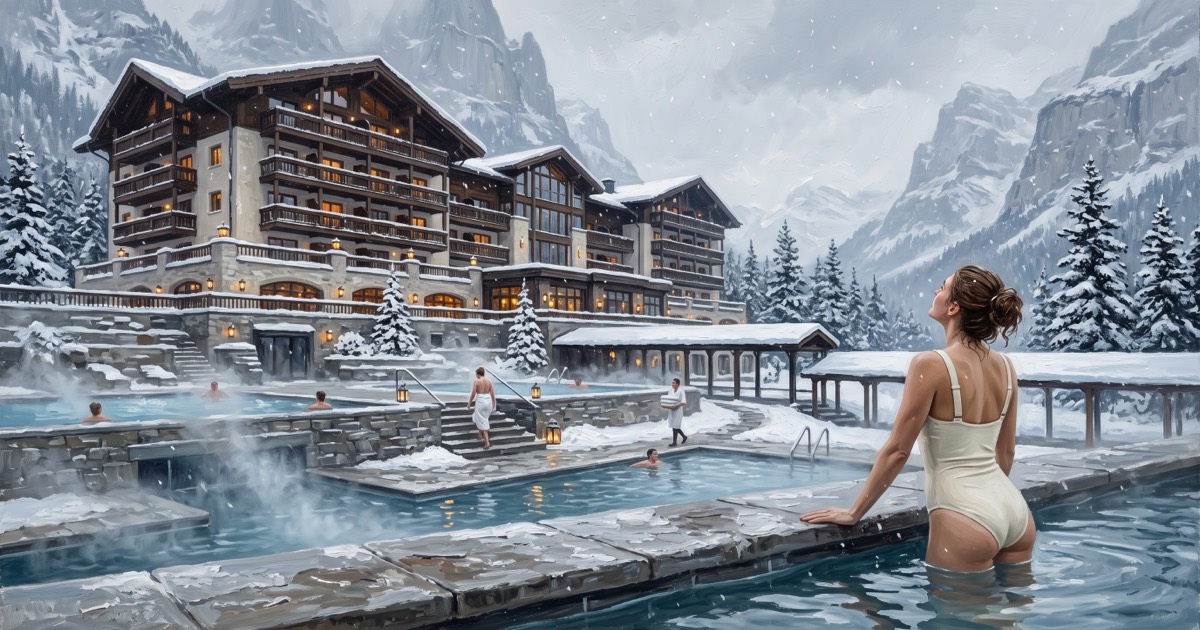
In the Ötztal valley, AQUA DOME is architecturally the most striking property on this page: three raised bowl-shaped thermal pools set above the valley floor, lit at night against the mountains.
A thermal complex with a hotel attached rather than the reverse, and it works as both a day visit and a stay. The site runs to over 20,000 square metres with twelve indoor and outdoor pools and around 2,200 square metres of water, held between 34 and 36 degrees and fed from a thermal source 1,865 metres below the valley. The three signature outdoor bowls differ from one another: a brine basin with underwater music and light, a massage basin and a sulphur basin. A heated bathrobe corridor links the four-star superior hotel directly to the baths.
Setting:
In the Ötztal valley in Tyrol, and architecturally the most striking property on this page: three raised bowl-shaped thermal pools set above the valley floor, lit at night against the mountains.
Bathing and facilities:
This is a thermal complex with a hotel attached rather than the reverse, and it works as both a day visit and a stay. The bowl pools are the reason it appears here: bathing outdoors at altitude with the Tyrolean Alps around you, and genuinely good architecture doing the framing.
On the water: the Ötztal spring is geothermal and sulphurous. Warm bathing eases muscular tension and pairs well with a day on the mountain; minerals are not absorbed through the skin in meaningful quantity, and thermal water does not treat diagnosed conditions.
Practical notes. This is a busy family resort in Austrian school holidays, not a quiet retreat. Alpine altitude means dehydration arrives faster than expected: drink water between sessions. Follow posted temperatures, keep hot soaks short, and take advice first if pregnant or managing a cardiovascular condition. Sauna areas in Austria are conventionally nude and mixed, which surprises many visitors; check which zones apply before you go in.
Hotel restaurants and casual dining at the thermal complex, with Tyrolean cooking as the base.
A modern hotel attached to the thermal complex, comfortable and family-friendly, with an adults-only spa zone for guests who want quiet. Busy in the ski season, so book ahead for winter.
Estimated pricing
When is it best?
December to March, when the raised outdoor pools sit in snow with the Ötztal peaks above and the water steaming into cold air. It is open year-round and summer is pleasant, but the winter contrast is what the architecture was built for.
Is it suitable for families?
Yes, unlike most of this page. The main thermal complex is family-friendly, with a separate adults-only spa zone for guests wanting quiet. Posthotel Achenkirch is adults-only, and the three Mayr clinics are medical facilities, so this is the family option in Austria.
No verified awards
No inspected rating, judged award or reader-voted accolade has been verified for AQUA DOME. It features in Austria's national tourism collection and in travel coverage of Tyrolean thermal spas, which is promotion and editorial rather than recognition.
Listings
About the property
No award is recorded, and none is claimed. AQUA DOME is widely promoted, including by Austria's national tourist board, but destination marketing is not an accolade and is not presented as one here.
The one genuinely distinctive claim is geological and checkable: this is the only thermal spring in western Austria, which is why a spa of this scale exists in a valley this remote.
Read the property honestly as two things sharing a site: a hotel, and a large public thermal bath open to day visitors. In peak season (Tyrolean school holidays and poor-weather ski days), the public areas are busy and family-oriented. Guests seeking a quiet wellness retreat sometimes arrive expecting otherwise. The hotel offers adults-only areas; the wider complex is not one.
Thermal water requires treatment and monitoring under Austrian bathing regulation, as at any public facility. Sulphur-rich thermal bathing is associated with symptomatic relief for some skin and musculoskeletal complaints; that is symptom relief under bathing conditions, not treatment of an underlying condition, and anyone with a cardiovascular condition or who is pregnant should take medical advice before prolonged hot immersion.
Baden bei Wien is Austria's UNESCO Great Spa Town, inscribed in 2021 as one of the eleven Great Spa Towns of Europe, and Badener Hof is the town's own health and spa hotel, operated by Badener Kurbetriebs alongside the municipal thermal facilities.
The town's sulphur springs have been used since Roman times, and Beethoven spent summers here. Fourteen natural sulphur thermal springs yield more than four million litres a day at between 24 and 36 degrees, and that water underpins the town's whole therapeutic tradition: sulphur baths, mud packs, underwater therapy and massage. Badener Hof sits in the old town a few minutes from the spa park, with the Roman-era bathing culture, the Kurpark and the Grand Casino all within walking distance, and Vienna around half an hour by train.
Setting:
At Baden bei Wien, Austria's UNESCO Great Spa Town, inscribed in 2021 as one of the eleven Great Spa Towns of Europe, half an hour south of Vienna. Badener Hof is the town's own health and spa hotel, operated by Badener Kurbetriebs alongside the municipal thermal facilities.
Facilities and the water:
The municipal operation is the distinguishing fact. This is the town's own hotel rather than a private property using the town's name, which is why it sits inside the Kur infrastructure rather than beside it.
On the water: Baden's springs are genuinely sulphurous and thermal, and have been used continuously for close to two thousand years. Warm sulphur bathing eases muscular stiffness and is restful; minerals are not absorbed through the skin in meaningful quantity, and the water does not treat diagnosed conditions. The length of the tradition says nothing about therapeutic efficacy, and this guide does not present it as though it does.
Sulphur water has a strong odour that lingers on skin and swimwear, and will tarnish silver: remove jewellery. Follow posted temperatures, keep hot soaks short, and take advice first if pregnant or managing a cardiovascular condition.
Austrian cooking in a town with a strong cafe tradition and vineyards on its doorstep.
A functional health and spa hotel operated by the town's spa company, Badener Kurbetriebs, which also runs the Römertherme thermal baths and the Badener Kurzentrum with its centre for the spine and musculoskeletal system. The hotel connects to the Römertherme by corridor, so thermal access does not mean going outside. The clinical focus is orthopaedic and rehabilitative rather than fasting-led: back and joint pain, osteoporosis, neurological rehabilitation and sports medicine, with physician consultation and therapies delivered in the hotel. The most affordable property on this page by a wide margin, and the proximity to Vienna makes it the easiest to reach.
Estimated pricing
Why is Baden UNESCO-inscribed?
It is Austria's entry among the eleven Great Spa Towns of Europe, inscribed in 2021. The listing recognises the European spa town as a cultural phenomenon: the architecture, parks, assembly rooms and social ritual that grew around thermal water. Baden's Biedermeier quarter and Kurpark are largely intact, and its sulphur springs were used in Roman times.
Can I visit from Vienna?
Easily. Thirty minutes by direct train, which makes it a genuine day trip and the most accessible thermal bathing near the capital. Staying overnight gets you the Kurpark in the evening and the Vienna Woods in the morning, which is worth the extra day.
No verified awards
No inspected rating, judged award or reader-voted accolade has been verified for Badener Hof. It is a working cure hotel rather than a property that competes for hospitality awards.
About the property
The water
The absence of awards here is a category difference, not a shortcoming. Badener Hof is a Kurhotel operating within Austria's regulated cure system, where stays are structured around physician assessment and prescribed therapy and are in some cases funded through health insurance. Properties of this kind are not competing in the luxury-spa award circuit, and a missing trophy says nothing about them.
That regulatory framing is the genuine credential. A prescribed Kur involves a doctor, a treatment plan and a defined course, closer to outpatient care than to a spa break. It is still not a substitute for your own physician, and anyone under medical care should continue it.
Baden bei Wien is part of the Great Spa Towns of Europe UNESCO World Heritage inscription, which covers eleven towns across seven countries. As elsewhere in this guide: that is recognition of cultural and architectural heritage, not an endorsement of therapeutic efficacy, and it belongs to the town rather than to any hotel in it.
On sulphur bathing: there is reasonable evidence for symptomatic relief in some musculoskeletal and skin complaints under bathing conditions. That is relief of symptoms, not treatment of the underlying condition, and benefit typically fades after the course ends. The distinctive smell is hydrogen sulphide and is normal. Water at up to 36°C is mild, but anyone with cardiovascular conditions or who is pregnant should take medical advice before extended immersion.
Six properties in the country where modern Mayr medicine was built into an industry, and four of them run it under physician supervision. That makes the safety note the most consequential thing on this page, and it comes before any property is described. One property has operated since 1984, making it among the earliest anywhere to combine Mayr with a clinical model. One sits in Austria's only UNESCO Great Spa Town, inscribed in 2021. One has around 7,000 square metres of spa and admits adults only. Prices run from EUR 120 a night to EUR 8,000 a programme, and both ends are legitimate.
A method developed by the Austrian physician Franz Xaver Mayr, built around reduced intake, slow and thorough chewing, early final meals, abdominal treatment and rest across a stay of a week or more. What is defensible is the structure: supervised routine, restricted diet, daily movement and rest reliably improve how people feel and several measurable markers. The detox and cleanse framing attached to it is not supported, and no programme extends lifespan.
Anyone pregnant, and anyone with diabetes, cardiovascular disease or an eating-disorder history without specific advice from their own doctor. The same applies to anyone taking regular prescribed medication, especially medication whose dosing depends on food intake. Anyone with a history of disordered eating should not book without first discussing it with their own clinician: extended restriction in a supervised, aestheticised setting can be actively harmful, and the setting can make it harder to recognise.
Lanserhof Lans is the oldest, operating since 1984 and rebuilt in 2017. VIVAMAYR Maria Wörth sits on Lake Wörthersee, which is genuinely swimmable in summer and softer country than the Tyrol. Park Igls is the smallest and most personal, at 900 metres above Innsbruck. The clinical model is broadly common across all three, so choose on setting and scale.
It is typically textile-free and often mixed, which surprises visitors from other traditions. Many properties have designated sessions or separate zones, so ask if it matters to you. Standard cautions apply everywhere: no alcohol beforehand, leave when you have had enough rather than waiting out a timer, cool gradually, and take medical advice first with cardiac conditions, uncontrolled blood pressure or in pregnancy.
AQUA DOME in the Ötztal, which has a family-friendly thermal complex and a separate adults-only spa zone. Posthotel Achenkirch is adults only, and the three Mayr properties are medical facilities rather than holidays. Badener Hof is a Kur hotel geared to longer therapeutic stays rather than family breaks.