Brazil Wellness Resorts: Medical Spas, Thermal Springs & Atlantic Forest Retreats

Brazil has a genuine medical spa tradition that predates the wellness industry by decades. Kurotel opened in Gramado in 1982 and is run as a physician-led medical centre with individual assessment, not a resort with a doctor on call. Lapinha has operated since 1972 on a farm in Paraná. Caldas Novas sits on the largest hydrothermal system of its kind in the world, heated by depth rather than volcanism. What Brazil also has is a lot of marketing built on detox and cleansing language, and this page separates the two: the medical properties are described by what their physicians actually do, and the thermal towns by the geology that actually heats them. Two of these are wellness retreats in the full sense, residential programmes assessed and prescribed on arrival, while the rest are wellness resorts and thermal towns you use at your own pace.

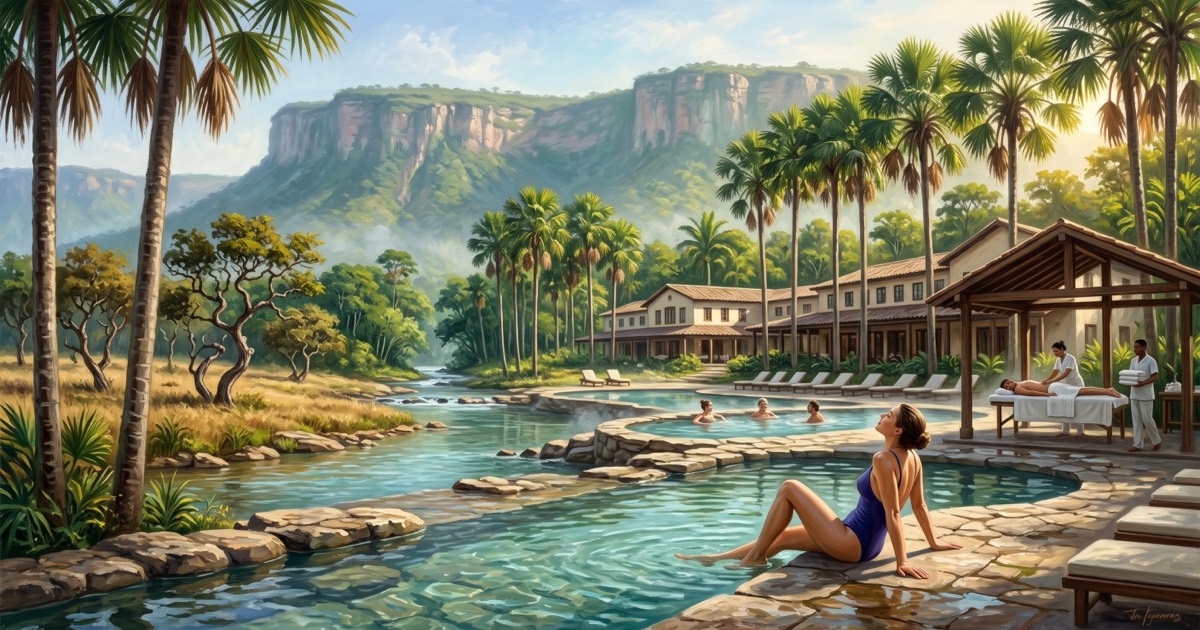
Thermal spring pools and a treatment pavilion at a cerrado wellness resort below a chapada tableland, Brazil

Brazil Apex 6 Wellness Resorts 2026 - Comparison at a Glance

ResortLocationTypeStayPrice RangeBest SeasonSignature ExperienceWellness Focus
KurotelGramado, Rio Grande do SulAll-Inclusive7-21 nights$$$$Year-roundPhysician-led programme since 1982Medical longevity centre
Lapinha SpaLapa, ParanáAll-Inclusive7-14 nights$$$Year-roundA working farm running programmes since 1972Medical spa & organic farm
Rio Quente ResortsGoiásDay VisitFlexible$Apr-SepThe largest hydrothermal system of its kindThermal bathing
BotaniqueSerra da MantiqueiraA La CarteFlexible$$$$$Apr-OctAtlantic Forest mountains and dark skiesLuxury forest retreat
Txai Resort ItacaréItacaré, BahiaA La CarteFlexible$$$$Apr-OctA private beach backed by Atlantic ForestCoastal spa & Bahian culture
Palace HotelMinas GeraisDay VisitFlexible$Apr-SepArt deco thermal baths in a calderaHistoric thermal town
What a Brazilian Medical Spa Actually Is

Kurotel and Lapinha are physician-led residential programmes, not hotels with a wellness menu. Expect medical assessment on arrival, an individually prescribed programme, controlled diet, scheduled treatment and supervised exercise across a stay of a week or more.

What is defensible is the structure: supervised routine, restricted diet, daily movement and rest, sustained over time. That reliably improves how people feel and several measurable markers. Detox and cleansing framing is used widely in Brazilian wellness marketing and is not supported. This page describes what the programmes physically involve instead.

Before Booking a Programme
Why the Water Is Hot, and Two Practical Notes

Rainfall percolates deep into the rock, is warmed by the Earth's natural temperature gradient at depth, and rises back under pressure. No volcanic activity is involved, which is the explanation most coverage assumes and gets wrong. It is the same mechanism that heats Ma'in in Jordan.

Best Brazil Wellness Resorts - Top 6 Currently

Kurotel Longevity Center & Spa, Gramado

A physician-led medical centre running since 1982, in the mountains of Rio Grande do Sul
Summary

Opened 1982 in Gramado, and run as a physician-led medical centre rather than a resort with a doctor available. Programmes begin with individual medical assessment and are prescribed from it.

Four decades of continuous operation under medical direction is the strongest credential on this page, and unlike an award it can be verified.

Experience & Programme

Setting: R. Nacoes Unidas 533, Bavaria, Gramado, in the Serra Gaucha mountains of Rio Grande do Sul, around two hours from Porto Alegre.

What a stay involves
  • Medical assessment on arrival, with the programme set individually
  • Programmes of seven to twenty-one nights, including longevity, weight management and stress
  • Controlled diet, prescribed rather than chosen
  • Supervised exercise, hydrotherapy and treatments on a daily schedule
  • A quiet residential register, with fellow guests on programmes
Restricted-diet programmes are not suitable in pregnancy, with diabetes or cardiac conditions, or with a history of disordered eating. Anyone on regular prescribed medication should speak to their own prescribing doctor well before arrival.
What is defensible is the structure: supervised routine, controlled diet, daily movement and rest sustained over a week or more. That reliably improves how people feel and several measurable markers. Longevity in the marketing sense is not a demonstrated outcome, and this page does not claim it.
Programmes & Activities
  • The programme itself, which is the reason to come
  • Gramado and Canela, mountain towns with a strong German and Italian settlement history
  • Caracol Falls and the Serra Gaucha walking
  • Vale dos Vinhedos, Brazil's principal wine region, within reach
  • Cool mountain climate, unusual for Brazil
Dining Experience

Diet is part of the medical programme rather than a separate pleasure, and is set individually.

  • Programme-controlled meals, all included
  • Serra Gaucha produce
  • No alcohol on programme
Accommodations & Service

Around 35 suites, comfortable rather than luxurious, in a purpose-built medical facility across roughly 25,000 square metres of hillside grounds at Gramado, a town in Rio Grande do Sul settled by Germans and Italians and known in Brazil as the Brazilian Switzerland. It was founded in 1982 by Dr Luis Carlos Silveira and his wife Neusa, who brought the European kur idea to a country that then had almost no spas, and built it as hotel, spa and clinic together, which was unusual at the time. The Kur Method rests on five pillars: water, movement, food, relaxation and balance. Expect a clinical rhythm: assessment first, then a prescribed programme, with diagnostics running to DEXA imaging, genetic testing and metabolic sequencing, and days structured around a morning hike, group fitness, aquatic work and afternoon hydrotherapy, fango and massage. Porto Alegre airport is about ninety minutes away. It has been repeatedly voted a leading spa in industry awards, which are votes rather than inspections. Expect a clinical rhythm: assessment, timetable, prescribed treatments. Service is medical rather than hospitality-led, which is the point.

Pricing & FAQ
Estimated pricing
  • Programmes from around BRL 20,000 to 60,000 depending on length, rates observed 2026
Is this a hotel?

No, and that is the distinction worth understanding. Kurotel is a medical centre with accommodation. Guests are assessed by physicians, given individually prescribed programmes, and follow a timetable. If you want a spa holiday in the Brazilian mountains, this is the wrong entry; Botanique elsewhere on this page is the right one.

How long should I stay?

Seven nights minimum, and longer is genuinely better. Short stays deliver the difficult adjustment phase and little of the benefit. The programmes are built around sustained routine, which is the mechanism that actually works.

Lapinha Spa, Lapa

A working organic farm in Paraná running medical programmes since 1972
Summary

Operating since 1972 on a working farm at Lapa in Paraná, southern Brazil. Fifty years of continuous operation makes it one of the oldest properties of its kind in South America.

The distinguishing feature is the farm: much of the food served is grown on the property, which is a closed loop rather than a sourcing claim.

Experience & Programme

Setting: Fazenda Margarida, on the Estrada da Lapa to Campo do Tenente, around an hour and a half from Curitiba.

What a stay involves
  • Medical assessment and an individually set programme
  • Programmes of seven to fourteen nights
  • Organic food grown on the farm, with the diet set to programme
  • Hydrotherapy, treatments and supervised exercise
  • Walking and forest trails across the property
The same cautions apply as at Kurotel: restricted-diet programmes are not suitable in pregnancy, with diabetes or cardiac conditions, or with a history of disordered eating. Speak to your own prescribing doctor before booking if you take regular medication.
Lapinha's material uses detox language, as most of this sector does. The page describes the programme instead: supervised routine, restricted organic diet, daily movement and rest across a week or more.
Programmes & Activities
  • The farm and its trails, which are integral rather than incidental
  • Lapa, a historic town with a preserved colonial centre
  • Curitiba, an hour and a half, known for its urban planning and botanical garden
  • Paraná pine forest, the araucaria landscape distinctive to the region
  • Cool southern climate, quite unlike tropical Brazil
Dining Experience

The strongest element after the programme. Much of what is served is grown on the property.

  • Organic produce from the farm itself
  • Programme-set meals, all included
  • Paraná regional cooking outside programme restrictions
Accommodations & Service

Farm accommodation, comfortable and quiet rather than luxurious, in extensive grounds. The register is residential and unhurried, and fifty years of operation shows in how settled the routine is.

Pricing & FAQ
Estimated pricing
  • Programmes from around BRL 12,000 to 35,000 depending on length, rates observed 2026
Kurotel or Lapinha?

Kurotel is the more clinical of the two, purpose-built and physician-led, in the mountain town of Gramado. Lapinha is a working farm where the food is grown on site and the setting is agricultural rather than medical. Both run assessed programmes of a week or more. Choose Lapinha for the farm and the quiet, Kurotel for the clinical structure.

Is southern Brazil different?

Considerably. Paraná and Rio Grande do Sul are cool, temperate and heavily shaped by European settlement, with araucária pine forest rather than palms. Winters are genuinely cold by Brazilian standards. It surprises visitors expecting tropical Brazil, and it is part of why both medical properties are here rather than on the coast.

Rio Quente Resorts, Goiás

Rio Quente Resorts — official site

The largest hydrothermal system of its kind in the world, heated by depth rather than volcanism
Summary

Rio Quente sits 25km from Caldas Novas on the largest hydrothermal system of its kind in the world, in the state of Goiás in central Brazil. The water emerges between roughly 34 and 57 degrees.

No volcanic activity is involved. Rainfall percolates deep into the rock, is warmed by the Earth's natural temperature gradient, and rises back under pressure. That is the same mechanism as Ma'in in Jordan and it is more interesting than the volcanic explanation people assume.

Experience & Bathing

Setting: Goiás, central Brazil, around three hours from Brasília and two and a half from Goiânia.

What is offered
  • Dozens of thermal pools across hotels and public parks
  • Large water parks using the thermal water
  • Rio Quente nearby, a thermal river resort area
  • Accommodation at every price point, from simple pousadas to large resorts
This is a busy family resort, not a secluded retreat, and the page states that plainly. Brazilian school holidays fill it completely. If you want quiet thermal bathing, the Palace Hotel in Poços de Caldas elsewhere on this page is calmer.
Standard thermal cautions apply: limit sessions, come out to cool, hydrate, and take medical advice first with cardiac conditions, uncontrolled blood pressure or in pregnancy. UV is high year-round and outdoor bathing compounds exposure.
Programmes & Activities
  • Thermal bathing, across public and hotel pools
  • Rio Quente, the thermal river, nearby
  • Serra de Caldas Novas State Park, for walking above the town
  • Lagoa Pirapitinga and the surrounding cerrado landscape
  • Brasilia, three hours, a UNESCO World Heritage Site for its modernist plan
Dining Experience

Resort-town dining, plentiful rather than refined, with Goiás regional cooking worth seeking out.

  • Goiano cooking: pequi, empadao goiano and river fish
  • Hotel buffets and churrascarias throughout the town
  • Wide range of price points
Accommodation

The town is built around thermal accommodation, from simple pousadas to large family resorts, and it is worth understanding what it is before booking: this is among the largest hydrothermal resort areas in the world, and it operates at that scale. High season brings around 100,000 visitors and carnival can bring 300,000 to a town whose resident population is a fraction of that. The springs were found by gold prospectors in the eighteenth century, settlement grew around them from 1850, and the town became a municipality in 1911. The water rises warm without volcanic activity, heated by depth rather than magma, and it feeds hundreds of pools across the town and neighbouring Rio Quente. This is a Brazilian family destination rather than a retreat, and the page includes it for that reason rather than despite it. Anyone seeking quiet should look elsewhere on this page, or come outside school holidays and carnival. Typically BRL 250 to 900 a night, rates observed 2026. Most hotels have their own thermal pools, so choose on pool quality and crowd tolerance rather than location. Avoid Brazilian school holidays if you want space.

Pricing & FAQ
Estimated pricing
  • Public park entry is inexpensive; accommodation BRL 250 to 900 per night, rates observed 2026
Why is the water hot if there is no volcano?

Because the Earth gets warmer with depth regardless of volcanism. Rainfall percolates deep into the rock, is heated by that natural gradient, and rises back to the surface under pressure. The Caldas Novas system this resort draws on is the largest of its type in the world. There is a real distinction between the two towns: at Rio Quente the water emerges naturally hot at the surface, while at Caldas Novas it is drawn up from deep artesian wells. It is the same mechanism that heats Ma'in in Jordan, and the volcanic explanation most coverage assumes is simply wrong.

Is it a wellness destination?

Not in the retreat sense, and the page is honest about it. Caldas Novas is a busy thermal resort town with water parks and family hotels. What it has is genuinely remarkable geology and very affordable thermal bathing. For a quiet, structured wellness stay in Brazil, Kurotel or Lapinha are the entries that provide it.

Botanique Hotel & Spa, Serra da Mantiqueira

Atlantic Forest mountains between São Paulo and Rio, with exceptional dark skies
Summary

A luxury retreat in the Serra da Mantiqueira, the mountain range between São Paulo and Rio de Janeiro, set in Atlantic Forest, one of the most biodiverse and most threatened forest types on Earth.

The setting is the property: mountain forest, cool air, and skies dark enough that stargazing needs no equipment.

Experience & Spa Treatments

Setting: The Serra da Mantiqueira, roughly three hours from São Paulo. Confirm the exact municipality with the property when booking, as published sources differ.

What is offered
  • A spa with treatment rooms and thermal facilities
  • Villas and suites, several with private pools
  • Forest walking and waterfalls on and around the property
  • Stargazing, with genuinely dark skies
  • Yoga and wellness activities, bookable rather than programmatic
A separate Brazilian company trades under a similar Botanique name. Book through botanique.com.br directly to be certain you have the right property.
This is a luxury hotel with an excellent spa rather than a wellness programme. There is no medical assessment and no prescribed protocol. Kurotel and Lapinha are the entries on this page that provide that.
Programmes & Activities
  • Atlantic Forest walking, with waterfalls in the surrounding hills
  • Stargazing from the property
  • Campos do Jordao, the mountain resort town, within reach
  • Horse riding and cycling in the Mantiqueira
  • São Paulo, around three hours, for the city and its restaurants
Atlantic Forest is among the most threatened forest types in the world, with a small fraction of its original extent remaining. Properties within it carry a real responsibility, and it is worth asking what conservation work is actually funded.
Dining Experience

Kitchen-garden led, with Brazilian produce and a strong emphasis on the local.

  • Property kitchen gardens supplying the restaurant
  • Mantiqueira cheeses and Minas produce
  • Brazilian wines and cachacas
Accommodations & Service

Villas and suites in forest, several with private pools, finished to a high standard. This is the most expensive property on the Brazil page, and the seclusion and the setting are what the price buys.

Pricing & FAQ
Estimated pricing
  • From around BRL 4,000 to 12,000 per night, rates observed 2026
Which Botanique is this?

A 700-acre property in the Serra da Mantiqueira. It operated as Six Senses Botanique from 2021 until around 2023 and now trades independently as Botanique, so older coverage under the Six Senses name refers to the same place. A separate Brazilian company trades under a similar name, so book through botanique.com.br directly. Published sources also differ on the exact municipality, so confirm the location with the property when you book rather than relying on a listing.

Is the Mantiqueira worth the drive?

Yes, and it surprises people who think of Brazil as coastal and tropical. The range rises well above a thousand metres, the air is cool, the forest is Atlantic rather than Amazonian, and the night skies are exceptional. It is around three hours from São Paulo, which makes it a genuine escape rather than a resort suburb.

Txai Resort Itacaré, Bahia

A private beach backed by Atlantic Forest on the Bahian coast
Summary

On Praia de Itacarezinho, a long private beach on the Bahian coast backed by Atlantic Forest. The name comes from a Kaxinawa word.

Bahia is the cultural heart of Afro-Brazilian Brazil, and the coast around Itacaré is among the least developed stretches of it.

Experience & Spa Treatments

Setting: KM 48, BA-001, Praia de Itacarezinho, Itacaré, Bahia, around 70km from Ilhéus airport.

What is offered
  • A hilltop spa above the beach, with forest and ocean views
  • A long private beach, with direct access
  • Bungalows in forest and beachfront
  • Surfing, kayaking and forest walking
  • Yoga and treatments, bookable rather than programmatic
The Atlantic here has strong currents and the beaches are largely unguarded. Swim with care, ask staff about conditions, and treat the sea seriously regardless of how warm it is.
Where Afro-Brazilian or Indigenous traditions are offered as treatments, ask who is delivering them and on what basis. This guide describes what a treatment physically involves rather than repeating cultural framing supplied by a resort.
Programmes & Activities
  • The beach and the forest behind it
  • Surfing at Itacaré, a well-known Brazilian break
  • Waterfalls and forest trails in the surrounding area
  • Itacare town, for Bahian food and music
  • Salvador, further north, for the historic centre, a UNESCO World Heritage Site
Dining Experience

Bahian cooking is one of Brazil's great regional cuisines, built on African, Indigenous and Portuguese influences.

  • Moqueca, acaraje and dende palm oil dishes
  • Bahian seafood, landed locally
  • Cacao from the surrounding region, historically Brazil's cocoa coast
Accommodations & Service

Bungalows set in forest and along the beachfront, comfortable and unshowy. The beach and the seclusion are the reason to be here, and the property is deliberately low-density along a long stretch of sand.

Pricing & FAQ
Estimated pricing
  • From around BRL 2,500 to 7,000 per night, rates observed 2026
When should I go to Bahia?

April to October is drier and more reliable on this stretch of coast. Brazilian summer, December to March, is hot, humid and busy with domestic holidaymakers, and the rain can be heavy. The sea is warm year-round, which is not the same as safe: currents here are strong and beaches largely unguarded.

Is it a wellness destination?

It is a beach resort with a very good spa in an exceptional setting. There is no programme and no medical provision, and the page says so. What it offers that the medical properties cannot is Atlantic Forest meeting an empty beach, and Bahian culture a short drive away.

Palace Hotel, Poços de Caldas

Palace Hotel — official site

Art deco thermal baths inside an ancient volcanic caldera
Summary

A historic thermal town in Minas Gerais, sitting inside an ancient volcanic caldera. Its sulphurous waters have been used since the nineteenth century and the town retains a genuine spa quarter.

The distinction from Caldas Novas is register. Poços is a historic spa town with art deco bathhouses; Caldas Novas is a modern resort town with water parks.

Experience & Bathing

Setting: Southern Minas Gerais, at around 1,200 metres, roughly four hours from São Paulo and five from Belo Horizonte.

What is offered
  • Historic municipal thermal baths, in art deco buildings
  • Sulphurous mineral water, used in immersion and vapour treatments
  • The Palace Casino and spa quarter, from the town's early twentieth-century heyday
  • Hotels across the town with their own thermal facilities
The waters here are sulphurous and the smell is noticeable. Standard thermal cautions apply: limit sessions, hydrate, and take medical advice first with cardiac conditions, uncontrolled blood pressure or in pregnancy.
Historic Brazilian spa towns often carry inherited claims about specific cures. Warm sulphurous bathing eases muscular tension through heat and buoyancy. Minerals are not absorbed through the skin, and no bathing water treats disease.
Programmes & Activities
  • The thermal baths and spa quarter
  • Pedra Balao and the Cristo Redentor viewpoint above the town
  • The caldera rim, for walking and views
  • Minas Gerais historic towns, including Ouro Preto and Tiradentes further north
  • Local ceramics and the town's craft tradition
Dining Experience

Mineiro cooking is among Brazil's best-loved regional cuisines, and Poços is a good place to eat it.

  • Comida mineira: feijao tropeiro, pao de queijo and Minas cheese
  • Cachaca from the surrounding region
  • Town restaurants and hotel dining across all price points
Accommodation

The town has a substantial stock of thermal hotels, several dating from its early twentieth-century heyday, typically BRL 200 to 700 a night, rates observed 2026. Staying in the spa quarter puts the baths on foot, which is the point of a historic spa town.

Pricing & FAQ
Estimated pricing
  • Municipal bath treatments are inexpensive; hotels BRL 200 to 700 per night, rates observed 2026
Palace Hotel or Rio Quente?

Poços for history and quiet: art deco bathhouses, a real spa quarter, cooler air at 1,200 metres and a town that predates mass tourism. Caldas Novas for warmth, water parks and family resorts on the largest hydrothermal system of its kind in the world. They share a name root and almost nothing else.

Is the caldera still active?

No. The Poços de Caldas caldera is ancient and long extinct. The thermal water is heated by depth rather than by present volcanic activity, as at Caldas Novas. What the caldera gives the town is its bowl-shaped setting and its altitude, which is why the climate is cool for Brazil.

Brazil Wellness Resorts: Unique Selection Data Points

Six entries, two of them physician-led medical centres that predate the wellness industry, one running since 1972 and one since 1982. One sits on the largest hydrothermal system of its kind in the world, heated by depth rather than volcanism, which most coverage gets wrong. Two are described plainly as excellent hotels rather than wellness destinations. One carries a naming ambiguity and an unresolved municipality, both stated rather than papered over. Detox framing is used throughout Brazilian wellness marketing and is not repeated on this page.

Frequently Asked Questions: Brazil Wellness Resorts

What is a Brazilian medical spa?

Kurotel and Lapinha are physician-led residential programmes rather than hotels with a wellness menu. Expect medical assessment on arrival, an individually prescribed programme, controlled diet, scheduled treatment and supervised exercise across a week or more. What is defensible is the structure: supervised routine, restricted diet, daily movement and rest sustained over time reliably improves how people feel and several measurable markers. Detox and cleansing framing is not supported and is not used here.

Why is Caldas Novas hot if there is no volcano?

Because the Earth gets warmer with depth regardless of volcanism. Rainfall percolates deep into the rock, is warmed by that natural gradient, and rises back to the surface under pressure. The Caldas Novas system is the largest of its kind in the world, with water emerging between roughly 34 and 57 degrees. It is the same mechanism that heats Ma'in in Jordan.

Which is the serious wellness option?

Kurotel for the most clinical structure, purpose-built and physician-led in the mountains of Rio Grande do Sul. Lapinha for a working organic farm running assessed programmes since 1972. Both require a week minimum to be worth doing. Botanique and Txai are excellent hotels with very good spas, and this page says so rather than implying they are something else.

When should I visit?

April to October for the Bahian coast and the Mantiqueira, which is drier and less crowded. Caldas Novas and Poços de Caldas are best April to September, and Caldas Novas fills completely during Brazilian school holidays. The southern medical properties in Paraná and Rio Grande do Sul work year-round, with genuinely cold winters by Brazilian standards.

Is Brazil bigger than people expect?

Considerably, and it shapes any itinerary. The properties on this page span from Paraná in the temperate south to Bahia in the tropical northeast, thousands of kilometres apart. Southern Brazil is cool, European-settled and forested with araucária pine; Bahia is Afro-Brazilian and tropical. Treat them as separate trips rather than a circuit.