Maldives Wellness Resorts: Island Retreats, Overwater Spas & Marine Science

The Maldives holds the first island in the world built around wellbeing rather than adapted to it, overwater spa pavilions above living reef, and the strongest resident marine science presence of any resort destination. It is also the lowest-lying country on Earth, and reaching it is carbon-intensive. This page states both, because a guide marketing eco-wellness here without acknowledging the flight is not credible. What a visitor can genuinely do is choose properties doing real work and stay longer, and the entries below distinguish serious science from decoration. Only Joali Being operates as a wellness retreat in the programme sense, with an arrival assessment and a structured stay; the rest are wellness resorts with substantial spas, and the difference is worth knowing before you book a week.

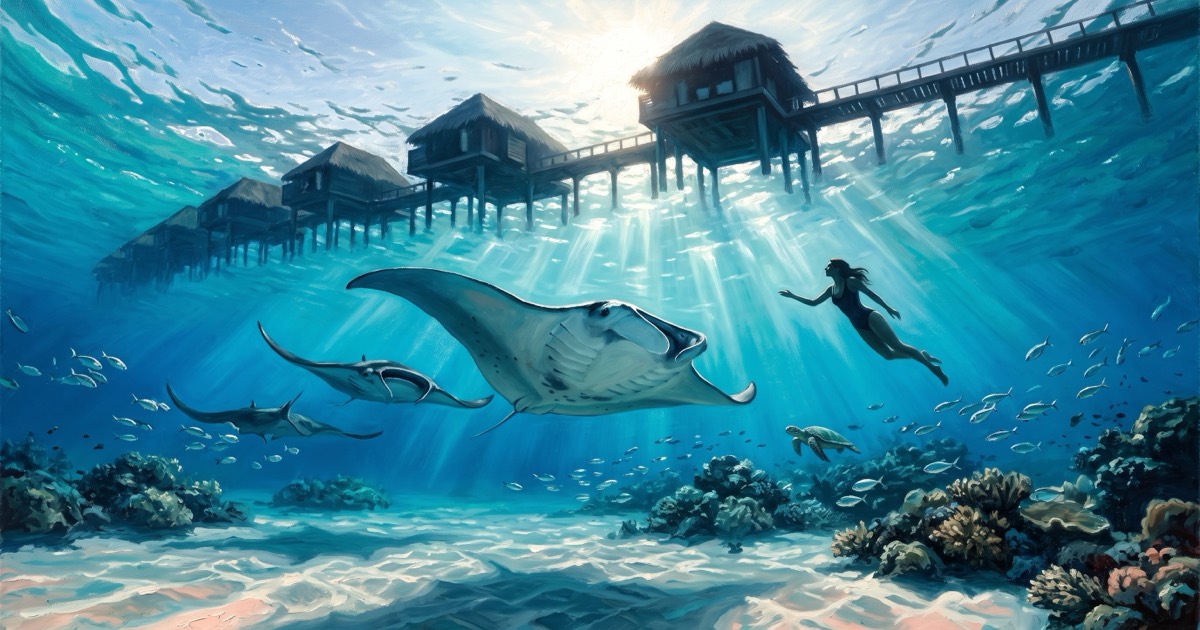
Free diver and manta rays beneath overwater villas in a Maldivian lagoon

Maldives Apex 6 Wellness Resorts 2026 - Comparison at a Glance

ResortLocationTypeStayPrice RangeBest SeasonSignature ExperienceWellness Focus
Joali BeingBodufushi, Raa AtollAll-Inclusive5-14 nights$$$$$Nov-AprThe first Maldivian island built around wellbeingWhole-island wellbeing programme
Six Senses LaamuOlhuveli, Laamu AtollA La CarteFlexible$$$$$Nov-AprResident marine biologists and reef researchMarine science & spa
Soneva Fushi, Soneva SoulKunfunadhoo, Baa AtollA La CarteFlexible$$$$$Nov-AprBarefoot philosophy that predates the trendEstablished eco-luxury spa
COMO MaalifushiThaa AtollA La CarteFlexible$$$$$Nov-AprThe only resort in Thaa AtollCOMO Shambhala programmes
Anantara KihavahBaa AtollA La CarteFlexible$$$$$May-Nov for mantasOverwater spa above the reef, glass floorsUNESCO Biosphere setting
OZEN LIFE MAADHOOSouth Male AtollAll-InclusiveFlexible$$$$Nov-AprGenuinely all-inclusive, speedboat transferAccessible island wellness
Two Things Worth Stating Plainly

1. The country's own situation. The Maldives is the lowest-lying country on Earth, averaging around 1.5 metres above sea level, and sea-level rise is an existential national issue rather than an abstract one. Reaching it is carbon-intensive: a long-haul flight plus, for most of these resorts, a seaplane transfer. A page marketing eco-wellness here without acknowledging that is not credible. What a visitor can do is choose properties doing real work and stay longer.

2. Coral bleaching. The Maldives has suffered major bleaching events, most severely in 1998 and 2016, and reef condition varies considerably by atoll and by year. Ask the resort directly about current reef condition rather than relying on photographs, which may be years old. Several properties here run genuine restoration programmes, and those are worth asking about specifically, since quality ranges from serious science to decoration.

Marine Wildlife and Practical Notes

Best Maldives Wellness Resorts - Top 6 Currently

Joali Being, Raa Atoll

The Maldives' first island built around wellbeing rather than adapted to it
Summary

The Maldives' first island built around wellbeing rather than adapted to it. Sixty-eight villas on Bodufushi, with the whole island's design, food and programming organised around four pillars rather than a spa added to a beach resort.

That distinction is real: the kitchen, the treatment provision and the daily structure were planned together rather than assembled.

Experience & Programme

Setting: Bodufushi Island, Raa Atoll, reached by seaplane from Malé, around 45 minutes and daylight only. It opened in November 2021 and is the sister property to JOALI Maldives, about fifteen minutes away by boat. The programme framework was developed with Professor Gerry Bodeker, an Oxford academic and Harvard-trained researcher in integrative medicine — a named academic behind the method, which is rarer in this sector than it should be. Every stay opens with a consultation and lifestyle assessment producing a personalised programme, typically five nights to three weeks. The wellbeing centre, AREKA, runs to 39 treatment rooms, with a hydrotherapy hall holding a banya, an Aufguss sauna, a hammam, a salt inhalation room and two Watsu pools; there is also a herbology centre with a resident herbologist, a sound therapy hall and an outdoor sound path.

What is offered
  • Structured programmes with assessment on arrival
  • A kitchen built around the programmes rather than alongside them
  • Hydrotherapy, treatment rooms and movement studios
  • Sixty-eight villas, beach and overwater
  • Programmes of five to fourteen nights
Detox and cleanse framing appears widely in Maldivian wellness marketing and is not supported. What structured programmes genuinely deliver is supervised routine, controlled diet, movement and rest, which reliably changes how people feel. No programme extends lifespan. TWO FURTHER DISTINCTIONS APPLY HERE SPECIFICALLY. The four pillars — Mind, Skin, Microbiome and Energy — are a proprietary framework the property devised, not a clinical taxonomy, and language about reversing ageing that appears in some coverage is marketing rather than evidence. And the team is made up of naturopaths, Ayurvedic doctors, therapists and movement specialists rather than physicians: this is a sophisticated, well-designed wellbeing retreat, not a medical facility, and it does not claim otherwise. Sound therapy and herbology sit in the traditional and complementary category, worth enjoying on their own terms and not to be mistaken for treatment. If you want physician oversight, the Dead Sea and Alpine clinics elsewhere in this guide are where to look.
Ask about current reef condition rather than relying on photographs. Bleaching has affected atolls differently and images may be years old.
Programmes & Activities
  • The programme, which structures the stay
  • Snorkelling on the house reef, following briefing
  • Raa Atoll, quieter than the central atolls
  • Diving, with operators following marine wildlife guidance
  • Sunrise and sunset, which the island's orientation is planned around
Dining Experience

The kitchen is part of the programme rather than an amenity, with menus set to each guest's assessment.

  • Programme-aligned menus, individually set
  • Maldivian and international cooking
  • Alcohol available but not part of programme structure
Accommodations & Service

Sixty-eight beach and overwater villas designed as part of the wellbeing concept, across roughly fourteen hectares of Bodufushi island in Raa Atoll, each with a private pool and a butler the resort calls a jadugar, Dhivehi for skilled magician. Villas with wellbeing in the name carry their own gym; the four-bedroom overwater villa has a dedicated wellbeing and movement room. The centre of it is Areka, with around 39 treatment rooms and transformational spaces including a hydrotherapy hall holding a sensory deprivation room, Russian banya, salt inhalation room and hammam, alongside a herbology apothecary called Aktar, a sound therapy hall with nine outdoor instruments, cryotherapy and what is described as the largest gym in the region. Every stay opens with an integrative lifestyle assessment, and programmes run five nights to three weeks under naturopaths, nutritionists, movement specialists and Ayurvedic doctors. The four pillars, Mind, Skin, Microbiome and Energy, were developed with Professor Gerry Bodeker of Oxford. Reached by a 45-minute seaplane from Male. Note that reverse ageing appears in the programme descriptions; that is not an established outcome, and the honest offer here is diagnostics, structure and rest. Among the most expensive properties in this guide, and the integration is what distinguishes it from a resort with a large spa.

Pricing & FAQ
Estimated pricing
  • Programmes from around US$2,000 to 5,000; nightly rates from around US$400 to 600 before programme, rates observed 2026
What does purpose-built actually mean?

That the island's design, kitchen, treatment provision and daily programming were planned together rather than a spa being added to an existing beach resort. It shows in how a day is organised and in what the kitchen can do. Whether it justifies the price is your judgement, but the distinction is genuine.

Is the flight defensible?

That is a fair question and the page does not dodge it. Reaching the Maldives means a long-haul flight plus a seaplane transfer, in the lowest-lying country on Earth. If you go, the honest responses are to stay longer, choose properties doing genuine environmental work, and ask specifically what their restoration programme involves.

Six Senses Laamu

The only resort in Laamu Atoll, with the strongest marine science presence in the Maldives
Summary

The only resort in Laamu Atoll, with the strongest marine science presence of any property in the Maldives: resident marine biologists and long-running work on reef and marine conservation.

Where the page distinguishes serious science from decoration, this is the property that sits firmly on the science side.

Experience & Spa

Setting: Olhuveli, Laamu Atoll, in the far south, reached by domestic flight from Malé plus a boat transfer, with around 94 to 97 villas built in local and sustainably sourced materials. ONE PRACTICAL POINT THAT SURPRISES PEOPLE: the seagrass meadows around the island are deliberately protected rather than cleared. Many Maldives resorts rake seagrass away to produce the bare white lagoon of the brochures; here roughly 385,000 square metres of it is kept, because the meadows are fish nurseries and carbon stores and they are why turtles, rays and sharks are visible from the villas. If you arrive expecting an empty turquoise swimming pool you may be briefly disappointed; if you snorkel, you will understand within ten minutes.

What is offered
  • Resident marine biologists and an active research programme
  • Reef and marine conservation work, long-running rather than recent
  • A Six Senses spa with treatment rooms and hydrotherapy
  • The sleep programme, the group's best-founded offering
  • Overwater and beach villas, the only resort in the atoll
The marine science here is genuine rather than presentational, and the detail settles it. The Maldives Underwater Initiative, formed in 2018, brings together around ten specialists from the resort and three resident partner NGOs — the Manta Trust, the Blue Marine Foundation and the Olive Ridley Project — working from a purpose-built research centre on the island. The record is concrete: research contributed to the designation of six local Marine Protected Areas in 2021 and to Laamu being named a Mission Blue Hope Spot the same year; the team wrote the country's first Dolphin Watching Code of Conduct and its national seagrass monitoring protocols; the seagrass work identified two species not previously documented in the Maldives; and in 2017 the Manta Trust partnership here pioneered the world's first contactless underwater ultrasound scanner for wild manta rays, producing the first scans of a pup in the wild. After the 2024 global bleaching event, the coral larval restoration programme released millions of larvae onto degraded reefs. Ask to join a session; guests can, and it is the clearest example on this page of what to look for elsewhere.
Manta rays and whale sharks must not be touched, chased or blocked. Follow the operator's briefing on distance, and treat any operator encouraging contact as a warning sign.
Programmes & Activities
  • Marine science sessions with the resident biologists
  • Snorkelling and diving in an atoll with a single resort
  • The sleep programme, which is well founded
  • Surf breaks, which Laamu is known for
  • Local island visits, arranged respectfully
Dining Experience

Several restaurants with a strong sustainability emphasis and genuine attention to sourcing.

  • Multiple restaurants across the island
  • Locally caught fish, with attention to which species
  • Organic gardens supplying part of the kitchen
Accommodations & Service

Ninety-four overwater and beachfront villas in the Six Senses barefoot register, built from sustainable materials, with shoes taken away on arrival and rarely needed again. The spa sits on the beach with five treatment rooms plus single and double treatment nests set into the island's vegetation. What genuinely separates this property is the conservation work, which is structural rather than promotional: the Maldives Underwater Initiative is a resident team of marine biologists working with the Manta Trust, the Blue Marine Foundation and the Olive Ridley Project, housed in SHELL, a purpose-built marine education centre with a laboratory. The atoll is the only one in the Maldives designated a Hope Spot by Mission Blue, and six Marine Protected Areas were subsequently declared here. The team took the marine and coastal category at the 2021 Skal International Sustainable Tourism Awards. The resort tracks 139 sustainability indicators monthly and targets a 46 per cent cut in scope one and two emissions by 2030 against 2019. The Yin Yang surf break is nearby from May to September. Reached by a 65-minute seaplane from Male, or a domestic flight and speedboat. The remoteness is genuine: a domestic flight plus a boat, and the only resort in the atoll.

Pricing & FAQ
Estimated pricing
  • From around US$1,200 per night, rates observed 2026
How do I tell real conservation from marketing?

Ask specifics. Are there resident marine biologists or a visiting consultant? Is monitoring ongoing or occasional? Is any of the work published or shared with national programmes? What happens to restoration structures after the guests photograph them? This property answers those questions well, which is why it is on the page and why it is the benchmark to hold others to.

Why does one resort per atoll matter?

Pressure. An atoll with a single resort carries far less anchoring, boat traffic and reef contact than the central atolls. Laamu and Thaa are both single-resort atolls on this page, and that is a genuine environmental difference rather than a marketing line about exclusivity.

Soneva Fushi, Soneva Soul

Among the first resorts anywhere to take environmental practice seriously
Summary

One of the oldest luxury resorts in the Maldives and among the first anywhere to take environmental practice seriously. The no news, no shoes barefoot philosophy predates the industry's adoption of it by decades.

Soneva Soul is the spa, on an island large enough to have genuine forest between the villas.

Experience & Spa

Setting: Kunfunadhoo Island, Baa Atoll, within the UNESCO Biosphere Reserve, reached by seaplane from Malé — so daylight hours only, worth checking against your inbound flight. It opened in 1995 with 48 villas as the first luxury resort in the Maldives and the original barefoot island, and it added the country's first astronomy observatory in 2008. Its founders, Sonu and Eva Shivdasani, also created Six Senses and Evason before selling both in 2012, which is why the name recurs across this guide: Six Senses Laamu sits on this same page, and Ma'in Hot Springs in Jordan was an Evason.

What is offered
  • Soneva Soul, with treatment pavilions in forest
  • Long-established environmental practice, including waste and water systems
  • An island large enough for forest between villas
  • An observatory, unusual in the Maldives
  • Barefoot throughout, which is the original house rule
Soneva's environmental work is long-running and substantive rather than recent branding, and the specifics bear that out: plastic straws banned in 1998, the Maldives' first integrated waste management centre in 2007, own water bottled on site instead of branded water from 2008, carbon neutral for direct and indirect emissions since 2012, and around 90 per cent of waste reused or recycled. There is a hot glass studio, the only one in the country, melting down roughly 1,200 bottles a year, and the Namoona partnership extends the waste programme to neighbouring local islands rather than stopping at the resort's own shoreline. THE PART THAT DESERVES CREDIT IS THE UNCOMFORTABLE FINDING: when Soneva measured its full emissions, including the ones most of the industry does not count, it found roughly 85 per cent came from guests' flights rather than from resort operations. That is the honest answer about what a Maldives holiday costs the atmosphere, and it is not flattering to anyone selling one. The response was a MANDATORY TWO PER CENT ENVIRONMENTAL LEVY on every stay, funding the Soneva Foundation. Expect it on your bill; it is not optional and it is not a donation prompt.
Baa Atoll is a UNESCO Biosphere Reserve. Reef-safe sunscreen matters, never stand on coral, and follow briefings on distance from manta rays and whale sharks.
Programmes & Activities
  • Snorkelling and diving in Baa Atoll
  • Hanifaru Bay in season, where manta rays aggregate
  • The observatory, for genuinely dark Indian Ocean skies
  • Island cycling through forest between villas
  • Waste-to-wealth and garden tours, which are worth doing
Dining Experience

Several restaurants with a long-standing emphasis on growing and sourcing on the island itself.

  • Multiple restaurants across the island
  • Extensive organic gardens supplying the kitchens
  • Chocolate and ice cream rooms, a house institution
Accommodations & Service

Large villas in forest and on the beach, several with private pools, running from one to nine bedrooms and built from reclaimed timber and thatch on Kunfunadhoo, one of the largest islands in the Maldives, inside the Baa Atoll UNESCO Biosphere Reserve. Barefoot and unhurried, with a personal butler the resort calls Mr or Ms Friday, and the island's size means genuine privacy rather than the density of smaller resorts. Beyond Soneva Soul, the spa, there is a glass studio working recycled glass, an observatory, an outdoor cinema, a large children's den and a great many dining venues. The sustainability record is unusually substantiated: carbon neutral since 2012 covering guest flights as well as operations, 700kWp of solar, single-use plastic eliminated from guest areas since 2008 at around 100,000 bottles a year, roughly 90 per cent of waste recycled through the Eco Centro waste-to-wealth programme, 63,000 corals planted since 2022, and a 98 per cent reduction in mosquitoes achieved without insecticide. Hanifaru Bay, where manta rays aggregate in season, is in the same atoll. Reached by a 30-minute seaplane from Male. Barefoot and unhurried, and the island's size means genuine privacy rather than the density of smaller resorts.

Pricing & FAQ
Estimated pricing
  • From around US$2,500 per night, rates observed 2026
Is the environmental record genuine?

Long-running and substantive rather than recent branding, which is a meaningful distinction in a market where eco language is universal. The waste and water systems, the gardens and the carbon work all predate the industry's general adoption of these things. Ask what the current programmes involve; the answers here are specific.

When are the manta rays at Hanifaru?

Roughly May to November, when plankton aggregations draw them into Hanifaru Bay in Baa Atoll. Access is regulated and numbers are limited, which is as it should be. Mantas must not be touched, chased or blocked, and any operator encouraging contact should be declined.

COMO Maalifushi, Thaa Atoll

The only resort in Thaa Atoll, and the most remote on this page
Summary

The only resort in Thaa Atoll, and the most remote on this page. COMO Shambhala's approach is consistent across the group: structured multi-day programmes combining bodywork, movement and nutrition.

A single-resort atoll means less pressure on the reef and considerably fewer boats, which is a genuine environmental difference — Thaa's other islands are villages, sandbanks and uninhabited green dots, and guesthouse tourism there is barely started. The practical consequences are worth knowing: the house reef is in good condition and the channels carry grey reef sharks and eagle rays that busier atolls advertise and rarely deliver, and the reef passes catch southern swell, so this is also a surf destination with a guided programme and essentially nobody in the line-up. The resort holds EarthCheck Silver certification. If your priority is a reef you can snorkel from the beach rather than by boat, this is one of the stronger choices on the page.

Experience & Programme

Setting: Maalifushi, Thaa Atoll, in the southern Maldives. Two routes, and the choice matters more than it usually does: a seaplane from Malé of around 60 minutes, or a domestic flight of about 35 to 45 minutes to Thimarafushi followed by a 20 to 25 minute speedboat. Seaplanes fly in daylight only. The domestic route operates into the evening, so if your international flight lands late, the domestic-plus-boat option can save you an unplanned overnight in Malé. Return seaplane transfers have run to several hundred dollars a head and are charged on top of the room rate, which is worth factoring into the total. The resort holds 65 villas and suites, designed by the Japanese architect Koichiro Ikebuchi in New Zealand pine, teak and thatch.

What is offered
  • COMO Shambhala programmes, structured across multiple days
  • Bodywork, movement and nutrition combined
  • Consistent method across the group, which means known quality
  • Overwater and beach villas
  • The only resort in the atoll
COMO Shambhala programmes are well structured and consistently delivered. They are wellness programmes rather than medical treatment: there is no physician assessment and no clinical provision, and the page does not imply otherwise.
Ask about current reef condition rather than relying on photographs. Bleaching has affected atolls differently, and Thaa's remoteness helps but does not exempt it.
Programmes & Activities
  • The COMO Shambhala programme
  • Diving and snorkelling in a single-resort atoll
  • Surfing, which Thaa has good breaks for
  • Yoga and movement, included in programmes
  • Genuine quiet, which is the atoll's distinction
Dining Experience

COMO Shambhala cuisine alongside conventional menus, which is the group's standard and is done well.

  • COMO Shambhala menus, light and programme-aligned
  • Conventional restaurant options alongside
  • Locally caught fish
Accommodations & Service

Sixty-five suites and villas in COMO's restrained style, garden rooms of around 72 square metres through beach suites of about 101 with their own terrace and pool, up to one and two-bedroom water villas over the lagoon. The remoteness is the point, and it means longer transfers in exchange for an atoll almost to yourself: this is the only resort in Thaa, and there are no other boats on the horizon. COMO Shambhala Retreat runs eight treatment rooms set over the water, with a steam room, sauna, jacuzzi, an open-air yoga pavilion and a fitness centre; therapists train at COMO Shambhala Estate in Bali, the group's flagship. Daily yoga and non-motorised watersports are included. Structured options include the COMO Shambhala Wellness Experience and a four-day digestive reset built on cold-pressed juices, broths and herbal teas. Surfing is serious here, with a Tropicsurf centre and breaks that are genuinely uncrowded, and there is an uninhabited private island for castaway days. Reached by a 60-minute seaplane from Male. One note: skin treatments are described as detoxifying, which is a marketing term rather than a physiological effect. The remoteness is the point, and it means longer transfers in exchange for an atoll almost to yourself.

Pricing & FAQ
Estimated pricing
  • From around US$1,500 per night; programmes from around US$500 in addition, rates observed 2026
Is the extra travel worth it?

If quiet matters to you, yes. Thaa is a single-resort atoll, so the reef sees a fraction of the traffic of the central atolls and you will rarely see another boat. The cost is a longer transfer, either a domestic flight plus boat or a long seaplane leg.

How do COMO programmes compare?

Consistent, which is their strength. The Shambhala method is delivered to the same standard across the group, so you broadly know what you are getting. They are wellness programmes rather than medical treatment: no physician assessment, no clinical provision, and the page keeps that clear.

Anantara Kihavah, Baa Atoll

Overwater spa pavilions built above the reef, in a UNESCO Biosphere Reserve
Summary

In Baa Atoll's UNESCO Biosphere Reserve, with overwater spa pavilions built above the reef and glass floors in some treatment rooms.

Near Hanifaru Bay, where manta rays aggregate seasonally in one of the most significant gatherings anywhere.

Experience & Spa

Setting: Kihavah Huravalhi Island, Baa Atoll, reached by seaplane from Malé, around 35 minutes.

What is offered
  • Overwater spa pavilions above the reef
  • Glass floors in some treatment rooms
  • An underwater restaurant, which is genuinely unusual
  • An observatory for Indian Ocean skies
  • Overwater and beach pool villas
Baa Atoll is a UNESCO Biosphere Reserve and Hanifaru Bay is one of its core protected zones — the largest known manta feeding aggregation in the world, where over a hundred and sometimes two hundred reef mantas feed at once. The rules are strict and worth knowing before you book an excursion, because they shape the experience. SCUBA DIVING IS BANNED INSIDE THE BAY: it is snorkelling only, which sounds like a limitation and is not, since the plankton concentrates in the top few metres and that is exactly where the mantas feed. Entry is by licensed boat through a ranger station, visitor numbers and boat numbers are capped, and sessions run around 45 minutes. A permit fee of roughly 20 to 30 US dollars per person funds the Baa Atoll Conservation Fund. Guides must hold a Biosphere licence and lead limited group sizes. Mantas must not be touched, chased or blocked, and no flash photography. Follow the operator briefing exactly, and decline any operator encouraging contact. The season runs roughly May to November, peaking between June or July and October, with the best odds around the full and new moon when stronger tides drive plankton into the bay — so if the mantas are your reason for coming, time the trip to the lunar calendar rather than the school holidays.
Structures built above living reef carry an environmental cost regardless of construction method. It is reasonable to ask what monitoring is in place beneath the pavilions and what the reef condition is now.
Programmes & Activities
  • Hanifaru Bay in season, roughly May to November
  • Snorkelling and diving in the Biosphere Reserve
  • The observatory, for stargazing
  • Spa treatments over the reef, which is the property's signature
  • The underwater restaurant, worth doing once
Dining Experience

Several restaurants including an underwater one, which is a genuine engineering feat as well as a novelty.

  • Underwater restaurant, set below the lagoon surface
  • Several above-water restaurants across cuisines
  • Locally caught fish and Maldivian dishes
Accommodations & Service

Eighty overwater and beach pool villas and residences at a high standard, from around 258 square metres up to multi-bedroom compounds, every one with a private pool and a villa host. The spa pavilions are the distinction: treatment rooms built over the water with glass floors, so reef fish pass beneath the bed during a massage, expanded to eight rooms in a refurbishment completed in 2022. Beyond the spa, the property is unusual for what it has built rather than what it claims: SEA, the only underwater restaurant in the Maldives, where turtles and butterflyfish pass the glass by day and reef sharks and moray eels by night, and SKY, an overwater observatory with a resident astronomer and a serious telescope. A PADI five-star dive centre runs marine-biologist-led snorkelling, and the Baa Atoll location puts Hanifaru Bay within reach in season, roughly May to November, when manta rays gather there in the largest aggregations recorded anywhere. Kayaks, snorkelling gear and bicycles are included. Reached by a 35-minute seaplane from Male, or a domestic flight and speedboat. The spa pavilions are the distinction, and the Baa Atoll location puts Hanifaru within reach in season.

Pricing & FAQ
Estimated pricing
  • From around US$1,800 per night, rates observed 2026
When should I come for the mantas?

Roughly May to November, when plankton aggregations draw manta rays into Hanifaru Bay. That is the opposite of the Maldives' conventional high season, which means a wetter, greener trip at lower rates. Access is regulated and numbers limited, which is as it should be.

Is building over reef a problem?

It carries an environmental cost regardless of how carefully it is done, and this page says so rather than treating overwater construction as neutral. If it matters to you, ask what monitoring exists beneath the structures and what the current reef condition is. It is a fair question.

OZEN LIFE MAADHOO, South Malé Atoll

The most affordable property here and the only genuinely all-inclusive one
Summary

The most affordable property on this page and the only genuinely all-inclusive one: meals, drinks, and a defined allowance of activities and treatments included.

That changes the arithmetic considerably in a destination where extras routinely double a bill, and the speedboat transfer avoids a seaplane leg.

Experience & Spa

Setting: Maadhoo Island, a long narrow island on the eastern rim of South Malé Atoll, reached by speedboat from Malé in around 35 to 45 minutes — no seaplane leg, which matters for both cost and for anyone arriving late, since seaplanes only fly in daylight. Around 90 to 95 villas across beach and overwater categories, part of Atmosphere's OZEN Collection. CHECK THE AGE POLICY FOR YOUR PARTY: sources disagree, with some listing the resort as accepting guests aged 12 and over only, while others describe two-bedroom family pavilions, a children's playground and designated family dining sessions. The likeliest reading is that a minimum age applies to particular villa categories and venues rather than the whole island, but confirm directly if you are travelling with children.

What is offered
  • Genuinely all-inclusive: meals, drinks and a defined allowance of activities and treatments
  • A spa with treatment rooms and a menu
  • Speedboat transfer rather than seaplane, which cuts cost and carbon
  • Overwater and beach villas
  • A correction to a common assumption: there is no house reef directly off this beach. Like most islands close to Malé, Maadhoo has a lagoon rather than reef at its shore. What the resort does instead is run complimentary snorkelling excursions twice daily to nearby reefs, included in the plan. That works well for most guests, but if your reason for choosing the Maldives is stepping off your own deck straight onto coral, this is not the island for it — several of the other properties on this page are
All-inclusive here is genuinely inclusive rather than nominal, and the plan is unusually broad: return speedboat transfers, premium spirits and wines rather than house pours, non-motorised watersports, the twice-daily snorkelling trips, a daily minibar and specified fine-dining experiences. But the wellness element is where people misread it. THE SPA ALLOWANCE IS TIED TO LENGTH OF STAY AND IS AN EITHER-OR: broadly one 60-minute treatment OR one dive for a four to five night stay, two for six to eight nights, three for nine to twelve, and so on, with the dive option requiring PADI certification. It is not unlimited spa, and choosing treatments means forgoing the included dives. Confirm the current tiers when you book
South Male Atoll is among the busiest in the Maldives, with far more resorts and boat traffic than Laamu or Thaa. Reef pressure is correspondingly higher, and the page states that rather than glossing it.
Programmes & Activities
  • House reef snorkelling, with direct access
  • Diving in South Malé, which has well-known sites
  • Water sports, several included in the package
  • Spa treatments, within the defined allowance
  • Malé, 45 minutes by speedboat, for a day visit
Dining Experience

All meals and drinks included across several restaurants, which is the property's central proposition.

  • Several restaurants, all included
  • Drinks included, unusually for the Maldives
  • Maldivian and international cooking
Accommodations & Service

Overwater and beach villas at a good standard for the price, on Maadhoo island in South Male Atoll. Less exclusive than the remote atoll properties, and considerably more affordable, which is exactly why it is on the page: it is the entry point to a Maldives wellness stay for anyone unwilling to spend four figures a night. The practical advantages follow from the location. South Male is close enough to the airport for a speedboat transfer rather than a seaplane, which removes both the cost and the daylight-only constraint that governs arrival times elsewhere in this guide, and means a late flight does not force an overnight in Male. Less exclusive than the remote atoll properties, and considerably more affordable, which is exactly why it is on the page.

Pricing & FAQ
Estimated pricing
  • From around US$900 per night all-inclusive; comparable properties run US$400 to 600 before extras, rates observed 2026
Does all-inclusive actually save money here?

In the Maldives, usually yes, and substantially. Meals, drinks and transfers routinely double a headline rate at properties where they are not included. The allowance for treatments and activities is defined rather than unlimited, so read what it covers, but the arithmetic generally favours the inclusive rate.

Is South Malé a compromise?

Environmentally, somewhat, and the page says so. It is among the busiest atolls with far more resorts and boat traffic than Laamu or Thaa, and reef pressure is higher. In exchange you get a 45-minute speedboat instead of a seaplane, which cuts both cost and carbon, and a considerably lower price.

Maldives Wellness Resorts: Unique Selection Data Points

Six properties in the lowest-lying country on Earth, on a page that states its own carbon cost rather than selling eco-wellness without acknowledging the flight. One is the first Maldivian island built around wellbeing rather than adapted to it. One has resident marine biologists and long-running published reef work, which is the benchmark to hold others to. Two are the only resorts in their entire atoll, which is a genuine environmental difference rather than a line about exclusivity. One is included because it is affordable and reached by speedboat rather than seaplane.

Frequently Asked Questions: Maldives Wellness Resorts

Can a Maldives trip be environmentally defensible?

Not straightforwardly, and this page does not pretend otherwise. The Maldives is the lowest-lying country on Earth at around 1.5 metres average elevation, sea-level rise is an existential national issue, and reaching it means a long-haul flight plus usually a seaplane. If you go, the honest responses are to stay longer rather than making multiple short trips, choose properties doing genuine environmental work, and ask specific questions about what that work involves.

How is the coral now?

Variable, and you should ask rather than assume. The Maldives suffered major bleaching events, most severely in 1998 and 2016, and reef condition differs considerably by atoll and by year. Resort photographs may be years old. Ask the property directly about current condition, and ask what their restoration programme actually involves, since quality ranges from serious science to decoration.

How do I tell real conservation from marketing?

Ask specifics. Are there resident marine biologists or an occasional visiting consultant? Is monitoring continuous? Is the work published or shared with national programmes? What happens to restoration structures after guests have photographed them? Six Senses Laamu answers these well and is the benchmark on this page; hold others to the same questions.

What are the rules around mantas and whale sharks?

They must not be touched, chased or blocked, and you should follow the operator's briefing on distance exactly. Hanifaru Bay in Baa Atoll has regulated access with limited numbers, which is appropriate. Treat any operator encouraging contact or promising close encounters as a warning sign and decline.

When should I visit?

November to April for the dry season and calmest seas, which is also the busiest and most expensive period. May to November is wetter and greener, with lower rates, and it is manta season at Hanifaru Bay. If seeing mantas matters more than guaranteed sunshine, come in the off season.