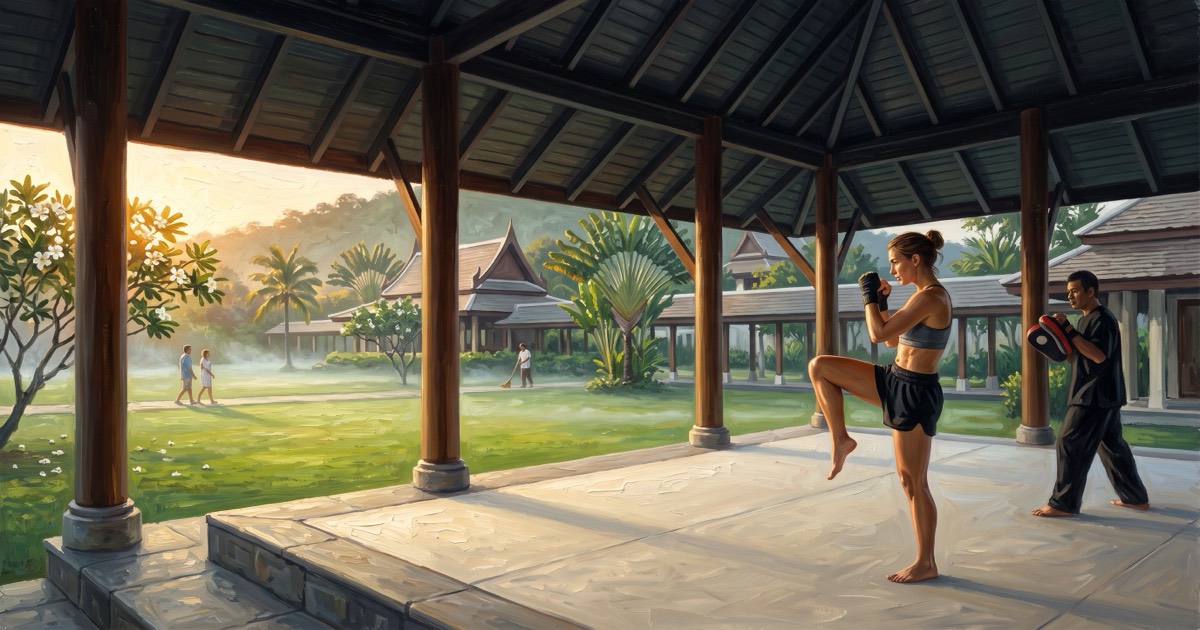
Independently researched rankings of the best wellness resorts and wellness retreats in Thailand, from Hua Hin medical retreats to Koh Samui healing sanctuaries and Phuket training campuses.

Enjoy tranquility in the "Land of Smiles"! Discover the best Thailand wellness resorts, expertly curated and ranked. Let our unique process guide your journey to holistic rejuvenation. We are here for you! Thailand, renowned for its rich cultural heritage and breathtaking landscapes, offers a serene escape for those seeking renewal. Our selection of top-rated wellness resorts in Thailand provides transformative experiences, blending ancient healing traditions with modern approaches. Immerse yourself in the beauty of this enchanting country, and embark on a personalized wellness journey that will leave you feeling refreshed and revitalized.Find your perfect sanctuary at one of Thailand's premier wellness resorts, where expert guidance and personalized care create a truly unforgettable experience.
Thailand's wellness heritage spans centuries, rooted in the ancient practices of Nuad Thai massage recognized by UNESCO as an Intangible Cultural Heritage traditional herbal medicine, and Theravada Buddhist meditation. The "Land of Smiles" offers an unmatched combination of world-class hospitality, tropical beauty, and deeply authentic healing traditions at remarkably accessible price points. Thai wellness resorts masterfully weave together royal spa traditions, organic Thai cuisine, and holistic therapies in settings ranging from misty northern mountains to crystalline southern islands.
| Resort | Location | Type | Stay | Price Range | Best Season | Signature Experience | Wellness Focus |
|---|---|---|---|---|---|---|---|
| Chiva Som | Hua Hin | All-Inclusive | 3-14 nights | $$$$ | Nov to Feb | Niranlada Medi-Spa | Integrative health & detox programmes |
| Kamalaya Koh Samui | Koh Samui | A La Carte | Flexible | $$$ | Dec to Apr | Monk cave meditation | Holistic healing & TCM |
| Six Senses Yao Noi | Phang Nga | A La Carte | Flexible | $$$$ | Nov to Apr | Sleep program with tracking | Sustainable island wellness |
| RAKxa | Bangkok | All-Inclusive | 3-14 nights | $$$$ | Year-round | VitalLife diagnostics | Medical wellness & diagnostics |
| Thanyapura | Phuket | A La Carte | Flexible | $$ | Nov to Apr | Olympic-grade sports training | Sports science & integrative health |
| Aleenta Phuket | Phang Nga | A La Carte | Flexible | $$$ | Nov to Apr | Beachfront Ayurveda | Boutique coastal wellness |
Thailand Wellness Resorts - A Journey to Blissful Healing: Thailand wellness resorts offer unparalleled healing experiences, masterfully blending ancient Eastern traditions with modern luxury. The best wellness resorts in Thailand harness the country's natural splendor, from pristine beaches to lush mountains, creating environments where health transformation occurs effortlessly. Luxury wellness resorts in Thailand deliver extraordinary experiences guided by practitioners trained in both traditional healing arts and cutting-edge wellness science. Each destination provides a distinctive approach to wellbeing while sharing Thailand's legendary hospitality and commitment to holistic healing, whether you seek detoxification, spiritual renewal, medical optimization, or athletic excellence amid settings of extraordinary beauty.
Chiva-Som is Asia's first dedicated wellness resort, opened on 19 April 1995 by the Thai statesman Boonchu Rojanastien on the site of his own beach house at Hua Hin, three hours south of Bangkok on the Gulf of Thailand. The name means haven of life, and the property still reads that way: 54 rooms, suites and garden pavilions in seven acres of tropical garden beside a long, quiet beach, refreshed in a four-year renovation completed in 2019 under his son Krip, with interiors by Ed Tuttle. Every stay is a structured wellness retreat: a health consultation on arrival, then one of sixteen retreats built on six modalities, spa, fitness, physiotherapy, holistic health, nutrition and aesthetic beauty, with a minimum of three nights and daily treatments included. The Health and Wellness Centre holds some seventy treatment rooms, a hydrotherapy suite and bathing pavilion, and the Niranlada Medi-Spa adds physician-led aesthetic and preventive work. Conde Nast Traveller named it among the best hotels and resorts in the world on its Gold List 2026, and its readers have voted it the world's best destination spa. Among Thailand wellness resorts it is the benchmark for a serious, quiet, all-inclusive reset; it is not a beach holiday with a spa attached, and alcohol is a rarity.
Kamalaya opened in November 2005 on the south coast of Koh Samui, built by John Stewart, who had spent sixteen years in a Himalayan ashram, and his wife Karina, a doctor of traditional Chinese medicine, around a hillside cave that Buddhist monks had used for meditation. It is a 76-room wellness sanctuary rather than a hotel: teak rooms and villas by the architect Robert Powell step down a jungle ravine of granite boulders and streams to a small private beach, and the cave still anchors the property. Guests arrive to a complimentary wellness consultation and bio-impedance analysis, then either follow a programme, from three to fourteen nights on themes such as burnout recovery, detox, sleep and stress, or stay a la carte with daily classes, steam caverns and plunge pools included. The kitchen, designed with Karina Stewart, treats food as part of the therapy: no processed sugar, dairy or wheat, with detox menus for those on them. It was named Best Global Holistic Haven at The Luxury Spa Edit's Global Spa Awards 2026. It is the most soulful of Thailand's wellness retreats, and the right choice for a guest recovering from something; the beach is shallow and not for swimming, and it suits adults far better than families.
Six Senses Yao Noi sits on the small island of Koh Yao Noi in Phang Nga Bay, between Phuket and Krabi, reached by a twenty-minute drive from Phuket airport to Ao Por marina and a forty-five-minute boat. Built on a former rubber plantation across 24 acres of gardens and mangrove, it has 56 freestanding pool villas on Thai-style stilts, each with an infinity pool, open-air bathroom and a personal villa host, looking out over the limestone karsts that rise from the Andaman Sea. It is a Thailand wellness resort in the Six Senses manner rather than a clinic: a spa village of open pavilions, a gym, tennis and a hilltop yoga deck, with the brand's sleep, detox and fitness programmes bookable by the day or as a multi-day wellness retreat, and Six Senses' resident visiting practitioners through the season. Cooking classes, a working organic garden and boat days to the bay's caves and islands fill the rest. Stays are entirely flexible and there is no medical supervision. It is the choice for a couple who want the most beautiful setting on this page with wellness woven in; a guest wanting programme structure will find Chiva-Som or Kamalaya closer to the brief.
RAKxa opened in December 2020 on Bang Krachao, the protected river island that Bangkok calls its green lung, about forty minutes from Suvarnabhumi airport and thirty from downtown, yet reached through greenery by bicycle path and boat. It was founded by M.K. Real Estate, Minor Hotels and VitalLife, the scientific wellness arm of Bumrungrad International Hospital, which is what makes it Thailand's first fully integrative medical wellness retreat: three centres work in concert, the VitalLife clinic for diagnostics, IV therapy, cryotherapy and physician consultations, RAKxa Jai for Ayurveda, traditional Thai and Chinese medicine and energy work, and RAKxa Gaya, a medical gym with hydrothermal facilities and physiotherapy. Around sixty villas of eighty square metres and up, dressed in Jim Thompson silks, sit in 63 acres of botanical garden around a lake. Stays are programme-led, from three to fourteen nights, each starting with a pre-arrival questionnaire and shaped around goals such as gut health, sleep, hormonal balance, detox or longevity, with anti-inflammatory menus at Unam and Ukhao. It was voted Best Global Transformational Retreat at the Global Spa Awards 2026. Among Thailand wellness resorts it is the most clinical, for a guest who wants measurable results and hospital-grade support; it is not a beach and it is not a place to drift.
Thanyapura is a sports and health resort in Thalang, northern Phuket, fifteen minutes from the airport on the edge of a national forest, and the one property on this page where Olympic squads train alongside wellness guests. Its facilities are the point: a 50-metre Olympic pool and a 25-metre training pool, a 500-metre cushioned athletics track, a 900-square-metre fitness centre, tennis, a football pitch, yoga and meditation studios and a spa, all included in the room rate with unlimited group classes. Accommodation is split between a lively 77-room pool wing beside the sports fields and a quieter 37-room garden wing for wellness guests, with a restaurant and a vegan cafe. The Lifestyle Clinic adds functional-medicine assessments, physiotherapy, IV therapy and nutrition coaching, and structured wellness retreats of three to seven nights address weight, burnout, fitness and mobility. Stays can also be entirely a la carte. It is the Thailand wellness resort for a guest whose idea of a reset is movement, a triathlete, a runner, a family with active teenagers, and for anyone whose priority is training rather than treatments; guests seeking silence, beach or a luxury spa should look elsewhere on this page.
Aleenta Phuket-Phang Nga opened in 2005 on Natai Beach, a long, largely undeveloped stretch of the Andaman mainland just north of Phuket, about half an hour from the airport. Owned by the Thai AKARYN group, a member of Leading Hotels of the World and holder of a Michelin Key, it is built on an all-suites, all-private idea: every room is a suite or villa, from ocean-view lofts to four-bedroom beachfront villas, most with their own pool behind floor-to-ceiling glass. Its wellness dimension is AYURAH, the resort's licensed wellness clinic and spa, which runs medically informed wellness retreats on themes such as detox, sleep, weight, hormones and burnout, each starting with an individual assessment, alongside complimentary daily yoga, sound baths and breathwork for every guest. SEASONS serves plant-based fine dining; The Edge does Thai and international by the beach. Stays are flexible, so a couple can take a beach holiday and add a retreat, or come only for the programme. It is the softest entry among Thailand's wellness resorts and the most romantic; the beach faces a heavier monsoon from June to October, and the high season is November to April.
The property that invented the Asian destination spa, on the Gulf of Thailand since 1995
Chiva-SomChiva-Som opened at Hua Hin in 1995 and effectively created the Asian destination spa, a model most of the region's wellness properties have been built on since. Seven acres of beachfront gardens on the Gulf of Thailand hold fifty-four rooms, suites and Thai pavilions, with programmes assembled from individual health assessment rather than chosen from a list. Three decades of practice and a resident medical team spanning doctors, physiotherapists, naturopaths and fitness specialists keep it competitive with clinics that arrived twenty years later.
A note on the newer diagnostic offering. Chiva-Som added a hyperbaric chamber and epigenetic testing in 2024. Hyperbaric oxygen therapy has genuine licensed medical indications, but general wellness, longevity and cellular rejuvenation are not among them. Epigenetic and biological-age testing is offered widely across this sector and interpretation varies considerably; a result may be uncertain or difficult to act on. Ask what is being tested, what the result would change, and who will interpret it with you, and take anything clinical to your own doctor.
Setting:
Seven acres of tropical garden along the beach at Hua Hin, planted densely enough that the property disappears into itself. Thai architecture, low buildings, and paths that keep the sea audible from most of the grounds. Around three hours from Bangkok by road, which is far enough to feel deliberate and close enough to be practical.
Signature Spa Treatments:
Traditional Chinese Medicine and naturopathy are traditional systems with their own training rather than evidence-based ones in the Western sense. The treatments are skilled and pleasant; the resident medical team is where the clinical work happens.
Water & Wellness Facilities:
Pools require chemical treatment and monitoring under bathing regulation. Watsu and warm-water bodywork are genuinely restful: buoyancy unloads the joints and the warmth eases muscle tension, which is a sufficient description of what they do.
Programmes include:
Each program incorporates:
Chiva-Som has genuine resident medical staff, which distinguishes it from a hotel spa. It is not a hospital and does not treat diagnosed disease. Detox describes a programme category rather than a physiological process (the liver and kidneys handle that continuously), and terms such as cell vitality and cellular rejuvenation are programme names rather than measurable outcomes. Food sensitivity testing outside recognised allergy diagnostics has a weak evidence base. Anyone with a history of disordered eating should approach weight programmes with care, and anyone under medical care should continue it and speak to their own doctor first.
Additional Activities:
On the garden tours: plant identification is educational. Do not gather or consume plants on the strength of a guided walk.
The kitchen works from organic ingredients toward food that supports the programme without reading as restriction. Dishes are developed jointly by nutritionists and chefs, calibrated to each guest's plan. Thai cooking survives the process, which is not always true of wellness kitchens in Thailand.
Menu Highlights:
Menus change with the season and by programme, so specific dishes are not published in advance. Expect recognisably Thai cooking (lemongrass, galangal, pomelo, Gulf seafood) prepared lighter rather than prepared differently, which is the kitchen's real achievement over thirty years. Dietary requirements are accommodated as a matter of routine.
Accommodations:
Service Approach:
Attentive without hovering, in the Thai register. Personal wellness advisors coordinate each programme, while the practitioner team spans doctors, physiotherapists, naturopaths and fitness specialists working from a shared assessment. Thirty years of operation shows in the coordination: departments here communicate in a way that newer properties tend to still be working out.
Estimated Pricing & Value:
Pricing is indicative and varies by season and exchange rate; confirm current rates directly with the resort. Additional diagnostics and specialised treatments may be charged separately.
Included:
Three meals daily, wellness consultation, a daily massage, unlimited fitness and leisure activities, use of the water therapy suites, and airport transfers from Bangkok on longer stays.
FAQ:
What distinguishes Chiva-Som's approach?
Chiva-Som pioneered this model in Asia, combining Eastern healing traditions with Western assessment, and the thirty years since have gone into refining the join rather than expanding the property. Stays begin with consultation establishing baseline measurements and objectives, from which the whole programme is built; there is no standard itinerary. The resident medical team means the diagnostic side is genuine rather than decorative. The well-founded parts of what it offers (nutrition, exercise, sleep, physiotherapy, stress management) are among the best-supported interventions in health, and they are separable from the newer longevity technologies where evidence is thinner. Guests with existing medical conditions should discuss their programme with their own doctor before booking.
What happens after the stay?
Considerable attention goes into this, on the reasonable view that a fortnight changes little by itself. Guests leave with a plan covering nutrition, exercise, stress management and sleep. Follow-up consultation with practitioners is available at intervals after departure, and guests retain access to resources including instructional material and recipes matched to their programme. The educational component is deliberate: the aim is that guests understand why they were doing what they were doing, which is what makes any of it portable.
How long should a stay be?
Three nights is the minimum offered, but the practitioners recommend at least seven for most objectives. The reasoning is straightforward: assessment takes time, dietary and sleep changes need several days before they register, and treatments work cumulatively rather than singly. For weight management or serious stress reduction, fourteen nights allows a full arc of assessment, intervention and consolidation. Shorter stays are better understood as a reset than a programme, which is a perfectly reasonable thing to want, and the property will build one accordingly.
Inspected ratings
Wins: judged and editorial
Reader and public votes
Certifications and listings
Distinctions
Entries are grouped by type, since inspected ratings, judged and voted awards, reader rankings, editorial selections and audited certifications carry different weight. Sister property Zulal Wellness Resort by Chiva-Som in Qatar operates under the same group and holds its own separate awards, which are not counted here.
Also featured in: Bone Health · Heart Health
Built around a monk's meditation cave on the southern coast of Koh Samui
Kamalaya Koh SamuiKamalaya was built around a cave on the southern coast of Koh Samui that Buddhist monks had used for meditation across centuries, and the property is arranged around it rather than merely near it. Programmes combine Eastern and Western practice across stress and burnout, detox, weight management and emotional balance, and it is the emotional wellbeing work that has earned the property most of its reputation. Seventy-six rooms and villas are set into a hillside that runs down to its own beach.
Setting:
A wooded hillside opening onto a beach, with buildings following the contours rather than levelling them. The monk's cave sits at the centre of the property, and the resort was designed outward from it. Facilities are spread across several levels linked by paths through tropical planting, which means a certain amount of walking and a good deal of privacy. Worth weighing if mobility is a consideration.
Signature Spa Treatments:
Ayurveda and Traditional Chinese Medicine are traditional medical systems with their own training and lineages rather than evidence-based ones in the Western sense. Energy work is offered as an experience; there is no evidence it detects or corrects anything physical, though many guests find it calming.
Water & Wellness Facilities:
Pools require chemical treatment and monitoring under bathing regulation.
Wellness programmes include:
Each program incorporates:
These are wellness programmes rather than medical care: no diagnostics, no published outcome data. Detox describes a programme category rather than a physiological process: the liver and kidneys handle that continuously, and a week of light food, daily movement, bodywork and proper sleep is a sufficient explanation for feeling considerably better. Programmes named for immunity do not enhance immune function. Anyone with a history of disordered eating should approach weight programmes with care, and anyone under medical care should continue it and speak to their own doctor first.
Additional Wellness Activities:
The cave remains a site of Buddhist significance. Guests are welcome to sit there; dress modestly and treat it as a place of practice rather than an attraction.
The kitchen works from whole ingredients toward a vegetable-led, lightly prepared style, accommodating everything from pescatarian to vegan without treating any of it as a compromise. Thai flavour survives intact, which on a restricted programme is the difference between completing it and abandoning it on day four.
Menu Highlights:
A coconut vegetable laksa arrives golden and fragrant, young coconut meat through local vegetables in a broth layered with lemongrass, galangal and turmeric. The raw papaya pad thai turns green papaya into noodles under an almond butter and tamarind sauce. Both read as Thai food rather than as Thai food adapted for a spa, which is the kitchen's real achievement. Note that terms such as anti-inflammatory and adaptogenic are used widely in this sector: a vegetable-led wholefood diet is genuinely sensible, but individual ingredients do not carry the specific effects those words imply.
Accommodations:
Service Approach:
Warm and intuitive rather than formal, with a notably long-tenured team, many of whom have been at the property since it opened. Each guest works with a wellness concierge coordinating the programme. The founders remain present and involved, which is unusual at this scale and accounts for much of the communal atmosphere guests describe: people here tend to talk to each other, which is not true of every wellness property.
Estimated Pricing & Value:
Pricing is indicative and varies by season and exchange rate; confirm current rates directly with the resort. Note that programme prices here exclude accommodation, which is booked separately by room category and season; the programme rates above are valid until 31 March 2027.
Included:
Programmes include lunch and dinner, two airport transfers, the initial wellness consultation, a departure review, all scheduled treatments, unlimited access to the fitness facilities, the daily holistic activity schedule, the steam caverns and the swimming pools. Accommodation is booked separately.
FAQ:
How are traditional and modern approaches combined here?
Kamalaya's founders came from backgrounds in Traditional Chinese Medicine, Ayurveda and monastic practice, and built the property around combining those with contemporary assessment. In practice that means Ayurvedic treatment sitting alongside nutritional guidance, or Chinese medicine consultation running alongside conventional measures. Consultants are cross-trained rather than siloed, which is what allows a single programme to draw on several traditions coherently. Be clear about the distinction: these traditions have their own training and internal logic, and are not evidence-based medicine. Guests with medical conditions should discuss their programme with their own doctor beforehand, particularly the detox protocols.
What is the monk's cave?
A cave on the property that Buddhist monks used for meditation and solitary retreat over centuries, and the reason Kamalaya exists in this location. The founders built outward from it, and it remains open to guests for meditation and quiet sitting, maintained in its natural state. It is worth approaching as a site of living Buddhist significance rather than a resort feature. The practical effect is that the property has a still centre, and the contemplative tradition it draws on is physically present rather than merely referenced.
What does the emotional wellbeing programme involve?
This is the work Kamalaya is best known for, covering burnout, grief, life transitions and relationship difficulty. The approach combines meditation and contemplative practice with body-based treatment, nutritional support and counselling. The reasoning is that emotional difficulty registers physically as well as mentally, so addressing sleep, nutrition and physical tension alongside the psychological work gives a broader base than talking alone. It is offered as supportive and restorative rather than as clinical treatment, and it is not a substitute for therapy or psychiatric care. Anyone currently under treatment for a mental health condition should speak with their own practitioner before booking, and the resort's team will discuss suitability in advance. If you are in crisis, this is not the right first step: contact a doctor or a crisis service.
Judged awards
Public votes and rankings
Editorial selections and listings
Entrant-nominated programmes
Distinctions
Entries are grouped by how each was decided. Judged awards, assessed by industry professionals from written entry with a site visit for shortlisted properties, carry more weight than public votes; entrant-nominated programmes, where a property submits itself, carry least.
Also featured in: Back Pain · Neck Pain · Hand & Wrist Pain · Gut Health · Functional Medicine · Colon Hydrotherapy · Stress & Burnout
A cliffside island resort facing the limestone karsts of Phang Nga Bay, reachable only by boat
Six Senses Yao NoiSix Senses Yao Noi sits on a cliffside on Koh Yao Noi, an island in Phang Nga Bay between Phuket and Krabi, facing one of the most photographed seascapes in Southeast Asia. Fifty-six elevated pool villas look onto the limestone karsts, an organic garden supplies the kitchens, and the wellness programming follows the Six Senses model of sleep, screening and lighter eating built around the setting. The sustainability operation here is among the group's most developed, including bottling its own drinking water and running the Earth Lab conservation centre. It is a resort with a good spa rather than a clinic: there is no resident medical team and no diagnostic programme.
Setting:
Koh Yao Noi is a small island in Phang Nga Bay, surrounded by the limestone karsts that rise sheer from the water throughout this stretch of the Andaman. The resort occupies a hillside, so the view is present from almost everywhere on the property. Access is by boat from Phuket or Krabi, and the crossing does useful work: by the time you arrive, the mainland has receded in more than the literal sense.
Signature Spa Treatments:
These are skilled spa treatments. Botanical and mineral ingredients are pleasant on skin; the effects to expect are relaxation and comfort rather than measurable physiological change.
Water & Wellness Facilities:
Pools require chemical treatment and monitoring under bathing regulation, whatever the water source.
Programmes include:
Each program incorporates:
These are wellness offerings rather than medical care: there is no physician on site and no published outcome data. Detox and cleanse describe programme categories rather than a physiological process: the liver and kidneys handle that continuously. Bioimpedance body composition analysis is a fitness tool with meaningful margins of error, not a medical assessment, and biomarker screening can produce findings that are uncertain or difficult to act on; take anything clinical to your own doctor.
Additional Activities:
On the garden workshops: plant identification is educational. Do not gather or consume plants on the strength of a guided session. Sea kayaking in the bay should follow the resort's guidance on tides and conditions.
The kitchen works to the Six Senses principle of local, fresh and clean, with the organic garden supplying much of the produce and the fishing communities of Phang Nga Bay supplying the rest. Sourcing is deliberately short-range, which on an island is both an environmental position and a practical necessity.
Menu Highlights:
Menus change with the season, the garden and the catch, so specific dishes are not published in advance. Expect Andaman seafood, garden vegetables and heirloom rice, prepared simply. The genuine point of eating here is that most of what reaches the plate travelled almost no distance, which is a real distinction rather than a marketing line.
Accommodations:
The hillside setting involves steps and steep paths between villas and facilities, which is worth weighing if mobility is a consideration.
Service Approach:
Each villa is assigned a Guest Experience Maker, the group's version of a butler, handling everything from excursions to pillow preferences for the duration of the stay. Many of the team come from the island and the surrounding communities, which shows in the excursions particularly. The register balances attentiveness against privacy, and on a property reached only by boat, the latter is much of what guests came for.
Estimated Pricing & Value:
Pricing is indicative and varies by season and exchange rate; confirm current rates directly with the resort. Note that the monsoon season, roughly May to October, brings lower rates and rougher crossings.
Included:
Daily breakfast, arrival and departure boat transfers, Guest Experience Maker service, daily yoga and fitness classes, non-motorised water sports equipment, and access to the wellness facilities including steam rooms and relaxation areas.
FAQ:
What does the sustainability programme actually involve?
More than most, and it is visible rather than stated, which is the right standard for any sustainability claim. The resort bottles its own drinking water on site, removing plastic bottles from the operation entirely. The Earth Lab functions as both conservation centre and open workshop, and guests can take part in what happens there. Solar generation covers part of the property's power. The organic gardens supply the kitchens directly, and organic waste returns to them as compost. On a small island with finite resources these are operational necessities as much as commitments, which is arguably why they are followed through more thoroughly here than at mainland properties.
How do you get there?
By boat, and only by boat, which is central to the experience rather than an obstacle to it. Most guests transfer by speedboat from Phuket or Krabi, with the resort handling logistics from the airport onward, including a private pier and arrival pavilion. Helicopter transfer from Phuket can be arranged. Two practical points: the crossing takes around 45 minutes to an hour depending on departure point, and during the monsoon season, roughly May to October, sea conditions can make crossings uncomfortable or occasionally cause delays. Worth factoring into tight travel connections.
What does the sleep programme involve?
Sleep With Six Senses is the group's standard sleep programme, run across its properties rather than unique to this one, and offered here in full. It opens with an assessment, with optional tracking, then adjusts the room environment (bedding, humidity, sound and light) alongside guidance on evening routine, timing and nutrition. The emphasis falls on habits and environment that can be reproduced at home, since a week of good sleep on a quiet island proves little by itself; the island's darkness and silence are probably doing more work than any single intervention. It is structured sleep-hygiene guidance rather than a clinical sleep service: a suspected disorder such as apnoea needs medical investigation, not a retreat.
Inspected ratings
Reader-voted rankings
Editorial rankings
Nominations
Distinctions
Tripadvisor Travelers' Choice is an aggregate score derived from customer ratings rather than an award. The MICHELIN Keys are the entry to weigh: assessed by inspection rather than voted. Every other entry here is a reader vote, an editorial ranking or a nomination. Beyond the Keys, the property's genuine distinctions are its setting and its sustainability infrastructure.

A physician-led medical retreat on the forested river island Bangkok calls its Green Lung
RAKxa Wellness and Medical SanctuaryRAKxa sits on Bang Krachao, the forested island inside a loop of the Chao Phraya river that Bangkok calls its Green Lung, and is among the few properties on this list where the medical side genuinely leads. Programmes are physician-supervised and built from diagnostics including biomarker and genetic analysis, delivered alongside traditional Thai therapies, nutrition and movement. Roughly sixty villas sit among botanical gardens and lotus ponds, forty-five minutes from central Bangkok yet convincingly separate from it.
Read before booking. RAKxa offers procedures that are medical rather than spa treatments (intravenous nutrient infusions, hyperbaric oxygen therapy and cryotherapy among them), and the evidence varies considerably across them. Hyperbaric oxygen has genuine licensed indications, but general wellness and longevity are not among them. IV infusion is a medical procedure with real risks and should follow assessment rather than preference. Cryotherapy is not suitable for people with cardiovascular conditions or uncontrolled high blood pressure, or during pregnancy. Discuss any of these with your own doctor before travelling rather than deciding on arrival.
Setting:
Bang Krachao is an anomaly: roughly sixteen square kilometres of forest and wetland inside a river loop, protected from development and surrounded by one of Asia's largest cities. Thailand designated it a conservation green zone decades ago, and the result is measurably cooler, quieter and greener than the metropolis across the water. RAKxa occupies part of it, forty-five minutes from downtown Bangkok and about an hour from Suvarnabhumi, which for a medical retreat is an unusual combination of seclusion and access.
Treatments include:
See the caution in the summary above: the medical procedures listed here carry considerations worth weighing with your own doctor first.
Water & Wellness Facilities:
Pools require chemical treatment and monitoring under bathing regulation. Flotation is deeply relaxing for most people; magnesium is not meaningfully absorbed through skin, so the benefit is the stillness rather than the mineral.
Programmes include:
Each program incorporates:
RAKxa has genuine resident medical staff, which distinguishes it from most properties in this guide. Two clarifications remain worth making. Programmes named for immunity do not enhance immune function, and detox describes a programme category rather than a physiological process: the liver and kidneys handle that continuously. Genetic and biomarker testing can produce findings that are uncertain or difficult to act on; ask what is being tested, what the result would change, and who interprets it with you. Anyone with a history of disordered eating should approach restrictive programmes with care.
Additional Activities:
Neurofeedback is an interesting tool with a mixed evidence base; treat it as an experience rather than a treatment.
Menus are developed jointly by physicians, nutritionists and chefs, which is rarer than it sounds and shows in the results: food that serves a nutritional purpose without reading as clinical. Dishes are matched to each guest's programme and assessment.
Menu Highlights:
Menus change with the season and by programme, so specific dishes are not published in advance. Expect vegetable-led cooking with river fish and local produce, plated to a standard that gives no indication of the nutritional targets behind it, which is the kitchen's real achievement. Note that terms such as anti-inflammatory and adaptogenic are used widely in this sector: the underlying vegetable-led pattern is genuinely sensible, but individual ingredients do not carry the specific effects those words imply.
Accommodations:
Service Approach:
RAKxa runs with clinical precision inside Thai hospitality, and the combination works better than either alone would. Each guest has a wellness consultant coordinating between the diagnostic, therapeutic and lifestyle elements, which on a programme involving physicians, nurses, therapists, nutritionists and traditional practitioners is necessary rather than luxurious. The medical team is genuinely medical, which is the distinction between this and a spa offering wellness screening.
Estimated Pricing & Value:
Pricing is indicative and varies by season and exchange rate; confirm current rates directly with the retreat. Note that individual medical procedures may be charged separately and can add substantially.
Included:
Programmes include accommodation, three meals daily, return transfers from Bangkok, the initial health and wellness consultation, use of the hydrotherapy facilities and fitness centre, the daily activity schedule, and the treatments prescribed for that programme.
FAQ:
How does RAKxa's medical approach differ from a conventional check-up?
The difference is duration and integration rather than technology. A conventional consultation identifies and treats what presents; RAKxa opens with diagnostics, then spends a week or more implementing the response under supervision. Physicians, nutritionists, therapists and movement specialists work to one plan. That implementation window is the real offering, because most health advice fails at the point of execution rather than diagnosis. Two things to hold in mind: the well-founded parts of this (nutrition, exercise, sleep, physiotherapy, cardiovascular assessment) are genuinely worthwhile and separable from the therapies with thinner evidence; and RAKxa does not replace your own physician. Guests under treatment should coordinate with them before and after.
What is Bang Krachao?
A loop in the Chao Phraya river encloses roughly sixteen square kilometres of forest, mangrove and wetland directly across the water from central Bangkok, and Thai conservation designation has kept it undeveloped apart from small communities and a handful of properties. Bangkok calls it the Green Lung for good reason: the temperature drops noticeably on crossing, the traffic noise disappears, and the biodiversity is remarkable given what surrounds it. For a health retreat the combination is unusually practical, offering genuine separation without the logistics of a remote location, and access to Bangkok's medical infrastructure if it is ever needed.
What happens after departure?
Guests leave with a written plan covering nutrition, supplementation, exercise, stress management and sleep, adapted for their actual circumstances rather than ideal ones. The medical team schedules follow-up consultation at intervals after departure to review progress and adjust the protocol. The reasoning is that the integration period after a programme is where results are won or lost, and that a retreat which ends at the airport has done half a job. Anyone making significant changes to medication or treatment should do so with their own physician rather than on a retreat's recommendation alone.
Judged awards
Wins: voted
Public votes and rankings
Editorial selections
Distinctions
Two similarly named programmes appear above, and they are separate organisations using different methods. The World Spa and Wellness Awards (Professional Beauty Group, UK) judges written entries through industry professionals, and sends a visiting judge to shortlisted properties in the Spa of the Year categories. The World Spa Awards (part of the World Travel Awards family) is decided by industry and public voting. Both entries are genuine; they measure different things, and are listed separately for that reason.
A serious training campus in northern Phuket, for people who would rather train than rest
Thanyapura Health & Sports ResortThanyapura is the outlier on this list and deliberately so: a genuine sports training campus in northern Phuket with competition-standard pools, tennis courts and an athletics track, wrapped around a wellness and medical centre. It serves professional athletes and training camps alongside recreational guests who want structure rather than pampering, and prices accordingly, which makes it by some distance the most accessible property in these rankings. Twenty-three hectares beside Khao Phra Thaew National Park, fifteen minutes from the airport.
Setting:
Twenty-three hectares against the forest of Khao Phra Thaew National Park, in the quieter northern end of Phuket well away from the resort strips. The campus reads as exactly what it is: serious facilities laid out for training, with accommodation and a wellness centre built around them. Fifteen minutes from Phuket International Airport, which for guests arriving with bicycles and equipment is not a small consideration.
Treatments include:
Contrast bathing and ice baths are widely used in sport and there is reasonable evidence they help perceived recovery after hard training; the effect on actual adaptation is debated, and some research suggests routine post-session cold immersion may blunt strength gains. Worth discussing with a coach rather than applying automatically.
Water & Training Facilities:
Pools require chemical treatment and monitoring under bathing regulation. Ice baths are not suitable for everyone: people with cardiovascular conditions or uncontrolled high blood pressure should avoid them, and nobody should use them alone.
Programmes include:
Each program incorporates:
These are fitness and coaching programmes rather than medical care. What Thanyapura offers is unusually well-evidenced for this sector: structured exercise, progressive overload, sports nutrition and recovery are among the best-supported interventions in health, and the coaching is genuinely qualified. Anyone with a health condition, an injury, or returning to training after a long break should have a medical check with their own doctor before an intensive block, and tell the coaching team.
Additional Activities:
Phuket is hot and humid year-round. Training loads that feel routine at home are considerably harder here, particularly in the first few days. Hydrate, and let the coaching team scale the first sessions.
The kitchen works to performance nutrition rather than spa cuisine, which is a different discipline: meals are built around training load and recovery phase, designed with sports nutritionists. Portions reflect that athletes need feeding rather than restricting, a distinction most wellness kitchens never have to make.
Menu Highlights:
Menus change with the season and by programme, so specific dishes are not published in advance. Expect protein-forward bowls, local seafood, quinoa and rice, and fruit-based recovery dishes: food engineered to macronutrient targets that still tastes like food, which after a morning in the pool matters more than it might elsewhere. Note that terms such as adaptogenic and anti-inflammatory are used widely in this sector: the underlying pattern is sound sports nutrition, but individual ingredients do not carry those specific effects.
Accommodations:
Service Approach:
Practical and knowledgeable rather than deferential, which is the correct register here. The team runs to certified coaches, trainers, physiotherapists and nutritionists who understand training cycles and can talk to a guest about their season rather than their stay. Service is oriented around making training conditions good and recovery efficient, and staff are used to guests at every point from off-season to race week.
Estimated Pricing & Value:
This is by a wide margin the most affordable property on this page, and the only one where an extended stay is realistic for most budgets. Pricing is indicative and varies by season and exchange rate; confirm current rates directly with the resort.
Included:
Daily breakfast, access to the fitness centre and swimming pools, selected group fitness classes, use of the athletics track, and scheduled shuttles to Nai Yang Beach and central Phuket.
FAQ:
How is this different from other wellness retreats?
Most wellness properties are built around rest, and Thanyapura is built around work. The facilities are competition standard rather than resort standard, the coaching staff are qualified to train competitive athletes, and training squads use the campus for exactly that reason. The wellness and medical centre exists to support the training rather than the other way round. Guests looking for a spa holiday will find this the wrong place; guests who find conventional wellness retreats slow will find it the only place on this list built for them. It is also worth saying plainly that what is on offer here (supervised progressive training, sports nutrition, structured recovery) has a stronger evidence base than most of what this sector sells.
Do you need to be an athlete?
No, and a good proportion of guests are not. The facilities are professional standard but the programmes scale to whoever is in front of them, and a significant part of the business is people starting or restarting rather than competing. Beginners work on sustainable habits, technique and gradual progression, with coaching that assumes no background. What makes it work for that group is the surrounding environment: being on a campus where serious training is happening around you tends to raise expectations of yourself in a way a hotel gym does not. The pricing also makes an extended stay realistic in a way most of this category is not. Anyone returning to exercise after a long gap or with a health condition should get a medical check first.
What about mental training?
The Mind Centre runs daily meditation and mindfulness sessions oriented toward active people, and mental performance coaches work on focus, visualisation, goal-setting and managing competition nerves. For athletes this is standard practice rather than an add-on, and for everyone else it tends to transfer. Sessions are performance coaching rather than psychological treatment, and anyone dealing with a mental health condition should continue under their own practitioner's care.
2024
2023
Distinctions
The World Travel Awards are decided by industry and public voting rather than by inspection. Several entries above are nominations rather than wins, and are labelled as such.
Forty suites on an undeveloped ten-kilometre beach, twenty minutes from the airport
Aleenta PhuketAleenta Phuket sits on Natai Beach in Phang Nga province, north of the airport and well clear of Phuket's developed south. Forty suites and villas, most with private pools, open directly onto a ten-kilometre stretch of sand that has stayed largely undeveloped. The Ayurah Wellness Centre runs individual programmes combining Thai healing practice with contemporary approaches, and the property's Pure Blue Foundation gives its sustainability position more substance than most, working on coral regeneration and sea turtle protection. It holds a MICHELIN Key in consecutive years, assessed by inspection rather than voted, which makes this one of the better-credentialled properties in this guide.
Setting:
Natai Beach runs ten kilometres north of the Phuket boundary and remains one of the few genuinely quiet beaches within reach of the airport, twenty minutes away. The resort is built open to it, with the boundary between interior and exterior deliberately loose. Gardens run down to the sand, the Andaman Sea sits directly in front, and the sunsets here are the reason many guests book a second night on the beach rather than in the restaurant.
Treatments include:
These are skilled spa treatments in an award-winning spa. Marine and mineral applications leave skin feeling good; they do not draw toxins from the body, and aromatherapy is pleasant rather than therapeutic in the clinical sense.
Water & Wellness Facilities:
Pools require chemical treatment and monitoring under bathing regulation. On swimming: the Andaman coast has strong currents and occasional rip tides, particularly during the monsoon months from roughly May to October. Observe any flags and the resort's guidance rather than judging conditions from the shore.
Programmes include:
Each program incorporates:
These are wellness offerings rather than medical care: there is no physician on site and no diagnostics, which the FAQ below states plainly. Detox and cleanse describe programme categories rather than a physiological process; the liver and kidneys handle that continuously. What a few days of lighter eating, daily movement, good sleep and skilled bodywork reliably delivers is feeling considerably better, which is reason enough. Anyone under medical care should continue it and speak to their own doctor first.
Additional Activities:
Paddleboarding is best in the calm morning window; conditions change through the day and in monsoon season. Follow the resort's guidance on when to go out.
Aleenta works to locavore principles, which on this stretch of coast means the kitchen garden, the Phang Nga fishing boats and small local farms. The intention is that sourcing supports the surrounding community as well as the guest, and in a province with far less tourism infrastructure than Phuket proper, that distinction carries weight.
Menu Highlights:
Menus change with the season, the garden and the daily catch, so specific dishes are not published in advance. Expect Andaman seafood, coconut-based curries with galangal and kaffir lime, and garden herbs cut hours before service. The cooking is properly Thai rather than internationalised, which given the setting is the only reasonable choice.
Accommodations:
Villas with unfenced private pools and direct beach access need supervision for families with young children.
Service Approach:
At forty rooms the team learns preferences within a day, and the service reads as personal rather than procedural. Wellness staff include trained therapists, nutritionists and fitness practitioners who work together on individual programmes. Sustainability runs through operations rather than sitting alongside them, which guests notice mostly in small things: glass bottles, ceramic amenities, no plastic anywhere on the property.
Estimated Pricing & Value:
Pricing is indicative and varies by season and exchange rate; confirm current rates directly with the resort. Note that the monsoon season, roughly May to October, brings materially lower rates alongside rain and rougher seas.
Included:
Daily breakfast, welcome refreshments, return airport transfers on longer stays, daily yoga, use of the fitness facilities and water sports equipment, and bicycles for exploring the area.
FAQ:
What is Natai Beach like?
Ten kilometres of sand that has escaped the development which reshaped southern Phuket, and it is the property's single greatest asset. It sits in Phang Nga province rather than on Phuket itself, twenty minutes north of the airport, which puts it within easy reach while feeling considerably further. The water is swimmable through much of the year, though the Andaman has strong currents and the monsoon months bring rougher seas. Follow the flags. Sea turtles nest along this coast, and conservation work by the resort and local authorities has helped keep the stretch intact, which is why it still feels like this.
How serious is the sustainability programme?
More substantial than the category norm, largely because of the Pure Blue Foundation, the resort's own marine conservation arm working on coral regeneration and sea turtle protection. Guests can take part in hatchling releases during nesting season, which is the rare sustainability initiative that is genuinely memorable rather than merely worthy. Single-use plastics have been removed entirely, with glass bottles and ceramic amenity containers throughout. Solar covers part of the energy demand and water is recycled. The Travelife Gold certification is audited rather than self-declared, which is the right standard in a category where claims frequently outrun practice, and it is the reason this entry treats the sustainability position as credible rather than repeating it uncritically.
How do the wellness programmes compare with the larger Thai retreats?
Differently rather than better, and the distinction is worth understanding before booking. Aleenta has forty rooms and no medical facility, so it cannot offer what Chiva-Som or RAKxa offer in diagnostics and physician supervision. If you want assessment-led, clinically supervised work, those are the properties on this page to look at. What Aleenta offers instead is scale: consultations produce genuinely individual programmes, and the wellness team coordinates directly with the kitchen because everyone knows everyone. Much of the work happens outdoors on the beach. For guests wanting a wellness stay rather than a clinical intervention, the intimacy is the point.
Inspected ratings
Certifications
Reader votes
Distinctions
Tripadvisor Travellers' Choice is an aggregate score derived from customer ratings rather than an award.
This is one of the stronger records on the site: a MICHELIN Key held in consecutive years and assessed by inspection.