Best Vietnam Wellness Resorts 2026 - Authentic Renewal Wellness Retreats

None of these runs a fixed residential programme, so Vietnam's wellness retreats are places to slow down rather than protocols to follow; what the wellness resorts here reliably deliver is light food, no alcohol, sleep and daily movement in exceptional settings.

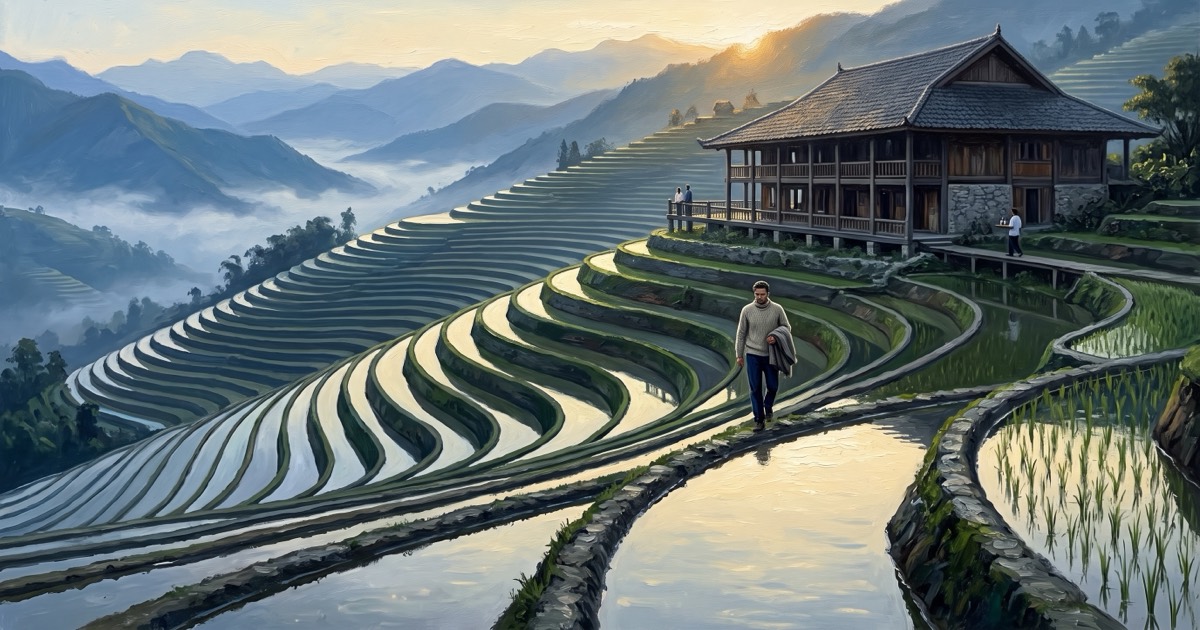
Guest walking the rice terraces below a mountain lodge at dawn near Sapa, northern Vietnam

Enter the consciousness forest of mesmerizing allure in Vietnam's best wellness resorts! Temples of ancient healing arts and luxurious serenity nestled between mist-draped mountains and pristine coastlines. Only apex establishments meeting our rigorous standards earn inclusion in our collection.

These sanctuaries blend thousand-year-old Eastern therapeutic traditions with contemporary comfort, creating havens where rejuvenation and opulence exist in perfect balance. Wellness resorts Vietnam offer transformative experiences from all-inclusive spa paradises to mineral-rich hot springs, united by dedication to authenticity. Here, Vietnamese healing techniques meet innovative approaches in settings where masterful practitioners guide personalized wellbeing journeys.

Here you will discover wellness resorts epically designed for profound mind & body enhancement. Where legendary hospitality and reverence for ancient wisdom create Asia's most magnificent wellness resorts experiences.

Vietnam's wellness traditions are rooted in Thuốc Nam Y (traditional Vietnamese medicine), which combines Chinese medicinal principles with indigenous Southeast Asian herbalism refined over two millennia. The country's extraordinary geographic diversity, from the limestone karsts of Ha Long Bay to the tropical beaches of Phu Quoc and the highland retreats of Da Lat, provides naturally therapeutic environments enhanced by mineral-rich hot springs and pristine coastlines. Vietnamese wellness resorts offer exceptional value alongside genuine healing experiences, featuring traditional Vietnamese massage, herbal steam baths, organic farm-to-table cuisine, and a gentle warmth of hospitality that makes every guest feel genuinely cared for.

Vietnam Apex 6 Wellness Resorts 2026: Comparison at a Glance

ResortLocationTypeStayPrice RangeBest SeasonSignature ExperienceWellness Focus
Fusion Resort & Villas Da NangDa NangAll-InclusiveFlexible$$Feb to AugUnlimited all-spa-inclusiveSpa freedom & beach wellness
Alba Wellness ValleyHueA La CarteFlexible$$Feb to AugJapanese-style onsen & hot springsThermal valley & herbal baths
AmanoiVinh Hy BayA La CarteFlexible$$$$$Year-roundNational park cliff-top spaNature immersion & Aman wellness
Six Senses Con DaoCon Dao IslandsA La CarteFlexible$$$$Nov to AprIsland Earth Lab sustainabilityMarine conservation & sleep
Four Seasons Nam HaiHoi AnA La CarteFlexible$$$$Feb to AugHeart of the Earth spa journeyVietnamese healing & beach luxury
Garrya Mù Cang ChảiYên BáiA La CarteFlexible$$Sep to NovRice terrace trekking at 1,000mHighland nature & ethnic culture
Before You Book: Worth Asking

The properties on this page are resorts and retreats rather than medical facilities. None has a resident clinical team in the sense a hospital does, and this guide does not describe their programmes as treatment.

  • Detox describes a programme category, not a physiological process. The liver and kidneys clear metabolic waste continuously, and no programme improves on that. What these retreats reliably deliver is light food, no alcohol, sleep, daily movement and rest, which is a sufficient reason to go.
  • Specific promises about stress hormones, body composition or metabolic markers should be treated with caution. These properties publish no outcome data.
  • Traditional Vietnamese practice is a living tradition with its own practitioners. A spa treatment influenced by it is not the same thing, and this guide does not present it as such.
  • Ask what is included in the quoted rate, and what is billed separately.

Anyone managing a health condition should discuss a stay with their own doctor first, and continue that care throughout. Vietnam is hot and humid for much of the year; factor that into any programme built around fasting or restricted eating.

Vietnam Wellness Resorts Unique Selection Points Are Many

With so many accommodations on the wellness band wagon these days. True independent thorough specialized info is more important than ever when finding the estimated best of the best wellness resorts Vietnam

Frequently Asked Questions: Vietnam Wellness Resorts

Why is Vietnam an emerging wellness destination?
Vietnam combines strong value with genuine natural resources and an established healing tradition. Thuốc Nam is the indigenous Vietnamese herbal medicine tradition, practised alongside Thuốc Bắc, the Sino-Vietnamese school derived from Chinese medicine. The two are distinct rather than a single blended system. The geography does much of the work: mineral hot springs inland from Hue, forested highlands in the north, and islands like Con Dao that are remote enough to be genuinely quiet. International groups including Aman, Six Senses, Four Seasons and Fusion all operate wellness properties here. Rates are generally lower than comparable properties in Thailand or Bali, though the gap varies by property and season, so treat any single percentage figure with caution.
What is the Fusion all-spa-inclusive concept?
The property in Da Nang pioneered the all-spa-inclusive model, where spa treatments come with the room rate rather than the bill. In practice that means a guaranteed minimum of two treatments per person per day, with further treatments possible subject to availability, not literally unlimited, though in practice few guests exhaust it. Treatments are chosen from a menu covering Vietnamese-inspired therapies, massage, body scrubs and wellness rituals, and yoga, tai chi and meditation classes are included alongside them. The practical effect is that spa use stops being a running decision about cost, which is the reason the model suits a wellness-focused stay. Note that the resort has been rebranded and now trades under a different name, so check current branding, inclusions and rates directly before booking; the same inclusive concept has been extended to other properties in the group, including Alba Wellness Valley near Hue.
What are the natural hot springs at Alba Wellness Valley?
Alba Wellness Valley by Fusion is situated in Phong Dien district near Hue, built around natural hot springs that have been used for healing since the French colonial era. The property features Japanese-inspired onsen baths fed by these geothermal sources, along with outdoor thermal pools, cold plunge facilities, and herbal steam rooms. The mineral composition of the waters includes sulfur, calcium, and bicarbonate, believed to benefit skin conditions, joint pain, and circulation. Alba is unique in Vietnam for combining authentic natural thermal resources with a structured wellness resort experience, bridging Japanese bathing culture with Vietnamese healing traditions in a lush highland valley setting.
How much do Vietnam wellness resorts cost per night?
Vietnam offers exceptional wellness value at every tier. Fusion Resort & Villas Da Nang’s all-spa-inclusive rates start from approximately $200 to $400 per night including unlimited treatments. Alba Wellness Valley offers hot spring wellness from approximately $150 to $300 per night. Garrya Mù Cang Chải provides highland immersion from approximately $100 to $250 per night. At the luxury end, Amanoi in Vinh Hy Bay ranges from $800 to $2,000+ per night, Six Senses Con Dao from $500 to $1,200 per night, and Four Seasons Nam Hai from $400 to $1,000 per night. Vietnam’s lower cost of living means the quality of service and cuisine at these prices often exceeds expectations set by Western-priced alternatives.
What is the best time to visit Vietnam for wellness?
Vietnam’s climate varies significantly by region due to the country’s 1,650km length. Central Vietnam (Da Nang, Hoi An, Hue), home to Fusion Resort & Villas Da Nang, Four Seasons Nam Hai, and Alba Wellness Valley, is best from February through August with dry, warm weather. Southern Vietnam and islands (Con Dao) are ideal from November through April during the dry season, perfect for Six Senses Con Dao. Amanoi in Vinh Hy Bay enjoys year-round warm weather. The northern highlands (Garrya Mù Cang Chải) are most spectacular during September through November when the terraced rice fields turn golden before harvest: one of Vietnam’s most iconic natural landscapes.

BEST VIETNAM WELLNESS RESORTS TOP 6 CURRENTLY - Equipoise

Vietnam has developed a distinctive wellness offering along its coast and inland, and the properties here differ more from one another than the country's reputation suggests. Fusion Resort & Villas Da Nang, which traded for years as Fusion Maia, pioneered the all-spa-inclusive model, where treatments come with the room rather than the bill. Alba Wellness Valley near Hue is built on natural hot springs in the Truong Son mountains. Amanoi sits above Vinh Hy Bay in Nui Chua National Park, and Six Senses Con Dao is remote enough that getting there is part of the decision. Four Seasons The Nam Hai occupies the beach between Hoi An and Da Nang, and Garrya Mù Cang Chải is far north among the rice terraces. The practical choice is between coastal resorts where the spa complements the beach, hot-spring properties where the water is the point, and remote retreats where isolation is the product. Vietnam is generally better value than comparable properties in Thailand or Bali, and the standard of hospitality is high across all three types.

Fusion Resort & Villas Da Nang

The Da Nang beachfront resort that pioneered the all-spa-inclusive model in Vietnam

Fusion Resort & Villas Da Nang
Summary

Fusion Resort and Villas Da Nang sits on Non Nuoc beach, on the stretch American servicemen called China Beach, between Da Nang and Hoi An, and it invented the idea that defines this page. When it opened as Fusion Maia in 2011 it was the first all-spa-inclusive resort in Asia: every guest receives treatments included in the rate rather than charged on top, currently two a day, alongside a breakfast served anywhere, any time. Villas are walled and private, each with its own pool and courtyard garden. The Maia Spa was rebuilt and reopened as the group's flagship at around 2,800 square metres, among the largest in Vietnam, with 26 treatment rooms, a 261-square-metre heated pool inside an indoor garden, infrared saunas, herbal steam room, a red-light therapy room, yoga and wellness lounge and a full fitness centre. Daily practice covers breathwork, tai chi, aerial yoga, meditation and sound healing. Hoi An's UNESCO old town is twenty minutes away by shuttle. Among Vietnam wellness resorts it is the one where treatments are the rate rather than the extra.

Experience & Spa Treatments

Setting:

A long sand beach on the coast south of Da Nang, within reach of both the city and Hoi An, with the Marble Mountains inland and the Son Tra peninsula visible to the north. The architecture is deliberately spare (clean lines, natural materials, walled villa gardens), which suits guests who want quiet and suits less well anyone wanting a lively beach resort. Hoi An old town is a short drive and the shuttle runs on a schedule.

Signature Spa Treatments:

  • Natural Living treatments combining Vietnamese practice with contemporary technique
  • Signature massage using aromatic oils
  • Marine-based body rituals using seaweed and sea minerals
  • Four-hands massage worked by two therapists together

Water Facilities:

  • Beachfront infinity pool facing the sea
  • Private pool in every villa
  • Hydrotherapy facilities within the spa
  • Swimming from the resort's stretch of beach, subject to seasonal conditions

Commercial pools require chemical treatment and monitoring by regulation. Descriptions of pool water as chemical-free are not accurate, including copper-silver ionisation, where the copper and silver ions are themselves the added sanitiser. Claims that ozonated or mineral pool water improves circulation or skin health are not supported by evidence.

Top Wellness Programs & Activities

Programmes include:

  • Natural Living Journeys, offered in detox, rejuvenation and balance variants
  • Mindfulness and stress reduction retreats with daily meditation
  • Digital detox programmes
  • Sleep-focused programmes with evening routines and treatments
  • Nutrition programmes with meal planning and cooking classes

Each programme incorporates:

  • An initial consultation with the spa team
  • A treatment plan set against that consultation
  • The daily included treatments
  • Movement sessions
  • Nutritional guidance using local ingredients

These are wellness programmes, not medical treatment. Anyone managing a health condition should speak to their own doctor before booking.

Additional Activities:

  • Sunrise yoga on the beach
  • Movement classes in the open-air pavilion
  • Guided meditation sessions
  • Beach fitness sessions
  • Paddleboarding and sea swimming when conditions allow
  • Vietnamese tea sessions introducing local herbs
Dining Experience

Vietnamese cooking with contemporary influences, using garden and local produce, with plant-forward options throughout. The resort's best-known dining feature is that breakfast is served wherever and whenever a guest wants it, which in practice matters more than any single dish.

  • Produce: Fruit, vegetables and herbs from the resort garden and local growers
  • Seafood: Landed by Da Nang boats and prepared using Vietnamese technique
  • Plant-based: Vegetarian and vegan dishes across the menu rather than as a side section
  • Programme menus: Adjusted for guests on a wellness programme
  • Approach: Light preparation, with Vietnamese herbs and spices doing the work

Menu Highlights:

Menus change with the season and the catch, so specific dishes are not published in advance. Expect central Vietnamese coastal cooking (local fish and seafood, rice and noodle dishes, garden vegetables and herbs) with vegetarian and vegan options throughout and dietary requirements accommodated on request. Breakfast is available anywhere on the property at any hour.

Accommodations & Service

Accommodations:

  • Pool villas throughout, each with a private garden and indoor-outdoor layout
  • Minimalist interiors in natural materials and neutral tones
  • Floor-to-ceiling glazing to the garden or the sea
  • A pillow menu with a choice of fills

Service Approach:

The resort's "anywhere, anytime" approach applies principally to breakfast, which is served at any hour and in any location on the property; spa treatments run to scheduled hours and are booked in advance, particularly at busy times. Guests are assigned a wellness host who arranges treatments and programme elements. The overall style is attentive but unhurried.

Pricing & FAQ

Estimated Pricing & Value:

  • One-bedroom pool villa: $350-550 per night depending on season
  • Two-bedroom pool villa: $650-850 per night
  • Three-bedroom beach villa: $950-1,200 per night
  • Week-long wellness programme: from around $2,800 including accommodation
  • Extended 21-day stay: from around $6,300 including accommodation

Prices are indicative, change by season, and were set before the property's rebrand. Confirm current rates directly.

Included:

A minimum of two spa treatments per person per day, breakfast anywhere at any hour, morning yoga, use of the fitness facilities, wellness workshops, scheduled shuttle to Hoi An, and airport transfers.

FAQ:

How does the all-spa-inclusive model actually work?

Every stay includes a guaranteed minimum of two spa treatments per person per day, chosen from a set menu, with further treatments possible depending on availability. It is not literally unlimited, though in practice few guests exhaust the allowance. The practical effect is that using the spa stops being a running decision about cost, which changes how people use it: guests book treatments daily rather than once as a treat. Treatments run to scheduled hours and book up at busy times, so reserve on arrival rather than assuming same-day availability. The model has since been extended to other properties in the group, including Alba Wellness Valley near Hue.

What Vietnamese elements are in the treatments?

Treatments draw on Vietnamese ingredients and practice (local herbs, rice, coffee, and tẩm quất massage technique) combined with contemporary spa method. The framing is worth being honest about: this is a contemporary spa using Vietnamese ingredients and some traditional technique, rather than a practice of traditional Vietnamese medicine. Thuốc Nam, the indigenous herbal tradition, is a medical system with its own practitioners, and a resort spa is not that. Taken as a well-run spa with genuine local character, it delivers what it offers.

Who does this suit, and who does it not?

It suits guests who want daily treatments without watching a bill, who like a quiet minimalist property, and who want Da Nang and Hoi An within reach. It suits less well anyone looking for a medically supervised programme (there is no resident clinical team and no diagnostics, which is the distinction from properties like Chenot or Clinique La Prairie) or anyone wanting a lively resort with extensive facilities beyond the spa. The Natural Living Journeys are structured spa programmes with nutrition and movement alongside, not clinical interventions, and should be judged on that basis.

Recent Accolades

Listings

  • Included in Vietnam Luxury Express's Top 50 Vietnam Luxury Resorts, 2025. A publication listing rather than a judged award

Reader polls and nominations

  • Placed first for Best Hotel for Nature Lovers, Best Hotel for Sustainability and Best Hotel for Families in the Luxury Lifestyle Magazine Readers' Travel Awards, 2023. These are reader-voted magazine categories, not independently judged awards
  • Nominated for Asia's Leading Retreat, World Travel Awards, 2023

Distinctions

  • All-spa-inclusive model: at least two spa treatments a day included with every stay
  • Breakfast served anywhere, at any time, as a standing offer
  • Beachfront setting on Non Nuoc Beach, Da Nang

There are no judged or inspected awards in this record: what remains is a publication listing, three reader-poll placings from a single magazine, and one nomination. That is worth stating plainly rather than leaving to inference.

The genuine distinction is the operating model, not an award: at least two spa treatments a day included with every stay. All-spa-inclusive at this level is rare, and it changes the arithmetic of a wellness stay considerably compared with properties where treatments are charged on top of the room rate.

Naming. The property formerly traded as Fusion Maia Da Nang and now operates as Fusion Resort & Villas Da Nang. The 2023 accolades above were made under the former name.

Alba Wellness Valley by Fusion

A hot spring resort in the Truong Son foothills near Hue, with Japanese-style onsen bathing

Alba Wellness Valley by Fusion
Summary

Alba Wellness Valley by Fusion lies about thirty kilometres north-west of Hue, the former imperial capital and a UNESCO World Heritage site, built at the source of the Thanh Tan geothermal spring in a wooded valley. The thermal water is the reason to come: it runs through the gardens so guests can soak at any hour, and the resort operates what it describes as the only seven-step Japanese onsen in Vietnam, a sequenced bathing ritual rather than a single pool. Accommodation is in bamboo bungalows, each with a garden, outdoor rain shower and a bicycle, and guests move about in kimono. The spa runs daily treatments with holistic wellness programmes addressing sleep, relaxation and general restoration, alongside yoga and meditation. The wider valley is unusually family-capable for a wellness property, with a water park, an organic farm, a craft village and a high-wire course. Among Vietnam wellness resorts it is the thermal and inland choice, and the natural pairing with Hue's tombs and citadel; it is not a beach resort.

Experience & Spa Treatments

Setting:

A green valley at the foothills of the Truong Son mountains, built around natural mineral hot springs on a site identified during French-era survey work. The architecture takes cues from Japanese bathhouse design and sits among bamboo, tropical gardens and streams. It is quiet, inland and rural, which suits guests who want the water and the setting rather than a beach.

Signature Spa Treatments:

  • Mineral hot spring bathing in Japanese-style onsen pools
  • Vietnamese bamboo massage drawing on local technique
  • Herbal wraps using plants from the surrounding area
  • Mud treatments using regional clay

Water Facilities:

  • Natural mineral hot springs containing calcium, magnesium, potassium and silica
  • Onsen bathing pavilions fed by the springs, with pools set at a range of comfortable bathing temperatures
  • Separate male and female bathing pavilions following traditional onsen practice
  • Cold plunge pools using mountain spring water
  • Private onsen tubs in selected accommodation

The spring emerges from the ground far hotter than anyone can bathe in, and is cooled before reaching the pools. Water at source temperature would cause scalding injury within seconds; do not treat published source temperatures as bathing temperatures. Bath water in commercial facilities is treated and monitored as required by regulation.

Top Wellness Programs & Activities

Programmes include:

  • Onsen-based programmes combining daily bathing with treatments
  • Mountain retreat programmes pairing meditation with time outdoors
  • Forest walking sessions in the surrounding woodland
  • Sleep and rest programmes built around evening bathing
  • Stress recovery drawing on Vietnamese and Japanese practice

Each programme incorporates:

  • Daily onsen bathing following Japanese sequence and etiquette
  • An initial consultation with spa staff
  • Meals using local mountain produce
  • Movement practice including tai chi, qigong or yoga
  • Guided time outdoors in the valley

Warm mineral bathing is comfortable and many people find it eases muscle tension and helps them sleep, which is a reasonable expectation of warm water. Claims that particular mineral compositions treat skin conditions, arthritis or other diagnosed conditions are not established, and the resort is not a medical facility. Anyone pregnant, or with a cardiovascular or skin condition, should check with a doctor before using hot pools and follow the posted time limits.

Additional Activities:

  • Morning tai chi looking out over the valley
  • Meditation in the bamboo garden
  • Marked forest walking paths
  • Vietnamese herbal steam baths
  • Waterfall and stream walks
  • Mountain biking on valley routes and to nearby villages
Dining Experience

The kitchen works farm-to-table with Japanese and Vietnamese influences, using produce from the resort's gardens and from growers in the surrounding mountain communities.

  • Garden ingredients: Vegetables, herbs and edible flowers from the resort's terraced gardens
  • Mountain specialities: Seasonal wild mushrooms, bamboo shoots and foraged herbs
  • Proteins: Locally raised free-range chicken, freshwater fish and tofu
  • Fermented foods: House-made miso, pickles and koji products
  • Preparation: Light cooking methods intended to keep nutritional value intact

Menu Highlights:

Menus change with the season and with what the gardens are producing, so specific dishes are not published in advance. Expect miso and broth-based dishes, rice bowls built around garden vegetables, freshwater fish and locally raised chicken, with vegetarian options across the menu. Dietary requirements are accommodated on request.

Accommodations & Service

Accommodations:

  • Japanese-influenced rooms and villas using natural wood and stone
  • Private balconies facing the mountains or the gardens
  • Selected villas with private onsen tubs fed by the springs
  • Interiors kept deliberately spare, in keeping with the bathhouse design

Service Approach:

Service blends Japanese omotenashi with Vietnamese warmth. Staff are trained in onsen etiquette and will walk first-time guests through the bathing sequence, which matters because the protocol is unfamiliar to most visitors. The approach is attentive but unobtrusive, with respect for personal space in the bathing areas.

Pricing & FAQ

Estimated Pricing & Value:

  • Standard room: $150-250 per night depending on season
  • Onsen suite: $250-350 per night
  • Private villa with onsen: $400-600 per night
  • Three-day programme: from around $850 including accommodation
  • Week-long hot spring stay: from around $1,800 including accommodation
  • Day pass for the hot springs: $45-65 per person

Prices are indicative and change by season. Confirm current rates directly with the resort.

Included:

Daily onsen access, breakfast, morning tai chi or yoga, guided forest walks, use of bicycles, shuttle service to Hue, and an initial spa consultation. Spa treatments are included under the group's all-spa-inclusive model; confirm the current allowance when booking.

FAQ:

What are the hot springs at Alba Wellness Valley like?

The springs are natural and mineral-rich, carrying silica, magnesium and calcium, and they are the reason the resort exists where it does. The water emerges from the ground far too hot to bathe in and is cooled before reaching the pools, which are set at a range of comfortable temperatures. What distinguishes Alba from most hot spring facilities in the region is that it follows Japanese onsen protocol properly, with separate male and female pavilions and a defined bathing sequence, which is unusual in Southeast Asia. Warm bathing is comfortable and many people find it eases tension and helps them sleep; specific therapeutic claims for the mineral content are not established.

How does the resort combine Japanese and Vietnamese elements?

The bathing culture and much of the architecture are Japanese in origin; the hospitality, kitchen and many of the treatments are Vietnamese. The gardens mix Japanese design with tropical planting, and treatments pair onsen bathing with Vietnamese herbal practice. It is a deliberate combination rather than a historical one, and it works because the two traditions share an emphasis on bathing, restraint and seasonal food.

How long should I stay?

A single visit is enjoyable, but three nights is the point at which the daily rhythm of bathing, eating and walking starts to settle, and it is what the resort's own programmes are built around. Longer stays of a week suit guests who want to properly unwind and are comfortable with a quiet rural setting an hour from Hue. Anyone considering a longer stay to address a specific health problem should speak to their own doctor first: this is a hot spring resort, not a medical facility, and it does not offer clinical supervision.

Recent Accolades

Nominations and shortlistings

  • Nominated for Vietnam's Leading Wellness Resort, World Travel Awards, 2024
  • Finalist for Wellness Cuisine of the Year, Destination Deluxe Awards, 2024
  • Best Wellness Programme, Hotlist of the Year, Travellive Magazine, 2023

Publication rankings and listings

  • Third in Top 10 Hotel Spas in Vietnam, Travel + Leisure Luxury Awards Asia Pacific, 2023
  • Fifth in Top 10 Upcountry Hotels in Vietnam, Travel + Leisure Luxury Awards Asia Pacific, 2023
  • Listed among the best hotels in Vietnam, Travel + Leisure, 2024
  • Included in Top 50 Vietnam Luxury Resorts, Vietnam Luxury Express, 2025. A publication listing rather than a judged award

Distinctions

  • Built on natural hot springs in the Thừa Thiên Huế uplands, the source of the property's bathing offering
  • Operates the all-spa-inclusive model developed by the Fusion group

There are no judged wins in this record: what remains is one nomination, one finalist placing, one magazine hotlist entry, and four publication rankings and listings. The Travel + Leisure placings are reader-voted rather than assessed.

The Destination Deluxe finalist placing for Wellness Cuisine of the Year is the entry closest to a judged assessment, and it points at something real: the kitchen is the property's strongest suit.

The genuine distinction is not an award at all: the resort is built on natural hot springs, which is a geological fact rather than a credential, and it is the reason the bathing here differs from a heated pool. Note that warm mineral bathing eases muscular tension and is restful; minerals are not absorbed through the skin, and thermal water does not treat diagnosed conditions.

Amanoi

An Aman resort above Vinh Hy Bay, inside Nui Chua National Park

Amanoi
Summary

Amanoi stands above Vinh Hy Bay within Nui Chua National Park on the south-central coast, roughly an hour and a half from Cam Ranh airport, on a site of granite headlands, forest and a private beach that is among the most dramatic Aman has built. Opened in 2013, it has pavilions and villas with pool, several set high for the bay view, and a separate cluster of spa houses beside a freshwater lake, each with its own steam room, treatment rooms and reflection pool. The wellness offering is genuinely programmed: multi-day immersions covering detox, mindfulness, yoga and fitness, built after consultation with resident practitioners, drawing on traditional Vietnamese and Chinese medicine alongside contemporary therapies, with a Watsu pool, yoga pavilion and Pilates studio. Around it sit the national park's hiking and rock climbing, turtle conservation on the beach and the Cham heritage of the region. It holds three MICHELIN Keys, one of only two properties in Vietnam at the guide's highest rank. Among Vietnam wellness resorts it is the most spectacular setting and the most structured luxury retreat; it is also the most remote, which is the point.

Experience & Spa Treatments

Setting:

A coastal hillside within Nui Chua National Park, looking across Vinh Hy Bay. Pavilions and villas are set among granite boulders, evergreen trees and cliffs, with the buildings kept low and spare so the landscape dominates. The park is one of the drier coastal ecosystems in Vietnam, which gives it flora not found elsewhere in the country. Access is via Cam Ranh airport and the drive is part of the commitment.

Signature Spa Treatments:

  • Tẩm quất, Vietnamese therapeutic massage, with heated herbal poultices
  • Nui Chua ritual using local botanical ingredients
  • Coconut and pearl exfoliation using local ingredients
  • Mindfulness-based stress reduction sessions

Water Facilities:

  • Swimming pools across the resort, treated to commercial standards
  • The Lotus Pond spa pool
  • Private heated pools at each Wellness House
  • Beachfront infinity pool
  • Hydrotherapy facilities in the spa pavilion
  • Swimming in the protected waters of Vinh Hy Bay

All commercial pools require chemical treatment and monitoring by regulation. Descriptions of pool water as untreated, chemical-free or structurally altered are not accurate.

Top Wellness Programs & Activities

Programmes include:

  • Multi-day Wellness Immersions
  • Individual wellness pathways set against personal goals
  • Weight management with nutritional guidance
  • Mindfulness and stress management retreats
  • Movement restoration combining Eastern and Western practice

Each programme incorporates:

  • An initial wellness assessment
  • A nutrition plan using local ingredients
  • Daily private movement sessions with a dedicated practitioner
  • Treatments in the private Wellness House facilities
  • Vietnamese treatment traditions alongside contemporary approaches

These are wellness programmes, not medical treatment. The resort does not publish outcome data, and results vary by individual. Anyone managing a health condition should speak to their own doctor before booking and remain under that doctor's care.

Additional Activities:

  • Sunrise qigong overlooking Vinh Hy Bay
  • Guided meditation on the granite boulder platforms
  • Coastal hiking in Nui Chua National Park with local guides
  • Vietnamese martial arts in the open-air pavilions
  • Forest bathing in the park woodland
  • Swimming in the protected bay
Dining Experience

Vietnamese cooking through a contemporary lens, using local ingredients and presented with the restraint Aman applies elsewhere. Menus can be adapted for guests on a programme.

  • Seafood: Daily catch from fishing boats in Vinh Hy Bay
  • Produce: Vegetables, herbs and fruit from the resort's garden and local growers
  • Local specialities: Mountain honey, heirloom rice varieties and herbs from the surrounding area
  • Programme menus: Adjusted in consultation with the wellness team
  • Vietnamese repertoire: Traditional dishes prepared with lighter technique

Menu Highlights:

Menus change with the season and the catch, so specific dishes are not published in advance. Expect bay seafood, lotus and garden vegetables, heirloom rice and local herbs, with vegetarian options throughout and dietary requirements accommodated on request.

Accommodations & Service

Accommodations:

  • Standalone pavilions and villas, many with private pools, facing the ocean or the mountains
  • Two Wellness Houses with their own treatment room, thermal facility and heated pool
  • Minimalist interiors in local timber and stone
  • A pillow menu with a choice of fills

Service Approach:

Aman's service model with Vietnamese staff: a personal butler for each guest, and practitioners assigned to a guest's programme rather than rotated. The approach is anticipatory and deliberately low-contact, which suits guests who want privacy and suits less well anyone who prefers a more sociable resort.

Pricing & FAQ

Estimated Pricing & Value:

  • Pavilion: $900-1,400 per night depending on season
  • Pool villa: $1,500-2,200 per night
  • Wellness House: $2,500-3,800 per night
  • Three-night Wellness Immersion: from around $3,800 including accommodation
  • Five-night retreat: from around $6,500 including accommodation
  • Seven-night programme: from around $9,200 including accommodation

Prices are indicative and change by season. Confirm current rates directly with the resort.

Included:

Breakfast, airport transfers, minibar, daily wellness activities, non-motorised water sports, access to thermal facilities and butler service. Wellness Immersion programmes include all meals, treatments and private sessions.

FAQ:

What are Amanoi's Wellness Houses?

Two standalone residences, each with its own treatment room, thermal facility (a hammam in one, a banya in the other), heated pool and outdoor relaxation areas. The practical consequence is that a guest on an intensive programme can have consultations, treatments and recovery in the same private building without using a communal spa. For guests who value privacy, which is much of Aman's clientele, that is the main reason to choose Amanoi over comparable properties. They are also the most expensive accommodation at the resort by a wide margin.

How does the setting shape a stay?

Amanoi sits between a protected marine bay and a national park, and the activities draw on both: coastal hiking, forest bathing, meditation on the rock platforms, swimming in the bay. Nui Chua has a dry coastal climate unusual for Vietnam, which supports flora not found in the wetter parks, and some treatments use plants from it. What the location does not do is anything measurable to your physiology; claims that coastal or mountain air produces negative ions that alter mood are not supported by evidence, and the honest version is simply that the place is quiet, remote and unusually beautiful, which is reason enough.

What should I expect from a Wellness Immersion?

A structured multi-day programme opening with an assessment, then a daily schedule of treatments, private movement sessions and adapted meals, with a plan for continuing afterwards. What it is reasonable to expect is rest, a break from ordinary routine, and guidance you can act on. What should not be expected is a guaranteed clinical result: the resort publishes no outcome data, and any specific promises about stress hormones, body composition or metabolic markers should be treated with caution. Guests managing a health condition should discuss a stay with their own doctor first.

Recent Accolades

Inspected ratings

  • Three MICHELIN Keys, MICHELIN Guide, 2026 selection (the guide's highest hotel rank; one of two in Vietnam, with Capella Hanoi)

2025

  • One of the 100 best hotels in the world, Fodor's Finest Hotels (an editorial selection)
  • Among Asia's top 22 hotels, Fodor's Travel
  • Nominated for Vietnam's Leading Honeymoon Resort, World Travel Awards
  • Nominated for Asia's Leading Boutique Resort, World Travel Awards

2024

  • Vietnam's Leading Honeymoon Resort, winner, World Travel Awards
  • Ranked among the top hotels with best pools in Vietnam, Travel + Leisure
  • Nominated for Vietnam's Best Wellness Retreat, World Spa Awards

2023

  • Vietnam's Best Wellness Retreat, winner, World Spa Awards
  • Vietnam's Leading Honeymoon Resort, winner, World Travel Awards
  • Nominated for Asia's Leading Boutique Beach Resort, World Travel Awards

Distinctions

  • Set within Núi Chúa National Park on the Vinh Hy Bay coast, a protected landscape
  • Aman Spa with dedicated wellness pavilions above the bay

The World Travel Awards and World Spa Awards are decided by industry and public voting rather than by inspection. Within that, the record is genuine: three wins across 2023 and 2024, including Vietnam's Best Wellness Retreat, which is the one directly relevant to this guide. The Fodor's entries are editorial selections rather than assessed awards. The three MICHELIN Keys are the one inspected entry, and the strongest on the record.

Note the pattern across the three years: the wellness win came in 2023 and became a nomination in 2024. Annual re-entry means a category can move between win and nomination without anything changing at the property.

Aman holds group-level awards that are sometimes attributed to individual properties. Only recognition made to Amanoi specifically is listed above; brand-level recognition is not counted as a property award.

Six Senses Con Dao

A remote island resort on Dat Doc Beach, within Con Dao National Park

Six Senses Con Dao
Summary

Six Senses Con Dao occupies a long crescent of beach on Con Son, the largest of the Con Dao islands, a forty-five-minute flight from Ho Chi Minh City into an archipelago that is largely national park and marine protected area, and which was for a century the site of the French and later South Vietnamese prisons, a history the island treats with care. The resort is built as a Vietnamese fishing village in timber, with villas along the sand, each with a pool and butler. Its wellness element is a Six Senses Spa, with treatment pavilions above the beach, the brand's sleep and detox programmes, visiting practitioners, daily yoga and meditation and an emphasis on marine conservation, including turtle nesting work on the beach and a resident marine biologist. It holds one MICHELIN Key. Stays are flexible and families are welcome. Among Vietnam wellness resorts it is the island and conservation choice, for a guest who wants the country's best beach with serious wellness alongside.

Experience & Spa Treatments

Setting:

A curved bay of pale sand on Con Dao Island, backed by forested hills and facing open sea. Villas are built low along the beach using timber and bamboo, spaced for privacy. The archipelago sits within a national park covering both land and sea, and the islands have a difficult history as a former prison colony, which is part of what has kept them undeveloped. The result is a resort where the surroundings, rather than the facilities, are the reason to come.

Signature Spa Treatments:

  • Marine-based treatments using sea minerals
  • Vietnamese bamboo massage
  • Body rituals using local herbs and clays
  • Six Senses signature treatments, set against an initial consultation

Water Facilities:

  • Main infinity pool overlooking the bay
  • Private pools at the villas
  • Swimming in the sheltered waters of Dat Doc Beach
  • An on-site drinking water plant that filters and bottles water in reusable glass, removing single-use plastic bottles from the resort
  • Rainwater harvesting and water recycling as part of the resort's sustainability programme

A note on saltwater pools, which are often described as chlorine-free: they are not. A saltwater system generates chlorine from dissolved salt by electrolysis. The swimming experience is gentler because chlorine is produced steadily at low concentration rather than dosed, but the sanitiser is still chlorine.

Top Wellness Programs & Activities

Programmes include:

  • Sleep With Six Senses, the group's sleep programme, with assessment and room environment adjustments
  • Ocean-focused wellness combining time in the water with conservation activity
  • Wellness screening with an initial assessment
  • Detox programmes using Vietnamese herbs and treatments
  • Longevity-oriented programmes focused on nutrition, movement and sleep

Each programme incorporates:

  • An initial wellness assessment
  • A nutrition plan using local ingredients
  • Daily movement practice adapted to the individual
  • Time outdoors, in the water or the national park
  • Treatments drawing on Vietnamese and international technique

These are wellness programmes rather than medical treatment, and the resort does not publish outcome data. Anyone managing a health condition should speak to their own doctor before booking.

Additional Activities:

  • Sunrise yoga on the beach
  • Paddleboarding in the sheltered bay
  • Guided hikes in Con Dao National Park
  • Snorkelling and diving on the reefs
  • Sea turtle conservation activity during nesting season, run with the national park
  • Visits to the Earth Lab, the resort's sustainability workshop
Dining Experience

Island-to-table cooking using seafood landed locally, produce from the resort's organic gardens, and Vietnamese dishes prepared with lighter technique. Menus can be adapted for guests on a wellness programme.

  • Seafood: Landed by local boats, with sourcing chosen to respect the protected marine area
  • Garden produce: Herbs, vegetables and fruit grown on site using permaculture methods
  • Local sourcing: Ingredients from Con Dao and the mainland, worked into the menu seasonally
  • Programme menus: Adjusted in consultation with the wellness team
  • Waste reduction: Whole-ingredient cooking as part of the resort's sustainability programme

Menu Highlights:

Menus change with the season and the catch, so specific dishes are not published in advance. Expect locally landed fish and seafood, rice and noodle dishes, garden vegetables and herbs, with vegetarian and vegan options across the menu and dietary requirements accommodated on request.

Accommodations & Service

Accommodations:

  • Individual villas in timber and bamboo, spaced along the beach and hillside
  • Indoor-outdoor layouts with natural ventilation and sea views
  • Private pools and timber decks
  • A pillow menu with a choice of fills

Service Approach:

Each guest is assigned a GEM, or Guest Experience Maker, who coordinates the stay. The wellness team includes practitioners in Vietnamese and international treatment traditions. Staff are involved in the resort's conservation work and guests can join it, which is a genuine part of the experience here rather than a marketing line.

Pricing & FAQ

Estimated Pricing & Value:

  • Ocean View Duplex Pool Villa: $750-1,200 per night depending on season
  • Ocean Front Deluxe Pool Villa: $950-1,500 per night
  • Ocean Front Three-Bedroom Pool Villa: $1,800-2,800 per night
  • Three-night sleep programme: from around $2,400 including accommodation
  • Five-night detox programme: from around $4,200 including accommodation
  • Seven-night wellness programme: from around $6,300 including accommodation

Prices are indicative and change by season. Confirm current rates directly with the resort.

Included:

Breakfast, scheduled yoga, water sports equipment, scheduled shuttle to Con Dao town, conservation activities, filtered drinking water and GEM service. Wellness programmes include treatments, consultations and adapted meals.

FAQ:

How does conservation work at the resort?

Con Dao National Park runs one of Vietnam's significant sea turtle nesting programmes, and the resort supports it: during nesting season guests can join activity organised with the park rather than staged by the hotel, which is the meaningful distinction. Alongside that, the resort runs an Earth Lab explaining its waste, water and growing systems, bottles its own drinking water on site to avoid single-use plastic, and grows a proportion of its produce in on-site gardens. Sustainability claims in hospitality are often thin; here the on-site water plant and the park partnership are concrete and checkable, which is the standard worth applying.

What does the Sleep With Six Senses programme involve?

It is the group's standard sleep programme, run across Six Senses properties rather than unique to Con Dao. It opens with a sleep assessment, then adjusts the room environment (temperature, light, sound) alongside bedding choice, an evening routine, and guidance on food and timing. Some properties offer sleep tracking during the stay. It is a structured approach to sleep hygiene in a setting with no traffic noise and very little light pollution, which is likely to be the larger factor. It is not a clinical sleep service: anyone with a suspected sleep disorder such as apnoea should see a doctor rather than book a retreat.

How hard is Con Dao to reach?

Con Dao is served by short flights from Ho Chi Minh City to Con Dao Airport, and the resort arranges transfers from there. Flights are operated by small aircraft, schedules vary by season and are more weather-sensitive than mainland routes, so build in slack around onward connections and confirm current routes and operators when booking. A ferry from Vung Tau or Soc Trang is the alternative and takes considerably longer. The remoteness is the reason the islands are undeveloped, and it is worth treating the journey as part of the decision rather than an obstacle to it.

Recent Accolades

Inspected ratings

  • One MICHELIN Key, MICHELIN Guide, 2026 selection (assessed by the guide's inspectors)

Wins

  • Number one Best Resort in Southeast Asia, Travel + Leisure World's Best Awards, 2023 (a reader vote)

Nominations

  • Nominated for Asia's Leading Honeymoon Resort, World Travel Awards, 2025
  • Nominated for Vietnam's Leading Villa Resort, World Travel Awards, 2025
  • Nominated for Vietnam's Best Wellness Retreat, World Spa Awards, 2023 and 2024

Publication rankings

  • Listed among the top hotels with the best pools in Vietnam, Travel + Leisure, 2024

Distinctions

  • Set on Dat Doc Beach on Con Son, within the Con Dao archipelago and its national park and marine protected area
  • Sea turtle nesting work run with Con Dao National Park
  • On-site drinking water plant, removing single-use plastic bottles from the property

Six Senses Con Dao is on Dat Doc Beach, while Bai Dam Trau is a separate public beach on the island near the airport.

The MICHELIN Key is the one inspected entry, assessed by the guide's inspectors rather than voted. The one win is a reader vote: number one Best Resort in Southeast Asia at the Travel + Leisure World's Best Awards, decided by reader ballot rather than inspection. Everything else is a nomination or a publication ranking.

The conservation work is not an award but is checkable and concrete: turtle nesting activity run with the national park rather than staged by the hotel, and an on-site water plant in place of bottled water.

Four Seasons Nam Hai

A Four Seasons beach resort between Da Nang and Hoi An, with an overwater spa; holds two MICHELIN Keys

Four Seasons Nam Hai
Summary

Four Seasons Resort The Nam Hai lies on Ha My beach between Da Nang and Hoi An, on a site the design references to the imperial architecture of nearby Hue: villas raised on platforms around three tiered lotus ponds and a garden of frangipani, with the beach in front and Hoi An's UNESCO old town fifteen minutes away. The wellness offering is one of the most photographed in Asia, a spa of thatched pavilions set on stilts over a lotus pond, reached by walkways, where treatment rooms open to the water and draw on Vietnamese herbal traditions alongside international therapies. Alongside it sit a Heart of the Earth wellness programme with consultations, multi-day journeys for detox, sleep and fitness, daily yoga, tai chi and meditation, three pools, tennis and a well-run children's club. It holds two MICHELIN Keys. Wellness is taken a la carte with no medical supervision. Among Vietnam wellness resorts it is the polished family choice, where the setting and the service carry the experience rather than a prescribed regime.

Experience & Spa Treatments

Setting:

A kilometre of Ha My beach on the central coast, between Da Nang and Hoi An. The resort's 100 villas are laid out by architect Reda Amalou around three tiered pools running down to the sea, with the design referencing the imperial architecture of nearby Hue. Villas are walled for privacy with folding glass walls to private gardens. Da Nang airport is about thirty minutes away and Hoi An's UNESCO old town about fifteen.

Signature Spa Treatments:

  • Nam Hai Earth Song, around 2.5 hours: an agarwood smudging sequence, body scrub, massage with ginger paste, and tuning forks applied to acupressure points
  • Sound sessions using quartz singing bowls in the overwater pavilions
  • Tam Quat, Vietnamese massage with heated herbal poultices
  • Treatments grouped by the spa as grounding, energising and harmonising
  • Couples treatments in the private overwater villas

Sound sessions and tuning-fork treatments are relaxing and many guests find them calming. There is no evidence that particular frequencies alter physiology, and the groupings above describe treatment categories rather than measurable effects.

Water & Wellness Facilities:

  • Heart of the Earth Spa beside a lotus lagoon, with eight treatment pavilions built over the water
  • Three infinity pools stepping down towards the sea, including a lap pool
  • Separate family pool with cabana service
  • 24-hour fitness centre with steam room and sauna, plus a stretch and Pilates room
  • Outdoor yoga pavilion, tennis, pickleball and paddle courts
  • Watersports including paddleboarding, diving and snorkelling

Commercial pools require chemical treatment and monitoring by regulation; descriptions of pool water as chemical-free are not accurate.

Top Wellness Programs & Activities

Programmes include:

  • Multi-day wellness immersions covering weight management, detox and cleansing, and mindfulness and stress management
  • Individual pathways set by the resident naturopath against a guest's stated goals
  • A sleep programme combining room environment adjustments, yoga nidra and evening routine
  • Movement restoration pairing Eastern practice with contemporary fitness method
  • Seasonal visiting practitioners in areas including reflexology and craniosacral therapy

Each immersion includes:

  • An initial assessment with the resident naturopath
  • A treatment plan set against that assessment
  • Daily treatments in the overwater pavilions
  • Private movement sessions including yoga, meditation and fitness
  • Adapted meals using farm and local produce

These are wellness programmes, not medical treatment. There is no physician, no diagnostics and no published outcome data, and terms such as detox or anti-ageing describe treatment categories rather than physiological effects. Anyone managing a health condition should speak to their own doctor before booking and remain under that doctor's care.

Nature & Cultural Activities:

  • Sunrise tai chi and qigong on Ha My beach
  • Guided meditation on the beach platforms
  • Excursions to Hoi An old town, My Son Sanctuary and the Imperial City of Hue
  • Cooking Academy sessions using local ingredients
  • Young Guardians of the Earth, a composting and environmental programme for children
  • Cycling through Quang Nam countryside to villages and archaeological sites
  • Marble Mountains excursions with local guides
  • Fishing and farming experiences with local families
  • Paddleboarding, beach yoga, tennis and racquet sports with coaching
Dining Experience

Vietnamese cooking alongside Japanese and international menus, using produce from the resort's organic farm and from growers in Quang Nam province. Menus can be adapted for guests on a wellness programme.

  • On-site farm: vegetables, herbs and fruit harvested daily for the resort kitchens
  • Local sourcing: partnerships with Quang Nam farmers, fishermen and producers
  • Programme menus: adjusted in consultation with the resident naturopath
  • Dietary requirements: vegetarian, vegan, gluten-free and allergen needs accommodated across all venues

Dining Venues:

La Sen is the main all-day restaurant, redesigned in the style of a Vietnamese terrace house, serving Mediterranean and international dishes beside the main pool. NAYUU serves Japanese omakase in a glass-walled room facing the sea, with visiting chef collaborations. Sol & Sao is the beachfront bar, moving from daytime refreshments to evening cocktails and Vietnamese small plates. The Cooking Academy runs hands-on classes using local ingredients, and private dining can be arranged on the beach or in the gardens. Menus change with the season and the catch, so specific dishes are not published in advance.

Accommodations & Service

Accommodations:

  • 100 villas laid out by architect Reda Amalou, each walled for privacy with folding glass walls onto a private garden
  • Design referencing the imperial architecture of Hue in a contemporary idiom
  • Around 40 villas with private plunge pools and direct beach access
  • One to five-bedroom configurations, suiting couples through to families and groups
  • Recently renovated interiors with bespoke timber furniture, spa-style bathrooms and private decks
  • Freestanding tubs, separate rain showers, outdoor showers and sound systems throughout

Service & Wellness Team:

Four Seasons service standards, recognised with Forbes Five-Star for eight consecutive years and two MICHELIN Keys in the guide's first Vietnamese selection. The wellness team includes a resident naturopath who sets plans for guests on a programme, therapists trained in Vietnamese and international technique, yoga instructors and fitness staff. Visiting practitioners appear seasonally in areas including reflexology and craniosacral therapy. Butler service is provided in the premium villas, and cultural concierges arrange heritage excursions.

The spa's framing draws on the writing of Thich Nhat Hanh, the Vietnamese Zen teacher, as an idea about attention rather than a therapy. Visiting practitioner sessions such as shamanic healing or numerology are offered as experiences, not health services, and this guide does not present them otherwise.

Pricing & FAQ

Estimated Pricing & Value:

  • One-bedroom villa: around $600-1,000 per night by season
  • One-bedroom pool villa: around $900-1,400 per night
  • Two-bedroom pool villa: around $1,500-2,200 per night
  • Three to five-bedroom villas: priced for families and groups
  • Multi-night wellness immersions: quoted including accommodation, meals and treatments

Prices are indicative and change by season. Confirm current rates directly with the resort.

Included:

Breakfast, access to the spa's thermal areas and relaxation spaces, the 24-hour fitness centre, daily group yoga, tai chi and meditation, the three pools and private beach, non-motorised watersports, scheduled shuttle to Hoi An, bicycles and wifi. Treatments and excursions are charged separately.

FAQ:

What do the two MICHELIN Keys recognise?

The guide awarded the resort two Keys in its first Vietnamese selection, assessed by inspectors rather than voted. The citation points to the villa architecture, the spa, and the breadth of facilities. It is a hotel distinction rather than a clinical or medical one, and should be read as recognition of the property overall.

What is the Heart of the Earth Spa actually like?

Eight treatment pavilions built on stilts over a lotus lagoon, reached by walkways, with rooms opening to the water. It is among the most photographed spas in Asia and the setting is the reason to book it. Treatments draw on Vietnamese ingredients and technique alongside international method, and a resident naturopath will set a plan for guests on a programme. What it is not is a medical facility: there is no physician, no diagnostics and no outcome data, and anyone managing a health condition should speak to their own doctor first.

How does the location work for a stay?

Three UNESCO World Heritage sites are within reach: Hoi An old town fifteen minutes away, My Son Sanctuary inland, and the Imperial City of Hue about two hours north. The resort runs a scheduled shuttle to Hoi An and arranges guided excursions. Combining the beach with the heritage sites is the usual reason to choose this stretch of coast, and the resort is well placed for it.

Recent Accolades

Inspected ratings

  • Two MICHELIN Keys, MICHELIN Guide, 2025, kept in the 2026 selection (assessed by inspectors; Three Keys is the guide's highest rank)
  • Forbes Travel Guide Five-Star every year since 2019; 2026 was the eighth consecutive year. Assessed by anonymous inspection against published standards

2025: voted and editorial

  • Best Global Wellness Resort of the Year, SpaChina Wellness and Spa Awards
  • Top 100 Best Spas in the World, Vogue (an editorial listing)

2023

  • Vietnam's Leading Luxury Beach Resort recognition

Location and setting

  • Within reach of three UNESCO World Heritage Sites: Hoi An Ancient Town, My Son Sanctuary and the Imperial City of Hue
  • 86 acres of tropical gardens with an on-site organic farm
  • Thirty minutes from Da Nang International Airport

The inspected entries are the ones to weigh, and they are strong. Two MICHELIN Keys and Forbes Five-Star held for eight consecutive years are both assessed against published standards rather than voted; sustained inspected quality is among the harder things to achieve in this guide.

The UNESCO sites are nearby attractions rather than anything awarded to the resort, and are grouped under setting for that reason. The SpaChina award is decided within the industry rather than by inspection, and the Vogue entry is an editorial listing.

Garrya Mù Cang Chải

A bamboo-built resort above the Mù Cang Chải rice terraces, opened December 2024

Garrya Mù Cang Chải
Summary

Garrya Mù Cang Chải sits at around 1,500 metres in the mountains of Lào Cai province (formerly Yên Bái) in Vietnam's far north-west, above the rice terraces that are designated a Vietnamese national heritage landscape and are among the most photographed in Asia. It is the outlier on this page and the coolest: a property of pavilions and villas in bamboo and local materials, part of the Banyan Group's quieter Garrya line, looking across the valley with no beach and no resort scale.

The wellness offering follows the group's model in a mountain register: the 8ELEMENTS Spa with its thirteen-step hydrotherapy circuit, treatment rooms, herbal steam and hot tubs, alongside yoga, meditation, and long walks and cycles through the terraces and H'Mông villages. It won World's Best New Wellness Retreat at the 2025 World Spa Awards, a category decided by industry and public voting, in its first full year.

Wellness here is à la carte with no medical supervision: no physician, no diagnostics, no outcome data. A resort spa using H'Mông motifs, ingredients or design references is not practising a H'Mông healing tradition, and this guide does not describe it as one; the artisan workshops run by local makers are where the genuine cultural contact is. Best from September for the harvest gold; expect cold nights, a long mountain transfer of around six hours from Hanoi, and note the altitude if you manage a cardiovascular or respiratory condition.

Experience & Spa Treatments

Setting:

Around 1,500 metres in the northwestern highlands, overlooking the Mù Cang Chải terraces that H'Mông communities have farmed for generations. The bamboo architecture is genuinely unusual: naturally ventilated, open to the valley, and built using traditional joinery at a scale rarely attempted. Roughly six hours by road from Hanoi over mountain passes, which is a long journey and part of what keeps the area quiet. The best months for the terraces are September and October for the golden harvest, and May and June when the fields are flooded and mirror the sky.

Treatments include:

  • The thirteen-step hydrotherapy circuit at the 8ELEMENTS Spa
  • Massage using heated bamboo
  • Body treatments using local rice, mountain herbs and botanicals
  • Herbal treatments using plants gathered in the surrounding highlands
  • Sound sessions using singing bowls
  • Grounding and barefoot meditation sessions on the terraces

Herbal and grounding treatments are pleasant and often calming; there is no evidence they produce physiological effects beyond that, and the word detoxification describes a treatment category rather than a process: the liver and kidneys handle that continuously.

Water & Wellness Facilities:

  • 8ELEMENTS Spa with the thirteen-step hydrotherapy circuit
  • Vitality pool looking onto the terraces
  • Infinity swimming pool with valley views
  • Sauna and thermal facilities
  • Treatment rooms with valley views and natural ventilation
  • ReCharge gym with mountain views
  • Outdoor yoga platforms above the terraces
  • Meditation pavilions among bamboo

Pools require chemical treatment and monitoring under bathing regulation; descriptions of mountain spring water used with minimal treatment, or naturally filtered through limestone, are not accurate for a public pool.

Top Wellness Programs & Activities

Programmes:

  • Awakening in the Mountains, four days and three nights: from around $1,015 per person, combining treatments, movement, seasonal food, cultural activities and guided walks
  • Awakening in the Mountains, six days and five nights: from around $1,821 per person, with more treatment time and deeper cultural programming
  • Shorter wellness experiences bookable individually
  • Sleep-focused and rest-focused stays
  • Movement and trekking-led stays

Each includes:

  • A wellness consultation on arrival
  • Full-board dining using highland produce
  • Daily treatments from the spa menu
  • Daily movement: yoga, tai chi, guided walking
  • Cultural activities with local artisans
  • Guided walks on the terraces and surrounding hills

These are wellness programmes, not medical care: no physician, no diagnostics, no outcome data. Altitude is worth noting: at around 1,500 metres most people are unaffected, but anyone with cardiovascular or respiratory conditions should factor it in, and the mountain road journey is long and winding.

Nature & Cultural Activities:

  • Sunrise walks and meditation on the terraces
  • Guided trekking to Mam Xoi Hill, the Khau Phạ Pass and nearby bamboo forest
  • Aqua yoga in the vitality pool
  • H'Mông beeswax-resist textile workshops with local artisans
  • Sound sessions in the bamboo pavilions
  • Cycling on the terraced valley roads
  • Weaving and dyeing demonstrations
  • Seasonal terrace experiences: planting in spring, harvest in autumn
  • Photography walks in the early morning mist
  • Cooking classes using highland ingredients

On the plant walks: identification is educational. Do not gather or consume wild plants on the strength of a guided walk.

Dining Experience

Highland cooking using produce from the surrounding terraces and the resort's gardens, with H'Mông ingredients and techniques through the menus. The food is a genuine part of the appeal and is not restrictive for guests who are not on a programme.

  • Local produce: heritage rice varieties, mountain vegetables and highland herbs
  • Sourcing: partnerships with surrounding villages alongside the resort's own gardens
  • Seasonal: menus follow the highland growing seasons
  • Experiences: cooking classes, bamboo-tube cooking, fermentation workshops
  • Dietary requirements: vegetarian, vegan, gluten-free and allergen needs accommodated on request

Dining Venues:

Refresh is the main all-day restaurant, serving Vietnamese, Asian and international dishes with valley views through the bamboo frame. Charcoal Grill works open-fire cooking in the style of highland village meals. A poolside bar handles lighter food and drinks, and private dining can be arranged in the bamboo pavilions or the garden. Menus change with the season, so specific dishes are not published in advance.

Accommodations & Service

Accommodations:

  • 110 rooms, suites and villas in bamboo construction with H'Mông-influenced detailing
  • Categories from around 30 to 154 m², suiting solo travellers through to families
  • Pool suites and a mountain-view pool villa with private pools
  • Wellbeing suites with dedicated relaxation areas and in-room treatment capability
  • Valley-facing terraces or balconies with every room
  • Naturally ventilated interiors using bamboo, local stone and traditional textiles

Service & Wellness Team:

Banyan Group service standards with a largely local team, many from surrounding H'Mông communities. The wellness staff cover Asian bodywork traditions, yoga and fitness. The resort states that it works in partnership with nearby villages on sourcing, employment and craft, and the artisan workshops are run by local makers rather than staff; that is the genuine cultural element here and worth booking.

On the framing: a resort spa using H'Mông motifs, ingredients or design references is not practising a H'Mông healing tradition, and this guide does not describe it as such. H'Mông culture is living, with its own practitioners and protocols. Where you want genuine cultural contact, the artisan workshops and village visits are the real thing; ask the resort directly about its community arrangements if that matters to you.

Pricing & FAQ

Estimated Pricing & Value:

  • Standard rooms: from around $150-250 per night by season
  • Pool suites: from around $350-500 per night
  • Mountain-view pool villa: from around $500-750 per night
  • Four-day programme: from around $1,015 per person
  • Six-day programme: from around $1,821 per person
  • Individual treatments charged separately

This is among the best value on the whole site: a World Spa Awards winner at a fraction of European or Australian rates. Prices are indicative and vary by season; the golden harvest weeks in September and October are the peak. Confirm current rates directly.

Included in Stay:

Breakfast using highland produce, access to the spa's pool, sauna and wellness areas, the gym, daily group wellness activities including yoga, tai chi and guided meditation, the infinity pool and grounds, cultural programming including craft demonstrations, concierge assistance with trekking and village visits, shuttle coordination from Hanoi, and wifi. Treatments and excursions are charged separately.

FAQ:

What did it actually win, and does it hold up?

World's Best New Wellness Retreat at the 2025 World Spa Awards, a global category decided by industry and public voting, won in the property's first full year. That is a real distinction, and the MICHELIN Guide added the resort to its Key selection in 2026. What it recognises is the combination of the bamboo architecture, the hydrotherapy circuit and the setting, in a new property. Set expectations accordingly: this is an outstanding new resort with a well-built spa, not a clinical wellness programme. There is no medical team and no diagnostics, and the honest reason to come is the place itself.

How difficult is it to reach?

Genuinely remote. It is roughly six hours by road from Hanoi over mountain passes, and the resort coordinates shuttle and private transfer services, with a rest stop en route. There is no nearby airport. The journey is scenic and many guests count it as part of the experience, but it is long, winding and not ideal for anyone prone to motion sickness. Plan at least three nights to make the travel worthwhile, and note that road conditions can be affected by weather in the wet season.

When should I go?

September and October for the golden harvest, when the terraces turn and the area is at its most photographed, and its busiest. May and June for the flooded fields, when the terraces mirror the sky, which many people prefer and fewer visitors see. Winter is cold at this altitude and often misty. The terraces are the reason to come, so time the visit around them rather than around the resort.

Recent Accolades

Inspected ratings

  • One MICHELIN Key, MICHELIN Guide, 2026 selection (assessed by the guide's inspectors)

Wins

  • World's Best New Wellness Retreat, World Spa Awards, 2025 (a global category)

Listings

  • Top 100 Spas of the World, Luxury Lifestyle Awards, 2025. An entrant-nominated programme rather than an independently judged award

About the property

  • Opened December 2024; the first Garrya property in Vietnam, under Banyan Group
  • 110 rooms, suites and villas, from around 30 to 154 m²
  • Bamboo construction by Vietnamese craftsmen, including a pillarless bamboo hall
  • 8ELEMENTS Spa with a thirteen-step hydrotherapy circuit
  • Around six hours by road from Hanoi

Setting

  • The Mù Cang Chải terraces hold Vietnamese National Heritage designation
  • They have been proposed for UNESCO consideration but are not UNESCO-listed

Claims that this is the world's largest bamboo-structured wellness resort appear in the property's marketing but are not independently verified. The 2025 World Spa Awards win needs no embellishment.

Note the heritage status carefully. The Mù Cang Chải rice terraces hold Vietnamese National Heritage designation and have been proposed for UNESCO consideration, but they are not UNESCO-listed. The distinction is often blurred in travel writing about this region. Either way, the terraces are recognition of a cultural landscape rather than of the resort.

The World Spa Awards are decided by industry and public voting rather than by inspection; the MICHELIN Key, new in the guide's 2026 Vietnam selection, is the one inspected entry. Read the win with the opening date in mind: the property opened in December 2024, so a “best new” category is one only a new property can win, and there is no longer record to judge it against yet.