New Zealand Wellness Resorts: Geothermal Springs, Alpine Retreats & Māori Wellbeing

New Zealand holds the most demanding programme in this guide and some of its quietest places. Aro Hā above Lake Wakatipu runs substantial daily hiking on a plant-based diet; Maruia River Retreat has seven villas on five hundred acres of native beech forest and is built around rest rather than programming. Rotorua's geothermal field supports two long-established bathing complexes drawing on distinct springs. This page also treats Māori wellbeing traditions as living practice belonging to specific iwi rather than as a technique set, which shapes how the entries are written. Two of these are wellness retreats with fixed residential programmes, two are lodges built for rest, and two are day bathing complexes with no accommodation at all, which is the first thing to settle before booking.

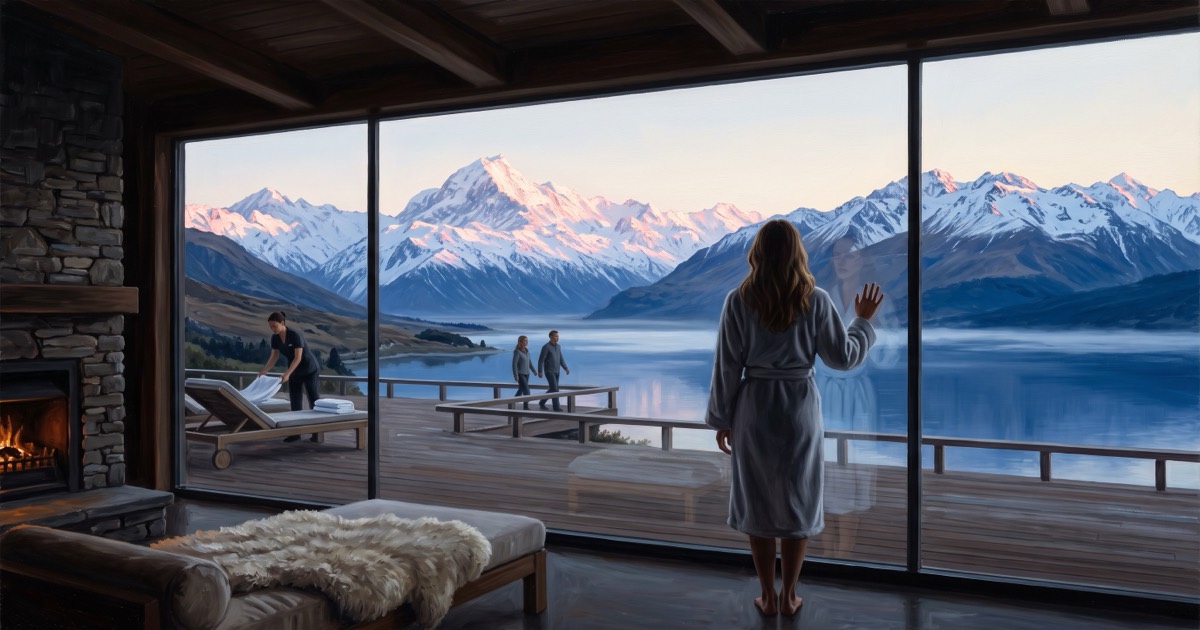
Guest at the glass wall of an alpine lodge at dawn, Southern Alps and glacial lake beyond, New Zealand

New Zealand Apex 6 Wellness Resorts 2026 - Comparison at a Glance

ResortLocationTypeStayPrice RangeBest SeasonSignature ExperienceWellness Focus
Aro Hā Wellness RetreatGlenorchy, OtagoAll-Inclusive5-7 nights$$$$$Oct-AprThe most demanding programme in this guideHiking, yoga, plant-based
Wai Ariki Hot Springs & SpaRotoruaDay VisitDay sessions$$$Year-roundThe Wai Whakaora geothermal journeyMāori-framed geothermal bathing
Maruia River RetreatMaruia, West CoastA La CarteFlexible$$$$Nov-AprSeven villas on 500 acres of beech forestRest rather than programming
Split Apple RetreatKaiteriteri, Abel TasmanAll-Inclusive3-7 nights$$$$$Nov-AprA tiny retreat above the Abel Tasman coastIndividual programmes
Maruia Hot SpringsLewis Pass, CanterburyA La CarteFlexible$$$Year-roundAlpine thermal pools under dark skiesJapanese-influenced bathing
Polynesian SpaRotoruaDay VisitDay sessions$$Year-roundTwo distinct springs, acidic and alkalineLakeside geothermal bathing
On Māori Wellbeing Traditions

Mirimiri (bodywork), rongoā (medicine using native plants), and a framing of wellbeing inseparable from whenua (land) and whānau (family) are living practice belonging to specific iwi, not a technique set.

Cold Water and Rotorua's Air

Cold water. Several properties offer ice baths and cold plunge. Sudden cold-water entry causes an involuntary gasp and a sharp rise in heart rate and blood pressure, the cold shock response, which can be dangerous even in people with no known heart condition. Never alone, never after alcohol, enter gradually, seconds rather than minutes. Anyone with cardiac history, high blood pressure or who is pregnant should take medical advice first.

Rotorua's sulphur smell. Geothermal activity releases hydrogen sulphide across the city. Most visitors stop noticing within a day, but people with asthma or respiratory conditions may find it irritating, and it tarnishes silver.

Best New Zealand Wellness Resorts - Top 6 Currently

Aro Hā Wellness Retreat, Glenorchy

The most demanding programme in this guide, above Lake Wakatipu in the Southern Alps
Summary

A purpose-built retreat above Lake Wakatipu in the Southern Alps, and the most demanding programme in this guide. Days begin with sunrise yoga and include substantial daily hiking in mountain terrain, on a plant-based diet.

This is not a spa holiday and the property does not present it as one. People arrive fit and still find it hard.

Experience & Programme

Setting: Station Valley Road, Glenorchy, at the head of Lake Wakatipu around 45 minutes from Queenstown.

What a stay involves
  • Sunrise yoga to begin each day
  • Substantial daily hiking in Southern Alps terrain
  • A plant-based diet, calorie-controlled
  • Bodywork, breathwork and contrast therapy, including cold plunge
  • Five- and seven-night programmes only
Combining sustained daily hiking with a calorie-controlled diet is genuinely demanding. Anyone with a cardiac condition, on regular medication, or with a history of disordered eating should discuss the programme with their own doctor before booking.
Cold plunge is part of the contrast therapy. Enter gradually, never after alcohol, seconds rather than minutes, and take medical advice first with cardiac history, high blood pressure or in pregnancy.
Programmes & Activities
  • The programme, which occupies the entire stay
  • Mount Aspiring National Park, part of the Te Wahipounamu UNESCO World Heritage Area
  • Lake Wakatipu and Glenorchy, among the finest landscapes in the country
  • Routeburn Track country, immediately beyond
  • Queenstown, 45 minutes, before or after
Dining Experience

Plant-based and calorie-controlled as part of the programme, prepared to a high standard.

  • Plant-based menus, portion-controlled
  • Produce from the retreat's own gardens
  • No alcohol, no caffeine
Accommodations & Service

Purpose-built eco-suites and shared lodges in stone, timber and glass, comfortable but not luxurious, taking between sixteen and thirty-two guests across an 8.4-hectare sub-alpine terrace on the Richardson foothills above Lake Wakatipu, about forty-five minutes from Queenstown. Built in 2014 by Damian Chaparro with Chris and Beth Madison, the site was designed to Passivhaus principles on a permaculture layout and runs close to self-sufficient: a 40kW micro-hydro scheme off a mountain stream, photovoltaic and thermal solar, a wood boiler feeding what was New Zealand's first renewably sourced distributed heating scheme, and a 750kWh battery so no diesel generator is needed. Programmes are the seven-day Signature or five-day Essential, plant-based throughout, with daily hiking, yoga, meditation, massage and contrast hydrotherapy, and no alcohol or caffeine, which is why the first two days are frequently uncomfortable. One caveat on the marketing: the retreat describes documented biological age reduction and a cellular-level reset. Short-term shifts in such markers are not established as durable, and no seven-day programme is shown to reverse ageing. What it does deliver, reliably, is a week of real exercise, plant food, deep sleep and no decisions, which is worth going for on its own terms. The programme is what you are paying for, and the setting at the head of Wakatipu is extraordinary.

Pricing & FAQ
Estimated pricing
  • From around NZ$6,500 / US$3,900 for a five-night programme, rates observed 2026
How hard is it really?

Hard. Sustained daily hiking in mountain terrain on a calorie-controlled plant-based diet, starting at sunrise, for five or seven days. Fit people find it demanding. That is the design rather than a warning, but go in knowing it, and discuss it with your own doctor if you have a cardiac condition, take regular medication, or have any history of disordered eating.

Is the location worth it?

Glenorchy sits at the head of Lake Wakatipu on the edge of Mount Aspiring National Park, within the Te Wahipounamu UNESCO World Heritage Area. It is among the finest landscapes in New Zealand and the hiking is the reason the programme works. Queenstown is 45 minutes away.

Wai Ariki Hot Springs & Spa, Rotorua

The Wai Whakaora journey through geothermal pools on the shore of Lake Rotorua
Summary

On the shore of Lake Rotorua, the Wai Whakaora journey moves through a sequence of geothermal mineral pools, herbal bathing, cold immersion and hydrotherapy, framed within Māori concepts of wellbeing.

Rotorua sits on one of the most active geothermal fields in the world, and the district is a centre of Te Arawa iwi.

Experience & Bathing

Setting: 1176 Hinemoa Street, on the lakefront in Rotorua, central North Island.

What is offered
  • The Wai Whakaora journey, a structured sequence rather than free bathing
  • Geothermal mineral pools and herbal bathing
  • Cold immersion and hydrotherapy
  • Mirimiri and treatment rooms
  • Lakefront setting with day sessions
Where Māori wellbeing traditions are offered, ask who leads them and what the connection to local iwi is. Mirimiri and rongoā are living practice belonging to specific iwi rather than a technique set, and choosing Māori-owned operators is the clearest way to engage respectfully.
Cold immersion is part of the sequence. Enter gradually, never after alcohol, seconds rather than minutes, and take medical advice first with cardiac history, high blood pressure or in pregnancy.
Programmes & Activities
  • The Wai Whakaora journey, which takes a half day
  • Lake Rotorua and the lakefront
  • Whakarewarewa, the living Māori village in the geothermal valley
  • Redwoods Whakarewarewa Forest, for walking and mountain biking
  • Wai-O-Tapu and the wider geothermal field
Dining Experience

Rotorua has a genuine food culture including hāngi, food cooked in an earth oven, which is worth experiencing at a Māori-owned operator.

  • Café and light dining on site
  • Hāngi at Māori-owned venues in the district
  • Rotorua's lakefront restaurants
Accommodation

A day facility with no accommodation of its own, on the Lake Rotorua lakefront and wholly owned by Ngāti Whakaue, the iwi whose whenua this is. That ownership is the point rather than a detail: the culture leads and the water follows, in the general manager's own words, and it makes this the rare case where a spa drawing on indigenous tradition is run by the people whose tradition it is. The centrepiece is Wai Whakaora, a two-hour seven-step journey moving from a blessing stone through waterfall showers, fire and ice caves, geothermal pools, mud beds and a steam cave to a closing karakia. The framework is hauora, the Māori conception of wellbeing as four inseparable pillars: taha tinana, hinengaro, wairua and whānau, the physical, mental, spiritual and the health that comes from belonging. Private geothermal pools, treatments in the Sanctuary, a cafe and adults-only quiet are the rest of it — and that last point matters if you are travelling as a family, because Polynesian Spa is a few minutes away on the same lakefront, appears on this same page, and keeps family areas separate from its adult pools. You can send the family there and come here alone, without leaving Rotorua. Note that steam and mud are described as detoxifying; that is the traditional framing rather than a physiological claim, and the liver and kidneys handle that work continuously. Rotorua has the full range, typically NZ$150 to 500 a night, rates observed 2026, and many hotels have their own geothermal pools.

Pricing & FAQ
Estimated pricing
  • NZ$100 to 500 depending on package, rates observed 2026
What about the sulphur smell?

Rotorua's geothermal activity releases hydrogen sulphide across the city, and it is noticeable on arrival. Most visitors stop registering it within a day. People with asthma or respiratory conditions may find it irritating, and it does tarnish silver, so leave good jewellery at the hotel.

How should I engage with Māori wellbeing traditions?

By choosing Māori-owned operators where possible, and by asking who leads a treatment and what the connection to local iwi is. Mirimiri and rongoā belong to specific iwi and are living practice rather than a technique set. It is a reasonable question, and a good operator answers it readily.

Maruia River Retreat, West Coast

Seven villas on five hundred acres of native beech forest, built around rest
Summary

Seven villas on 500 acres of native beech forest beside the Maruia River. Small, quiet, and built around rest rather than programming, with private outdoor hot tubs and a Finnish sauna.

The deliberate absence of a schedule is the point, and it is the opposite proposition to Aro Hā elsewhere on this page.

Experience & Spa

Setting: State Highway 65, Maruia, in the upper South Island between Nelson and the West Coast, remote by any measure.

What is offered
  • Seven villas only, on 500 acres
  • Private outdoor hot tubs
  • A Finnish sauna and cold immersion in the river
  • Native beech forest, walked from the door
  • Treatments bookable rather than scheduled
River immersion is cold and unsupervised. Enter gradually, never alone, never after alcohol, seconds rather than minutes, and get warm promptly. Take medical advice first with cardiac history, high blood pressure or in pregnancy.
New Zealand beech forest is a genuine conservation environment. Clean footwear between forest areas to avoid spreading kauri dieback and other pathogens, and follow the property's biosecurity guidance.
Programmes & Activities
  • Doing very little, which is the design
  • Beech forest walking on the estate
  • The Maruia River, for swimming and fly fishing
  • Lewis Pass and the alpine reserve, nearby
  • Nelson Lakes National Park, within reach
Dining Experience

Cooking from New Zealand produce for a very small number of guests, with no alternatives nearby.

  • Kitchen serving all guests, meals included or bookable
  • South Island produce, lamb and freshwater fish
  • Nelson and Marlborough wines
Accommodations & Service

Seven villas in three grades, Luxe, Master and Premium Master, spread across a 500-acre private estate of native beech forest, gardens and terraced paddocks on the Maruia River. Each has a private balcony over river, forest and mountain, a full kitchenette, and deliberately no television or wifi; the signal reaches the main lodge only, so the digital detox is structural rather than a rule. The wellness centre holds two therapy rooms, an eight-metre heated magnesium pool with swim jets, a wood-fired hot tub and infrared sauna set in the beech forest, a yoga shala with daily classes included, and forest bathing on the estate's own trails. Massage runs from remedial and myofascial to hot stone and aromatherapy, with a naturopath consultation available. The property holds Qualmark five-star and a Gold Sustainable Tourism award, and there is a 500-metre private airstrip; otherwise it is about two hours from Nelson and three from Christchurch. One note on the treatment menu: body scrubs are listed as offering lymphatic drainage and detoxification, which are marketing terms rather than physiological effects. The scale is the product: with seven villas on five hundred acres you can go a day without seeing another guest.

Pricing & FAQ
Estimated pricing
  • From around NZ$800 per night, rates observed 2026
Aro Hā or Maruia River?

Opposite propositions. Aro Hā is a demanding fixed programme of hiking, yoga and calorie-controlled eating. Maruia River has no programme at all: seven villas, private hot tubs, beech forest and a river. If you want to be worked hard, go to Glenorchy. If you want to be left alone, come here.

How remote is it?

Genuinely. It sits in the upper South Island between Nelson and the West Coast, hours from any city, with no alternatives for food or supplies nearby. That isolation is the appeal, and it means arriving prepared and planning to eat on site.

Split Apple Retreat, Abel Tasman

A very small architect-designed retreat above the Abel Tasman coast
Summary

A very small architect-designed retreat above the Abel Tasman coast with access to private beaches, run at an intimate scale with individually arranged programmes.

The scale means the programme is genuinely built around each guest rather than selected from a menu, which is rare and is the reason it is here.

Experience & Programme

Setting: 146 Tokongawa Drive, Kaiteriteri, above the Abel Tasman coast in the northern South Island, around an hour from Nelson.

What is offered
  • Individually arranged programmes rather than fixed formats
  • A very small number of rooms
  • Access to private beaches on the Abel Tasman coast
  • Spa facilities including sauna and hydrotherapy
  • Architect-designed throughout
Programmes here are arranged individually, which means the content varies. Ask specifically what is included, who delivers it, and what their qualifications are before booking, since there is no standard format to compare against.
Abel Tasman National Park has strong tidal ranges and the coast should be treated with respect. Check tide tables before any coastal walking, and swim from beaches rather than around headlands.
Programmes & Activities
  • Abel Tasman National Park, by foot or by water taxi
  • The Abel Tasman Coast Track, one of New Zealand's Great Walks
  • Kayaking along the coast
  • Split Apple Rock, the granite formation the retreat is named for
  • Nelson and the Marlborough wine region, within reach
Dining Experience

Cooking arranged around the programme for a very small number of guests, using Nelson region produce.

  • Programme-aligned menus, individually set
  • Nelson produce, seafood and orchard fruit
  • Marlborough and Nelson wines nearby
Accommodations & Service

Three suites only, built into a cliff face with 180-degree views over Tasman Bay and the Abel Tasman National Park. Two, Fuji and Lotus, are Japanese in idiom with granite baths and their own decks and gardens; the third, Rainbow, runs over two levels with a separate lounge. All have two private terraces. Shared facilities are a saltwater infinity pool, an onsen hot bath, steam room and infrared sauna, massage and meditation rooms, a yoga pavilion in Japanese gardens, a gym and an eight-seat theatre, with an extensive collection of Japanese and Southeast Asian art through the building. Two private paths lead down to beaches, one of them to Split Apple Rock, Tokangawa, the granite boulder the retreat is named for. Dining is a four-course tasting menu of Asian and Mediterranean cooking built around each guest's preferences, with cooking lessons available. It is roughly an hour from Nelson by road or fifteen minutes by helicopter to the on-site pad. The sauna is described as detoxifying, which is a marketing term rather than a physiological effect. Among the most expensive properties in this guide per night, and the intimacy and the individual attention are what the price buys.

Pricing & FAQ
Estimated pricing
  • From around NZ$1,500 per night, all-inclusive, rates observed 2026
What does individually arranged mean?

That the programme is built around you rather than selected from a menu, which is possible because the property takes very few guests. It also means there is no standard format to compare, so ask specifically what is included, who delivers it and what their qualifications are before booking.

Is Abel Tasman worth building a trip around?

It is one of New Zealand's Great Walks and among the most beautiful stretches of coast in the country: golden beaches, granite headlands and clear water. Water taxis let you walk sections without committing to the full track. Check tide tables, since several crossings are tidal.

Maruia Hot Springs, Lewis Pass

Natural thermal pools in an alpine reserve, remote enough for genuinely dark skies
Summary

Natural thermal pools in an alpine reserve at Lewis Pass, remote enough for genuinely dark skies, with indoor and outdoor pools, steam rooms and a Japanese-influenced bathhouse.

The alpine setting distinguishes it from Rotorua: the water is geothermal, the surroundings are mountain beech forest, and there is no sulphur smell across a city.

Experience & Bathing

Setting: State Highway 7 at Lewis Pass, in the Canterbury alpine reserve, around two and a half hours from Christchurch.

What is offered
  • Natural thermal pools, indoor and outdoor
  • A Japanese-influenced bathhouse
  • Steam rooms and cold plunge
  • Genuinely dark skies for stargazing
  • Accommodation on site, plus day entry
Lewis Pass is an alpine environment and conditions change quickly. Snow closes the road occasionally in winter; check NZTA conditions before travelling and carry chains in the cold months.
Standard thermal cautions: limit sessions, cool between, hydrate, no alcohol beforehand, and take medical advice first with cardiac conditions, uncontrolled blood pressure or in pregnancy.
Programmes & Activities
  • Thermal bathing under alpine sky, best after dark
  • Stargazing, with very little light pollution
  • Lewis Pass walking tracks through beech forest
  • Nelson Lakes National Park, north
  • Hanmer Springs and the Canterbury high country
Dining Experience

A restaurant on site, with essentially no alternatives given the alpine location.

  • On-site restaurant, the only option locally
  • New Zealand produce with Japanese influence
  • Canterbury and Marlborough wines
Accommodations & Service

Simple accommodation in an alpine reserve, comfortable rather than luxurious, and unusually varied for a single property: hotel rooms, glamping pods and a campsite for campervans, so the same springs serve a budget traveller and a hotel guest. All room rates include 24-hour access to the pools, which is the detail worth booking on, since sunrise and midnight soaks are the ones people remember. The site has a long history of bathing, used first by Māori pounamu traders travelling the pass, later a European resort, and from the late twentieth century a Japanese-style onsen bathhouse; new owners from 2015 rebuilt the outdoor bathing area, added a cold plunge, thermal showers, a steam room, two saunas and private spas. The bathhouse is designed in Japanese minimalist style with a full picture window onto the valley. New Zealand's largest sauna, seating 35, is here; the property describes it as detoxifying, which is a marketing term rather than a physiological effect. Christchurch is about two and a half hours away. The setting and the dark skies are the product, and both are genuine.

Pricing & FAQ
Estimated pricing
  • From around NZ$250 per night, rates observed 2026
  • Day entry available separately
How dark are the skies?

Genuinely dark. Lewis Pass is remote enough that light pollution is minimal, and lying in a thermal pool under the southern sky is the reason many people come. New Zealand's South Island has some of the least light-polluted skies accessible anywhere, and this is a comfortable way to use them.

Rotorua or Lewis Pass?

Rotorua for scale, Māori cultural depth and a choice of complexes, at the cost of a city-wide sulphur smell. Lewis Pass for alpine remoteness, dark skies and quiet. They are entirely different experiences of the same underlying geology.

Polynesian Spa, Rotorua

Over fifty years on Lake Rotorua, drawing on two distinct springs
Summary

On the edge of Lake Rotorua and in operation for over fifty years, with a large number of pools drawing on two distinct springs: the acidic Priest Spring and the alkaline Rachel Spring.

Two different waters in one complex is unusual, and it is the technical distinction that separates this from other geothermal bathing.

Experience & Bathing

Setting: 1000 Hinemoa Street, on the Rotorua lakefront, central North Island.

What is offered
  • Two distinct springs: the acidic Priest and the alkaline Rachel
  • A large number of pools at varying temperatures
  • Lake-edge pools looking across Rotorua
  • Adults-only and family areas, separated
  • Private pools bookable, plus a treatment menu
Warm mineral bathing eases muscular tension through heat and buoyancy. Minerals are not absorbed through the skin in meaningful quantity, and the traditional claims attached to individual springs are historical rather than evidence-based.
Rotorua's hydrogen sulphide is noticeable across the city. Most visitors stop registering it within a day, but people with asthma or respiratory conditions may find it irritating, and it tarnishes silver.
Programmes & Activities
  • The lake-edge pools, particularly at dusk
  • Whakarewarewa, the living Māori village, at a Māori-owned operator
  • Redwoods Whakarewarewa Forest, for walking and biking
  • Wai-O-Tapu and Waimangu, the geothermal valleys
  • Lake Rotorua and Mokoia Island
Dining Experience

Light dining on site, with Rotorua's lakefront restaurants and hāngi at Māori-owned venues nearby.

  • Café on site
  • Hāngi at Māori-owned operators in the district
  • Rotorua lakefront dining
Accommodation

A day facility with no accommodation. Rotorua has extensive options. The spa itself runs 28 pools fed by two distinct springs, and the difference between them is the point: the acidic Priest Spring, associated since the 1870s with easing tired muscles and joints, and the alkaline, silica-rich Rachel Spring, reticulated to the site since 1902 and known for a soft, silky feel on the skin. Four bathing areas divide the property: family pools with slides at 33 to 40 degrees, the adults-only Pavilion Pools from twelve upwards with eight historic pools and a foot reflexology walk, the Deluxe Lake Spa with five pools, a cold plunge and geothermally heated recliners over Lake Rotorua, and private pools bookable in short sessions. Treatments include geothermal mud facials, body wraps and Aix water-jet therapy, given on site since the early 1900s. The site holds real depth of history, built over the government Pavilion bathhouse of 1882 and the later Ward Baths of 1931, reopening in its present form in 1972. On the claims: the mineral waters are described as relieving inflammation and nourishing skin. Warm bathing genuinely eases muscle tension and is pleasant on the skin; the mineral content is not established as the reason, typically NZ$120 to 400 a night, rates observed 2026, and many hotels have their own geothermal pools.

Pricing & FAQ
Estimated pricing
  • NZ$50 to 200 depending on area and package, rates observed 2026
Two springs, what is the difference?

The Priest Spring is acidic and the Rachel Spring alkaline, which is genuinely unusual in one complex and gives noticeably different water in different pools. What both deliver is warm mineral bathing, which eases muscular tension through heat and buoyancy. The traditional claims attached to each spring are historical rather than evidence-based.

Polynesian Spa or Wai Ariki?

Polynesian Spa is larger, cheaper, over fifty years established, and works as free bathing across many pools. Wai Ariki is a structured journey framed within Māori concepts of wellbeing, at a higher price for a half-day sequence. Both are on the Rotorua lakefront and doing both across two days is entirely reasonable.

New Zealand Wellness Resorts: Unique Selection Data Points

Six properties spanning the two extremes of what a retreat can be. One runs the most demanding programme in this guide: sustained daily hiking in the Southern Alps on a calorie-controlled plant-based diet. Another has seven villas on five hundred acres of beech forest and no programme at all. One complex draws on two distinct springs, one acidic and one alkaline, which is genuinely unusual. This page also states how to engage with Māori wellbeing traditions respectfully, because they are living practice belonging to specific iwi rather than a technique set.

Frequently Asked Questions: New Zealand Wellness Resorts

How should I engage with Māori wellbeing traditions?

Mirimiri, rongoā and a framing of wellbeing inseparable from whenua and whānau are living practice belonging to specific iwi, not a technique set. The clearest way to engage respectfully is to choose Māori-owned operators. Where a property offers Māori-described treatments without that relationship, ask who leads them and what the connection to local iwi is. It is a reasonable question and a good operator answers it readily.

Which retreat should I choose?

They sit at opposite ends. Aro Hā is a fixed five- or seven-night programme of sunrise yoga, substantial daily mountain hiking and calorie-controlled plant-based eating, and fit people find it hard. Maruia River Retreat has seven villas on five hundred acres, private hot tubs and no schedule whatsoever. Split Apple builds a programme around each guest at a very small scale. Decide whether you want to be worked hard or left alone.

What about Rotorua's smell?

Geothermal activity releases hydrogen sulphide across the city and it is noticeable on arrival. Most visitors stop registering it within a day. People with asthma or respiratory conditions may find it irritating, and it tarnishes silver, so leave good jewellery at the hotel. Lewis Pass offers alpine geothermal bathing without a city-wide smell.

Is cold plunging part of these programmes?

At several, yes, and the risk is real. Sudden cold-water entry causes an involuntary gasp and a sharp rise in heart rate and blood pressure, the cold shock response, which can be dangerous even in people with no known heart condition. Never alone, never after alcohol, enter gradually, seconds rather than minutes. Anyone with cardiac history, high blood pressure or who is pregnant should take medical advice first.

When should I visit?

November to April for the South Island retreats, when the weather is settled and the hiking is at its best. Rotorua and Lewis Pass work year-round, and thermal bathing is arguably better in winter. Lewis Pass is alpine and snow occasionally closes the road, so check conditions and carry chains in the cold months.