Hungary Wellness Resorts: Thermal Lakes, Ottoman Baths & Medicinal Waters

Hungary has more thermal water than almost any country in Europe and a legal framework to match. Medicinal water is a formal state classification granted after assessment of composition and therapeutic use, not a marketing term. This page covers the largest biologically active thermal lake in the world, a working sixteenth-century Ottoman bath that is not a reconstruction, and thermal bathing inside natural limestone caves. It also states a legal restriction that most coverage of Hungarian spas omits entirely, and which families need to know before booking. Four of these are medical wellness retreats where a physician assesses you and sets the treatment, and two are public baths with no accommodation at all, which is the distinction to settle first.

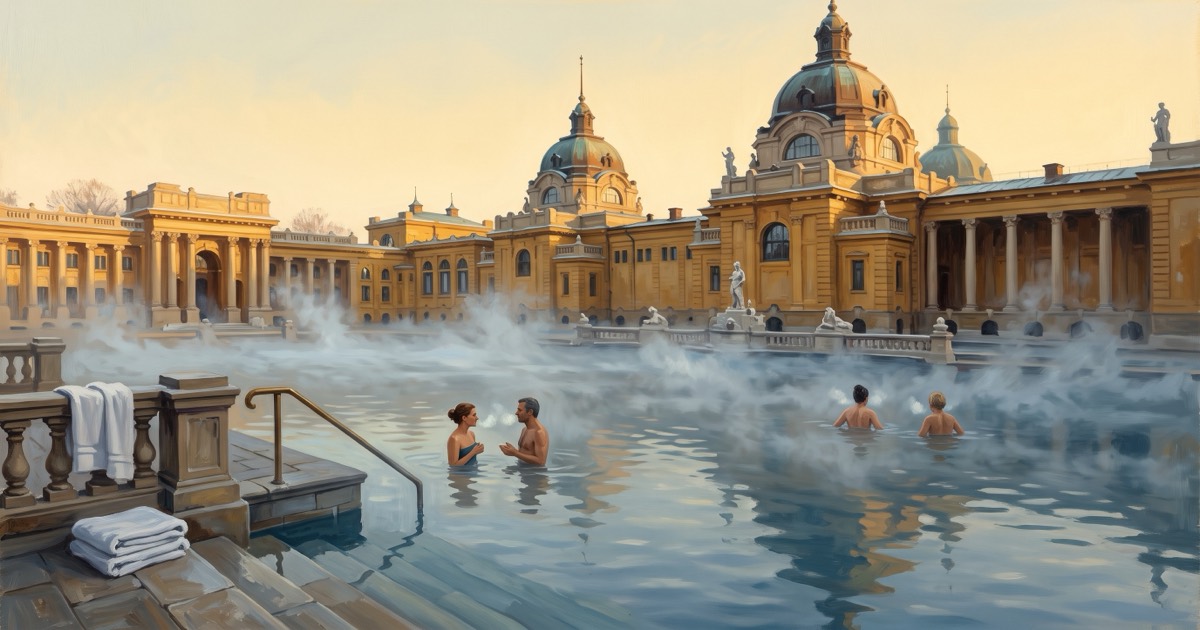
Bathers in the steaming outdoor pool of a neo-baroque thermal bath palace in Budapest at dawn

Hungary Apex 6 Wellness Resorts 2026 - Comparison at a Glance

ResortLocationTypeStayPrice RangeBest SeasonSignature ExperienceWellness Focus
Ensana Thermal Aqua Health SpaHévízAll-Inclusive7-21 nights$$Year-roundThe world's largest biologically active thermal lakeMedical balneotherapy
Rudas BathsBudapestDay VisitDay sessions$Year-roundA working 16th-century Ottoman bathHistoric Turkish bathing
Miskolctapolca Cave BathMiskolcDay VisitDay sessions$Year-roundBathing inside natural limestone cavesCave thermal bathing
Spirit Hotel Thermal SpaSarvarA La CarteFlexible$$$Year-roundMore than twenty pools and two thermal sourcesLarge-scale thermal spa
Lotus Therme Hotel & SpaHévízA La CarteFlexible$$$Apr-OctThermal pools in a large private parkHévíz thermal water
Ensana Thermal Margaret IslandBudapestAll-Inclusive3-14 nights$$Year-roundThermal springs on a car-free Danube islandMedical wellness in the capital
Hungarian Law on Children in Thermal Pools

This is a legal restriction, not a house rule, and it applies across every thermal facility on this page.

Under Hungarian Government Decree No. 510/2023 (XI. 20.), Annex 5, Section 1.9:

Families should plan around this. Several properties in Hungary are marketed as family-friendly while their principal pools are off-limits to under-14s. Ask which pools children may actually use before booking.

What Medicinal Water Status Actually Means

Hungary operates a formal legal classification for medicinal waters, gyogyviz, granted by the state after assessment of composition and therapeutic use. Medicinal spa status is recognised in the healthcare system, and some balneotherapy has historically been supported by health insurance.

That is a real regulatory framework and worth stating precisely. What it certifies is composition and recognised therapeutic use, not that any given condition will improve. Minerals are not absorbed through the skin in meaningful quantity, and warm mineral bathing works through heat, buoyancy and rest.

Best Hungary Wellness Resorts - Top 6 Currently

Ensana Thermal Aqua Health Spa Hotel, Hévíz

A short walk from the largest biologically active thermal lake in the world
Summary

A short walk from Lake Hévíz, the largest biologically active thermal lake in the world, with its own thermal supply feeding six pools and a medical department offering supervised balneotherapy.

This is a medical spa hotel in the Central European tradition: doctor assessment, prescribed treatment, and stays that can run to weeks rather than nights, with treatment packages typically including one physician-prescribed treatment a day from Monday to Saturday. But it is not only that, and the entry would mislead if it stopped there — this was the first all-inclusive four-star hotel in Hévíz, and it runs a kids' club, a playroom, a playground, a paddling pool and two indoor children's pools. It suits families as well as long-stay patients, which is unusual in a town built around medical bathing. Around 231 rooms and suites, renovated in 2025.

Experience & Treatment

Setting: Kossuth Lajos utca 13-15, 8380 Hévíz, in western Hungary near Lake Balaton, around two hours from Budapest and 90 minutes to two hours from Vienna, with Sármellék airport about 11km away. Distance to the lake is reported anywhere between 500 metres and 1.1km depending on the source; call it a walk of five to fifteen minutes over flat ground. The hotel draws on its own thermal well of the same water as the lake, which contains dissolved and gaseous sulphur along with mildly radioactive radon — a normal characteristic of Hévíz water and part of why treatment here is medically supervised rather than open-ended.

What is offered
  • A pool complex of around 200 square metres at 29 degrees running indoors and out, two indoor thermal pools at 33 and 37 degrees, a seasonal outdoor pool in the park from mid-April to mid-October, and separate children's pools. The wellness area runs to roughly 2,000 square metres with a sauna department of around 220 fed by the hotel's own supply
  • A medical department with doctor assessment and prescribed treatment
  • Balneotherapy and hydrotherapy including Hévíz mud packs, carbon dioxide baths, traction baths and underwater massage; electrotherapy; medical massage and gymnastics. There is also a salt cave with inhalation therapy for respiratory conditions, which is unusual in Hévíz where the focus is overwhelmingly musculoskeletal
  • Physiotherapy and supervised movement
  • A short walk to Lake Hévíz itself
Lake Hévíz water flows out completely every few days, which is what keeps it biologically active. The lake is bathed in year-round, including in winter when it steams. Sessions in the lake are time-limited by the operator for good reason: prolonged immersion in warm mineral water is tiring.
Hungarian law prohibits children under 14 from thermal pools and any pool above 35 degrees. That applies to the lake and to most pools here, so families should check which pools are usable before booking.
Programmes & Activities
  • Lake Hévíz, which is the reason the town exists
  • The treatment programme, typically two to three weeks
  • Lake Balaton, 20 minutes, for summer swimming and wine
  • Keszthely and the Festetics Palace
  • Walking in the Hévíz forest around the lake
Dining Experience

Half or full board is standard, with diet-controlled options where prescribed as part of treatment.

  • Board arrangements typical for longer stays
  • Hungarian cooking, with lighter options on medical programmes
  • Balaton wines from the hills nearby
Accommodations & Service

A functional medical spa hotel, comfortable rather than luxurious, with a clientele largely on longer therapeutic stays. The lake it exists for is genuinely unusual: Hévíz is a natural thermal lake of about 4.4 hectares over a spring shaft some 38 metres deep, fed at around 410 litres a second so the entire body of water replaces itself roughly every three days. It holds 22 degrees at its winter minimum and reaches the mid to high thirties in summer, so it is bathed in year-round, and a peat layer several metres thick on the bottom yields the mud used in treatment. Around 34 hectares of protective forest ring it. The convention is short immersions of twenty to thirty minutes with breaks between rather than long soaks. Excellent value by Western European standards. The lake and its mud are prescribed here for musculoskeletal complaints within a long balneological tradition; that is not the same as modern trial evidence, and a stay complements medical care rather than replacing it. Excellent value by Western European standards, which is much of the reason to come.

Pricing & FAQ
Estimated pricing
  • From around EUR 130 per person per night, typically with board and treatments, rates observed 2026
What makes Lake Hévíz unusual?

It is the largest biologically active thermal lake in the world, and its water is replaced completely every few days by the spring beneath it. That constant turnover is why it stays biologically active without chemical treatment. It is warm enough to bathe in year-round, and doing so in winter with steam rising off the surface is the experience people remember.

Can children come?

Not into the thermal pools. Hungarian law prohibits under-14s from thermal or hydrotherapy pools and from any pool above 35 degrees. This is a legal restriction rather than a house rule, and it applies across the country. Ask specifically which pools children may use before booking a family stay.

Rudas Baths, Budapest

A working sixteenth-century Ottoman bath, not a reconstruction
Summary

A working sixteenth-century Ottoman bath, not a reconstruction. Commissioned by Sokollu Mustafa Pasha, Ottoman governor of Buda, and the octagonal pool beneath its dome is the original structure.

Budapest has several historic baths; this is the one where you bathe inside genuine Ottoman architecture rather than a nineteenth-century revival of it. It is best understood as four connected places under one roof, and your ticket and the day's timetable decide which you can use: the Ottoman Turkish bath, a nineteenth-century swimming pool, a modern wellness wing, and the rooftop tub. WORTH KNOWING FOR TRIP PLANNING: the Gellért Bath, Budapest's other great Buda-side bathhouse, is closed for restoration and is not expected back until 2028, which has made Rudas markedly busier. Book ahead.

Experience & Bathing

Setting: Döbrentei tér 9, on the Buda side at the foot of Gellért Hill, beside the Erzsébet Bridge. The springs rise from Gellért Hill itself, reaching up to about 42 degrees at source. The bath was built around 1550 and rebuilt between 1566 and 1572 under Sokollu Mustafa Pasha, the Ottoman governor of Buda, originally as part of a larger külliye — a complex that also held a mosque and a caravanserai. It has operated for more than 450 years, through neglect and Second World War damage, with major restorations in 2006 and 2014.

What is offered
  • The Ottoman octagonal pool at around 36 degrees, beneath a hemispherical dome roughly ten metres across carried on eight stone pillars, its small glazed openings throwing coloured shafts of light through the steam. Four smaller pools ring it at about 28, 30, 33 and 42 degrees, with a plunge pool near 16 beneath its original dome
  • Thermal pools at graduated temperatures in the historic chambers
  • A rooftop pool with views across the Danube to Pest
  • Steam rooms and saunas
  • Drinking hall with mineral waters from the Rudas springs
The historic Turkish section operates single-sex on most weekdays and mixed at weekends and on Friday afternoons, with swimwear required on mixed days and not on single-sex ones. Rudas was men-only until 2006, when Tuesdays became women-only, and the pattern has shifted several times since. CHECK THE CURRENT TIMETABLE BEFORE TRAVELLING — it changes, it is the single thing that most often catches visitors out, and couples hoping to bathe in the Turkish section together need to pick their day. There is also late-night bathing on Fridays, roughly 10pm to 3am, for which tickets must be booked online in advance.
Under-14s are prohibited by law from thermal pools and any pool above 35 degrees, which covers most of this facility. Rudas is not a family destination.
Programmes & Activities
  • The Ottoman pool, which is the reason to come
  • The rooftop pool at night, with the Danube and Parliament lit
  • Gellért Hill and the Citadella, immediately above
  • Buda Castle and the Fisherman's Bastion, part of a UNESCO World Heritage inscription
  • The Danube embankments, also UNESCO-inscribed
Dining Experience

No significant dining on site, but Budapest is one of Central Europe's better food cities and everything is within walking distance.

  • Budapest's restaurant and ruin-bar scene across the river
  • Hungarian cooking: gúlyás, lángos, and the Great Market Hall
  • Tokaji and other Hungarian wines, which are seriously good
Accommodation

A public bath with no accommodation. The site was in use by about 1550 and the bath was rebuilt under Ottoman rule between 1566 and 1572, originally within a külliye that also contained a mosque and a caravanserai. It is still built around its hammam form: an octagonal pool beneath a ten-metre dome on eight pillars, pierced with coloured glass, with smaller corner pools around it at roughly 28, 30, 33 and 42 degrees and a cold plunge near 16. The swimming pool was added in 1896 and was Budapest's second indoor pool; at 29 degrees it is the warmest medicinal swimming pool in the city. The rooftop pool came with the 2014 works. Water is drawn from the Hungária, Attila and Juventus springs and carries sulphate, calcium, magnesium, sodium and an unusually high fluoride content; a dedicated drinking hall lets you taste all three. Note that the historic Turkish section operates single-sex on most weekdays and mixed at weekends, so check the schedule before going; swimwear is required in the mixed sessions and not in the single-sex ones. Budapest has the full range, typically EUR 60 to 250 a night, rates observed 2026, and the Buda side puts you within walking distance. Go early or late to avoid the busiest hours.

Pricing & FAQ
Estimated pricing
  • Entry from around HUF 12,000 / EUR 30, rates observed 2026
Is it really Ottoman?

Yes, and that is the distinction. The octagonal pool and its dome were commissioned by Sokollu Mustafa Pasha, Ottoman governor of Buda, in the sixteenth century, and the structure survives. Buda was under Ottoman rule for around 150 years, and Rudas is the most complete bathing legacy of that period still in use.

Which Budapest bath should I choose?

Rudas for the Ottoman architecture and the rooftop pool. Széchenyi for the vast neo-baroque outdoor pools and the chess players. Gellért for Art Nouveau interiors. They are different experiences and all three are worth doing if you have the days.

Miskolctapolca Cave Bath

Thermal bathing inside natural limestone cave chambers
Summary

Thermal bathing inside natural limestone cave chambers, which is genuinely unusual and the most distinctive experience on this page. Water at around 30 degrees fills interconnected passages you swim through.

The temperature is lower than most Hungarian thermal baths, and the salt content is low at around 1,000mg per litre, which together mean you can stay in far longer than a conventional thermal pool — there is no practical time limit. The caves are natural rather than excavated for the purpose. IMPORTANT STATUS NOTE: the bath was closed for nearly two years after a fire caused by an electrical fault destroyed the entrance building in September 2024. It reopened on 20 August 2026, so at the time of writing it has been trading again for only a matter of days. Older reviews and guidebooks describing it as closed are out of date, but equally, confirm opening arrangements directly before travelling while the reopening beds in.

Experience & Bathing

Setting: Pazár István sétány 1, Miskolctapolca, on the edge of Miskolc in north-eastern Hungary, around two hours from Budapest by car on the M3 and M30, or by train from Budapest-Keleti to Miskolc-Tiszai followed by bus 20 to the Barlangfürdő terminus. Worth knowing that the bath's own website gives driving directions and car parks but says nothing about trains or buses, so the public transport route is easy to miss. Bathing here goes back a long way: the Greek Orthodox abbot of Görömböly began developing Tapolca as a bathing place in 1711 and brought doctors from Kašsa, now Košice, to assess the water; three pools and an inn followed in 1723. The first wooden bath building went up in 1743. The caves themselves were only brought into use in 1959 and extended in stages until 2005, which is when the labyrinth reached its present form.

What is offered
  • Natural limestone cave chambers filled with thermal water
  • Interconnected passages you swim between
  • Water at around 30 degrees, cooler than typical thermal pools
  • Outdoor pools and conventional facilities alongside
  • A distinctive acoustic in the chambers, which people either love or find unsettling
The caves are dimly lit, enclosed and echoing. Anyone uncomfortable in confined spaces should look at the outdoor pools instead, and the passages are not suitable for weak swimmers.
At around 30 degrees this water sits below the 35-degree legal threshold, so the child restriction applies differently here than at hotter facilities. Confirm current rules on arrival rather than assuming.
Programmes & Activities
  • The cave chambers, which are the whole point
  • Miskolc and the Avas hill wine cellars
  • Lillafüred and the Bükk hills, for walking
  • Eger, an hour, for the castle and the Valley of the Beautiful Women wine cellars
  • Aggtelek caves, a UNESCO World Heritage Site, within reach
Dining Experience

Simple facilities on site, with Miskolctapolca village and Miskolc nearby for more.

  • Village restaurants and buffets
  • North-eastern Hungarian cooking
  • Eger and Tokaj wine regions both within reach
Accommodation

A day facility with no accommodation of its own. Miskolctapolca village has guesthouses and small hotels. The bath is the only thermal cave bath of its kind in Europe: warm water running through natural limestone passages rather than a pool built inside a cave, with bathing halls at varying temperatures. The water sits at around 30 degrees and carries a notably low salt content of roughly a gram per litre, which is why the convention here is long immersion rather than the short cycles usual at stronger springs. Two practical notes before travelling. The bath closes for maintenance every January. And the entrance building was damaged by fire in September 2024, so confirm current opening arrangements with the operator rather than assuming, typically EUR 40 to 100 a night, rates observed 2026, and Miskolc has more. The most affordable entry on this page.

Pricing & FAQ
Estimated pricing
  • Entry around EUR 15 to 30, rates observed 2026
What is it actually like?

Dim, warm and echoing. You swim between natural limestone chambers with the rock close overhead, and the water is around 30 degrees, cool enough to stay in for a long time. It is unlike any other bathing on this page and genuinely memorable. If enclosed spaces are difficult for you, it will not be pleasant.

Is it worth the trip from Budapest?

Two hours each way makes it a long day trip, but the Bükk hills, Eger and the Tokaj wine region are all in the same direction. As part of a few days in north-eastern Hungary it is well worth including; as a standalone excursion from Budapest, Széchenyi or Rudas are the easier choice.

Spirit Hotel Thermal Spa, Sárvár

More than twenty pools drawing on two distinct thermal sources
Summary

A large five-star spa hotel in Sárvár with more than twenty pools and an extensive sauna landscape, drawing on two distinct local thermal sources.

The scale is the proposition: a 10,000 square metre spa called the Oasis, 22 pools including a 25-metre swimming pool, nine saunas and a hammam, and a medical centre listing more than a hundred treatments. Around 265 rooms and suites, all with a balcony or terrace. The thermal water comes from the hotel's own well at roughly 1,055 metres, arriving at the wellhead near 46 degrees, and the property states that its healing pools are refilled each morning and carry no chemical additives — an unusual claim, and one worth asking about directly if it matters to you.

Experience & Bathing

Setting: Vadkert körút 5, 9600 Sárvár, in western Hungary, around two hours from Budapest and roughly 90 minutes to two hours from Vienna — the number 5 is confirmed on the hotel's own site, correcting listings that give it as 2. It stands on the shore of Sárvár's seven lakes, with the Nádasdy Castle and the historic town centre about a fifteen-minute walk away, and the Sárvár Arboretum a little beyond. The hotel opened in March 2008, holds around 265 to 271 rooms, and its rooms were refurbished in 2023.

What is offered
  • More than twenty pools, indoor and outdoor
  • Two distinct thermal sources, one a hot mineral water and one a saline water
  • An extensive sauna landscape with Aufguss sessions
  • Treatment rooms and medical wellness provision
  • Resolved: this is not an adults-only hotel, whatever the booking platforms say. Several major platforms list it outright as adults-only. That is wrong. The hotel's own site advertises cots, children's pools, childcare, a playhouse, a petting zoo and summer and festive children's programmes, and it takes families. What is actually age-restricted is the thermal water: the property states that its thermal pools are for children over 14 only, with parental supervision, and that massages are available from 14, with parental consent required between 14 and 18. So a family can stay, and younger children have pools of their own — but they cannot use the medicinal pools that are the reason most adults come. Judge accordingly: this works for families with teenagers far better than for families with small children, and at least one guest has written at length about finding it unfriendly to young children. There are also scheduled adults-only weekends, so check your dates
Sárvár's saline water is unusually strong and is used in specific treatments rather than for general bathing. Follow the posted time limits on the more concentrated pools; they exist for good reason.
The under-14 restriction on thermal pools applies here as everywhere in Hungary. This property does have family-usable pools, so ask which ones at booking rather than assuming the whole complex is open.
Programmes & Activities
  • The spa complex, which needs a full day to use properly
  • Sárvár Castle and the Nadasdy Museum in the town
  • The arboretum beside the castle
  • Lake Balaton, around an hour south
  • Vienna and Graz, both within two hours
Dining Experience

Hotel dining at five-star standard, with half board common and lighter options for medical wellness guests.

  • Half board typical, with several restaurants on site
  • Hungarian and international cooking
  • Western Hungarian wines from the nearby regions
Accommodations & Service

A large modern five-star hotel built around the spa. More comfortable than the medical properties on this page, and priced accordingly, though still excellent value by Western European standards.

Pricing & FAQ
Estimated pricing
  • From around EUR 180 to 500 per night, rates observed 2026
Twenty pools, seriously?

Yes, across indoor and outdoor areas at different temperatures and mineral concentrations, plus a large sauna landscape. In practice it means you can spend a full day without repeating yourself, and it disperses guests so the complex rarely feels crowded even when the hotel is full.

Sárvár or Hévíz?

Hévíz for the lake and for medical balneotherapy under doctor supervision, at lower cost and with a more clinical register. Sárvár for scale, comfort and a proper five-star hotel. Both are in western Hungary and both are easy from Vienna.

Lotus Therme Hotel & Spa, Hévíz

A five-star hotel in its own large private park near Lake Hévíz
Summary

A five-star hotel in its own large private park near Lake Hévíz, with indoor and outdoor thermal pools, a sauna world, and treatments built around Hévíz thermal water and the lake's medicinal mud.

The comfortable alternative in Hévíz: same water, less clinical register than the medical spa hotels. Around 232 rooms and suites, with six pools of its own — three of medicinal water, indoor and outdoor thermal pools and a jacuzzi — plus a sauna world running to Finnish and garden saunas, laconium, steam bath, aroma sauna, infrared cabin and a Kneipp walk. Dining is at the Corvinus restaurant. Bookings have generally included a complimentary three-hour ticket to the lake itself, which is worth confirming when you reserve because it materially changes the value of a stay here.

Experience & Bathing

Setting: Lóczy Lajos utca 5, Hévíz, in its own park of roughly 68,000 square metres, about 1.2km from the lake — sources describe that as anything from a few minutes to a twenty-minute walk, so allow the longer figure if mobility matters. Hévíz sits near the western end of Lake Balaton, around 8km from Keszthely. The lake is the reason the town exists: at 47,500 square metres it is the largest thermal lake in the world that can actually be bathed in, second in size only to New Zealand's Frying Pan Lake, which is far too hot to enter. It is 38 metres deep at the spring, fed at around 410 litres per second, and that flow replaces the entire body of water roughly every 72 hours. Temperatures hold near 35 to 38 degrees in summer and do not fall below about 22 in winter, so it is used year-round. The bed is peat mud, which is what the town's mud treatments draw on.

What is offered
  • Indoor and outdoor thermal pools using Hévíz water
  • A sauna world with several types
  • Treatments using the lake's medicinal mud
  • A large private park, which distinguishes it in a busy spa town
  • Medical wellness provision available
Hévíz mud is genuinely used in the town's treatment tradition and is warming and pleasant. As with all mineral applications, minerals are not meaningfully absorbed through the skin, and the benefit is heat, weight and rest. If you bathe in the lake itself rather than the hotel pools, note that a maximum session of around 90 minutes is advised because of the mineral concentration, showering before entry is expected, and access for under-14s is restricted. These are not arbitrary house rules; the lake is managed as a medical facility, and it is quieter and more orderly than a leisure pool for that reason.
The under-14 legal restriction applies to the thermal pools here as everywhere in Hungary. Confirm which pools are usable if you are travelling with children.
Programmes & Activities
  • Lake Hévíz, a short walk away
  • The hotel's own park, which is unusually large for the town
  • Lake Balaton and the Balaton uplands wine region
  • Keszthely and the Festetics Palace
  • Cycling around Balaton, which is flat and well marked
Dining Experience

Hotel dining at five-star standard, with half board common and a wider menu than the medical properties allow.

  • Half board typical, several restaurants
  • Hungarian cooking done properly
  • Balaton uplands wines, which are under-known abroad
Accommodations & Service

A comfortable five-star property with rooms facing the park. The most hotel-like option in Hévíz, and the right choice if you want the thermal water without the medical timetable.

Pricing & FAQ
Estimated pricing
  • From around EUR 150 to 450 per night, rates observed 2026
Lotus or the medical spa hotels?

Lotus if you want comfort, a park and thermal water on your own schedule. The Ensana medical properties if you want doctor assessment, prescribed balneotherapy and a structured two- or three-week course at lower cost. Both draw on the same Hévíz water; the difference is register and price.

Is Hévíz worth a week?

If you are there for the water, yes: the treatment tradition here is built around repeated daily immersion over weeks rather than single sessions. For a shorter trip, combine it with Balaton, Keszthely and the uplands wine region, all within half an hour.

Ensana Thermal Margaret Island, Budapest

Thermal springs on a car-free park island in the middle of the Danube
Summary

On Margaret Island, a car-free park in the middle of the Danube with its own thermal springs, connected to the neighbouring Grand Hotel's thermal facilities.

Medical wellness in a capital city, on an island where the only traffic is a shuttle bus. That combination does not exist anywhere else in this guide. Around 267 rooms in a four-star superior property, with six pools, a jacuzzi, a Kneipp path and a sauna world, all fed from the hotel's own thermal source on the island. The medical side goes further than most spa hotels: alongside balneotherapy and physiotherapy for rheumatic and degenerative joint conditions, the complex houses a dental clinic, a laser eye surgery clinic and a plastic surgery clinic. That is worth knowing in both directions — it means genuine clinical infrastructure on site, and it also means some fellow guests are recovering from procedures rather than taking a spa break.

Experience & Treatment

Setting: Margitsziget, 1138 Budapest, on the island in the Danube between Buda and Pest, at its northern end. Reached on foot from Margaret Bridge, or by tram and by bus 26, which stops outside. PRACTICAL NOTE FOR DRIVERS: the island is closed to general traffic, and vehicle access to the hotel is only possible from the Árpád Bridge at the northern end — approaching from the Margaret Bridge end by car will not work.

What is offered
  • Thermal pools fed by the island's own springs
  • Medical wellness provision with assessment and prescribed treatment
  • A heated underground tunnel linking the hotel to its sister property, the Ensana Grand Margaret Island — a Neo-Renaissance building designed by Miklós Ybl in 1873 — so guests of either can cross between the two in a bathrobe without going outside, which matters in a Budapest winter
  • Balneotherapy, physiotherapy and hydrotherapy
  • The island's running track, gardens and ruins outside the door
Margaret Island is car-free, which makes it genuinely quiet for a location in the centre of a capital of nearly two million people. The running track around it is used by the city and is one of the pleasures of staying here.
The under-14 restriction on thermal pools applies. This is a medical wellness property rather than a family hotel, and the page does not present it as one.
Programmes & Activities
  • Margaret Island itself, walked or run, including the medieval convent ruins
  • The musical fountain at the southern end
  • Budapest, on both banks, within walking or tram distance
  • The Danube embankments and Buda Castle, UNESCO-inscribed
  • Széchenyi and Rudas baths, both a short journey away
Dining Experience

Hotel board typical for treatment guests, with the whole of Budapest a short tram ride away.

  • Half or full board arrangements
  • Diet-controlled options on medical programmes
  • Budapest's restaurant scene across both banks
Accommodations & Service

A functional medical spa hotel with rooms facing the island's parkland, connected underground to its sister property and to the thermal facilities, which matters in a Budapest winter. Comfortable rather than luxurious, with the location doing much of the work: Margaret Island is a car-free park in the middle of the Danube between Buda and Pest, with a running track around its perimeter, and the thermal spring beneath it has supplied bathing on the island since the medieval period. Comfortable rather than luxurious, with the location doing much of the work. Excellent value for a capital city.

Pricing & FAQ
Estimated pricing
  • From around EUR 160 per person per night, typically with board and treatments, rates observed 2026
Can I combine treatment with seeing Budapest?

That is exactly what this property is for, and it is unusual. Medical wellness provision with assessment and prescribed treatment, on a car-free island, with a capital city a tram ride away. Most medical spa properties require you to choose between the treatment and the trip; here you need not.

Why is Margaret Island special?

It is a car-free park island in the middle of the Danube with its own thermal springs, medieval convent ruins, a running track used by the city and gardens along its length. For a location in the centre of Budapest it is remarkably quiet, and you can walk to both banks.

Hungary Wellness Resorts: Unique Selection Data Points

Six properties in a country with a formal legal classification for medicinal water and more thermal resource than almost anywhere in Europe. One sits beside the largest biologically active thermal lake in the world. One is a working sixteenth-century Ottoman bath rather than a reconstruction. One is inside natural limestone caves. This page also states a legal restriction that most coverage of Hungarian spas omits: under Government Decree 510/2023, children under 14 are not permitted in thermal pools at all. Prices run from about fifteen euro for a day to a few hundred a night, and the medical properties are the best value in this guide.

Frequently Asked Questions: Hungary Wellness Resorts

Can children use Hungarian thermal baths?

Not the thermal pools. Under Hungarian Government Decree No. 510/2023, children under 14 may use public bath services only under adult supervision, and are not permitted in thermal or hydrotherapy pools or in any pool above 35 degrees. This is a legal restriction rather than a house rule and applies nationwide. Several properties are marketed as family-friendly while their principal pools are off-limits to under-14s, so ask specifically which pools children may use before booking.

What does medicinal water status mean?

Hungary operates a formal legal classification for medicinal waters, gyogyviz, granted by the state after assessment of composition and therapeutic use. Medicinal spa status is recognised in the healthcare system and some balneotherapy has historically been supported by health insurance. That is a genuine regulatory framework. What it certifies is composition and recognised use, not that any given condition will improve, and minerals are not absorbed through the skin in meaningful quantity.

What makes Lake Hévíz unusual?

It is the largest biologically active thermal lake in the world, and its entire volume is replaced every few days by the spring beneath it. That constant turnover is why it remains biologically active without chemical treatment. It is warm enough to bathe in year-round, and the treatment tradition around it is built on repeated daily immersion over two or three weeks rather than single visits.

Which Budapest bath should I choose?

Rudas for genuine Ottoman architecture and a rooftop pool over the Danube, with the octagonal pool and dome commissioned by the Ottoman governor of Buda in the sixteenth century. Szechenyi for the vast neo-baroque outdoor pools. Gellert for Art Nouveau interiors. Check timetables before travelling, since several operate single-sex on certain days.

Is Hungary good value?

Exceptionally, and it is much of the case for coming. A full-board medical spa stay with daily prescribed treatments costs less per night than a mid-range hotel room in Western Europe. Expect functional rather than luxurious accommodation at the medical properties, a clinical rhythm, and fellow guests on longer therapeutic stays. That is the model working as intended.